Zhao Xueqiang, Guo Yahui, Jiang Changying, Chang Qing, Zhang Shilei, Luo Tianming, Zhang Bin, Jia Xinming, Hung Mien-Chie, Dong Chen, Lin Xin
Institute for Immunology, Tsinghua University School of Medicine, Beijing, China.
Departments of Molecular and Cellular Oncology, The University of Texas MD Anderson Cancer Center, Houston, Texas, USA.
Nat Med. 2017 Mar;23(3):337-346. doi: 10.1038/nm.4260. Epub 2017 Jan 23.
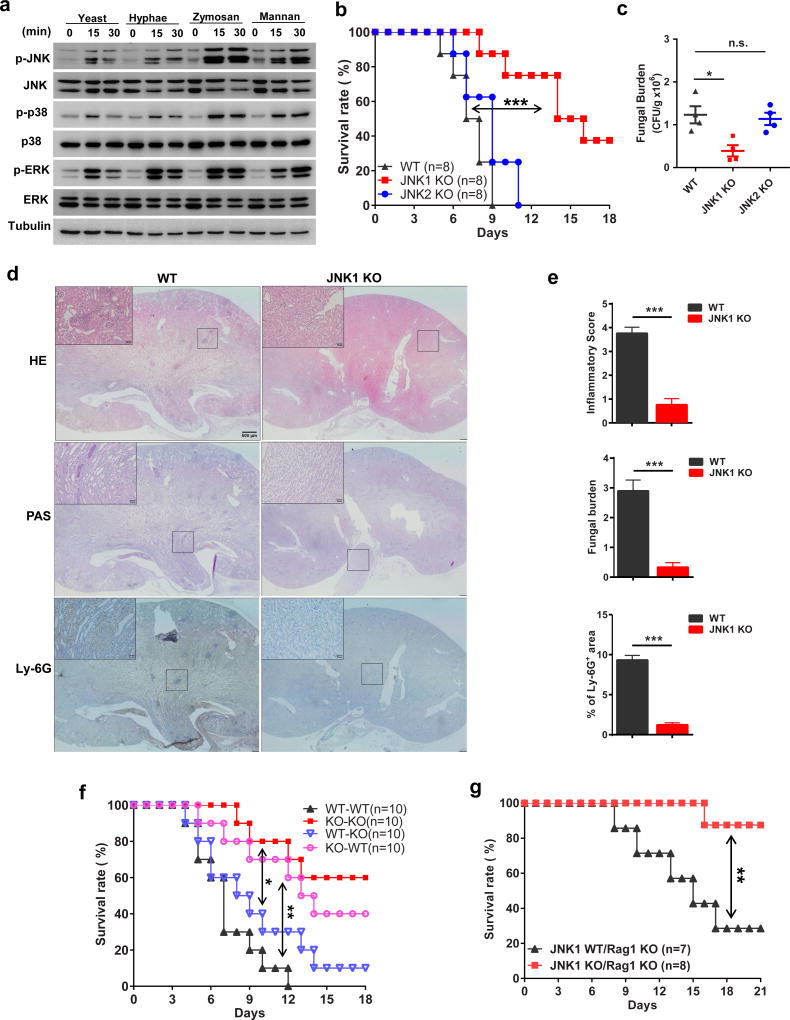
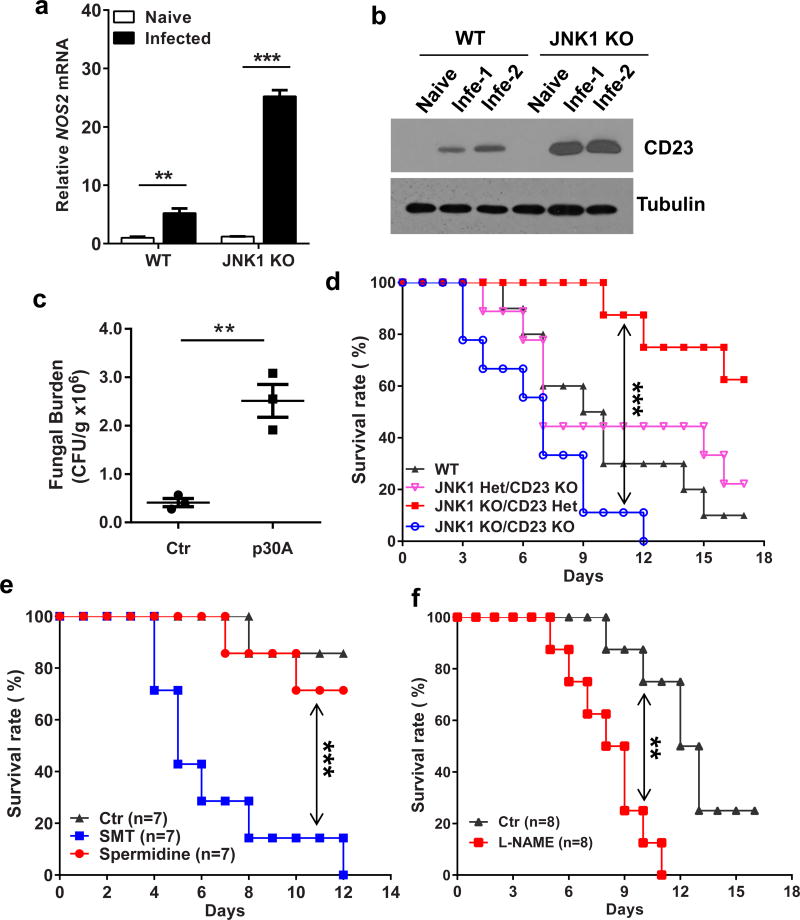
Opportunistic fungal infections are a leading cause of death among immune-compromised patients, and there is a pressing need to develop new antifungal therapeutic agents because of toxicity and resistance to the antifungal drugs currently in use. Although C-type lectin receptor- and Toll-like receptor-induced signaling pathways are key activators of host antifungal immunity, little is known about the mechanisms that negatively regulate host immune responses to a fungal infection. Here we found that JNK1 activation suppresses antifungal immunity in mice. We showed that JNK1-deficient mice had a significantly higher survival rate than wild-type control mice in response to Candida albicans infection, and the expression of JNK1 in hematopoietic innate immune cells was critical for this effect. JNK1 deficiency leads to significantly higher induction of CD23, a novel C-type lectin receptor, through NFATc1-mediated regulation of the CD23 gene promoter. Blocking either CD23 upregulation or CD23-dependent nitric oxide production eliminated the enhanced antifungal response found in JNK1-deficient mice. Notably, JNK inhibitors exerted potent antifungal therapeutic effects in both mouse and human cells infected with C. albicans, indicating that JNK1 may be a therapeutic target for treating fungal infection.
机会性真菌感染是免疫功能低下患者死亡的主要原因之一,由于目前使用的抗真菌药物存在毒性和耐药性问题,迫切需要开发新的抗真菌治疗药物。尽管C型凝集素受体和Toll样受体诱导的信号通路是宿主抗真菌免疫的关键激活剂,但对于负向调节宿主对真菌感染免疫反应的机制知之甚少。在此,我们发现JNK1激活会抑制小鼠的抗真菌免疫。我们表明,在白色念珠菌感染时,JNK1缺陷小鼠的存活率显著高于野生型对照小鼠,造血固有免疫细胞中JNK1的表达对此效应至关重要。JNK1缺陷通过NFATc1介导的对CD23基因启动子的调控,导致新型C型凝集素受体CD23的诱导显著增加。阻断CD23上调或CD23依赖性一氧化氮产生可消除JNK1缺陷小鼠中增强的抗真菌反应。值得注意的是,JNK抑制剂在感染白色念珠菌的小鼠和人类细胞中均发挥了强大的抗真菌治疗作用,表明JNK1可能是治疗真菌感染的一个治疗靶点。