Magnani Luca, Frige Gianmaria, Gadaleta Raffaella Maria, Corleone Giacomo, Fabris Sonia, Kempe Mannus H, Verschure Pernette J, Barozzi Iros, Vircillo Valentina, Hong Sung-Pil, Perone Ylenia, Saini Massimo, Trumpp Andreas, Viale Giuseppe, Neri Antonino, Ali Simak, Colleoni Marco Angelo, Pruneri Giancarlo, Minucci Saverio
Department of Surgery and Cancer, Imperial College London, London, UK.
Department of Experimental Oncology, European Institute of Oncology Milan, Italy.
Nat Genet. 2017 Mar;49(3):444-450. doi: 10.1038/ng.3773. Epub 2017 Jan 23.
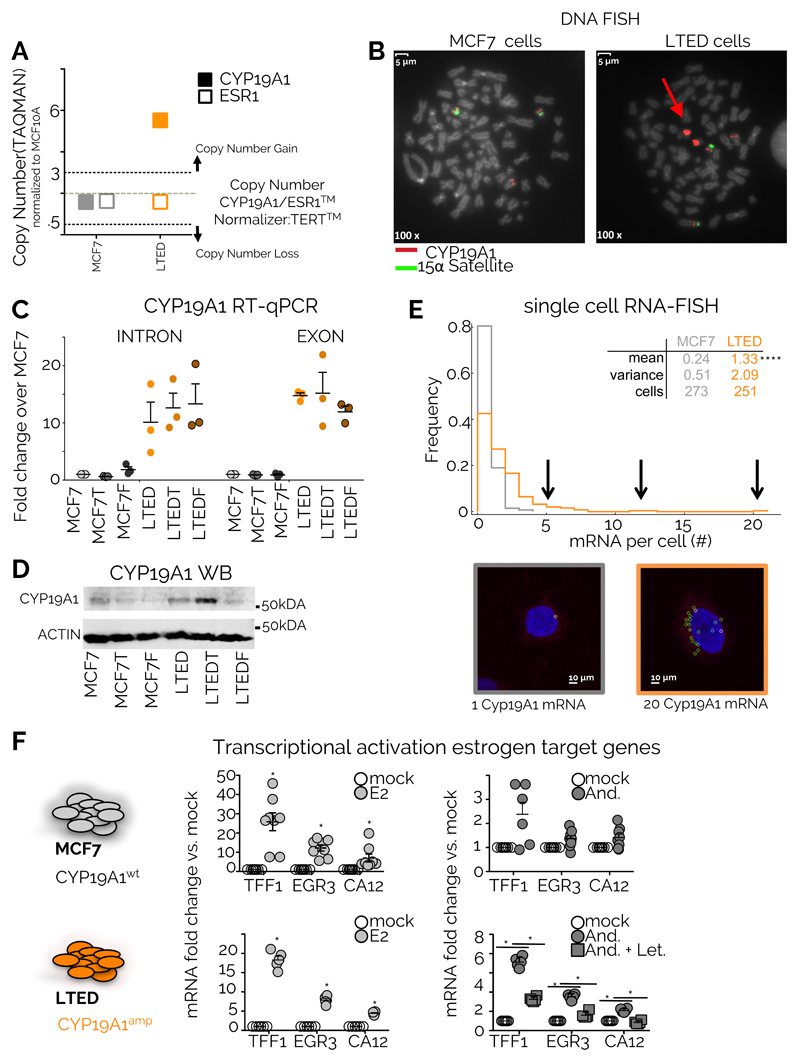
Tumor evolution is shaped by many variables, potentially involving external selective pressures induced by therapies. After surgery, patients with estrogen receptor (ERα)-positive breast cancer are treated with adjuvant endocrine therapy, including selective estrogen receptor modulators (SERMs) and/or aromatase inhibitors (AIs). However, more than 20% of patients relapse within 10 years and eventually progress to incurable metastatic disease. Here we demonstrate that the choice of therapy has a fundamental influence on the genetic landscape of relapsed diseases. We found that 21.5% of AI-treated, relapsed patients had acquired CYP19A1 (encoding aromatase) amplification (CYP19A1). Relapsed patients also developed numerous mutations targeting key breast cancer-associated genes, including ESR1 and CYP19A1. Notably, CYP19A1 cells also emerged in vitro, but only in AI-resistant models. CYP19A1 amplification caused increased aromatase activity and estrogen-independent ERα binding to target genes, resulting in CYP19A1 cells showing decreased sensitivity to AI treatment. These data suggest that AI treatment itself selects for acquired CYP19A1 and promotes local autocrine estrogen signaling in AI-resistant metastatic patients.
肿瘤进化受多种因素影响,可能涉及治疗引发的外部选择压力。手术后,雌激素受体(ERα)阳性乳腺癌患者接受辅助内分泌治疗,包括选择性雌激素受体调节剂(SERM)和/或芳香化酶抑制剂(AI)。然而,超过20%的患者在10年内复发,最终发展为无法治愈的转移性疾病。在此,我们证明治疗选择对复发性疾病的基因格局具有根本性影响。我们发现,21.5%接受AI治疗后复发的患者出现了CYP19A1(编码芳香化酶)扩增(CYP19A1)。复发患者还出现了许多靶向关键乳腺癌相关基因的突变,包括ESR1和CYP19A1。值得注意的是,CYP19A1细胞也在体外出现,但仅出现在对AI耐药的模型中。CYP19A1扩增导致芳香化酶活性增加以及雌激素非依赖性ERα与靶基因结合,致使CYP19A1细胞对AI治疗的敏感性降低。这些数据表明,AI治疗本身会选择出获得性CYP19A1,并在对AI耐药的转移性患者中促进局部自分泌雌激素信号传导。