Fang Yani, Zhang Cheng, Wu Tong, Wang Qi, Liu Jinhui, Dai Penggao
National Engineering Research Center for Miniaturized Detection Systems, College of Life Science, Northwest University, Xi'an, PR China.
Shaanxi Lifegen Co. Ltd., Xi'an, PR China.
PLoS One. 2017 Jan 23;12(1):e0170609. doi: 10.1371/journal.pone.0170609. eCollection 2017.
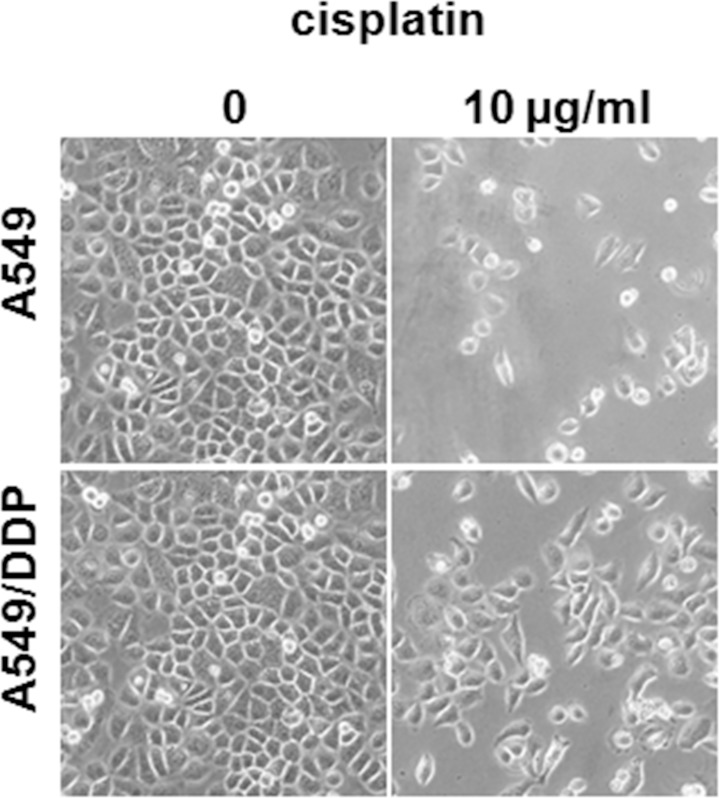
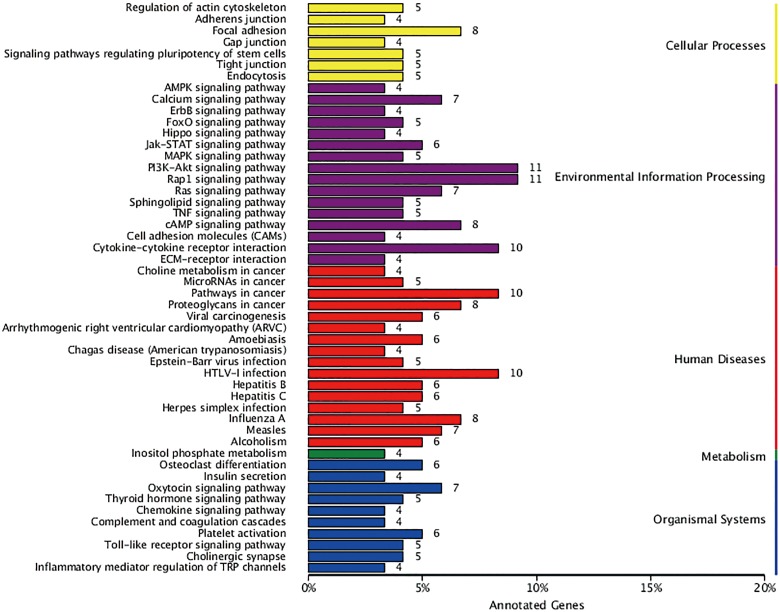
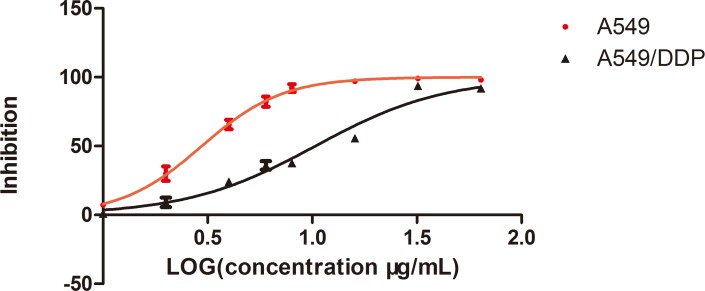
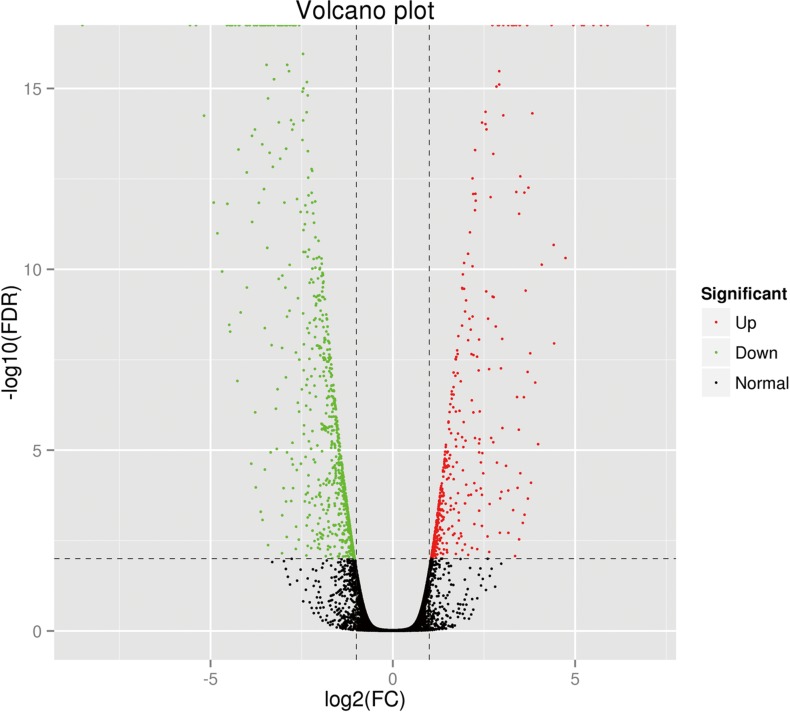
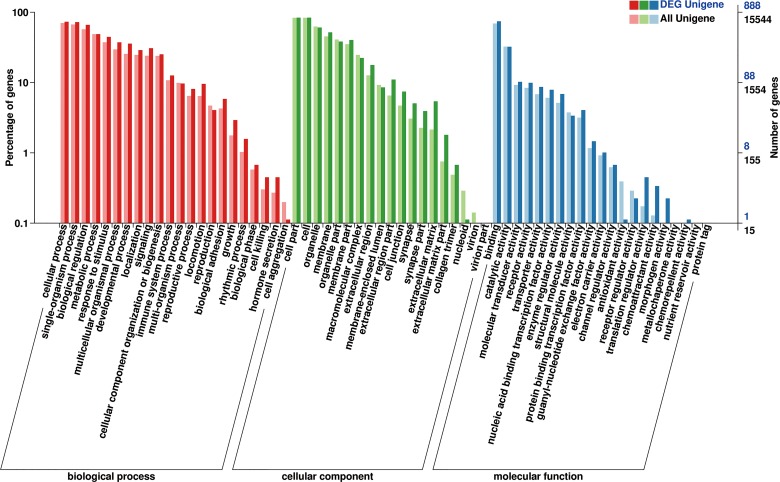
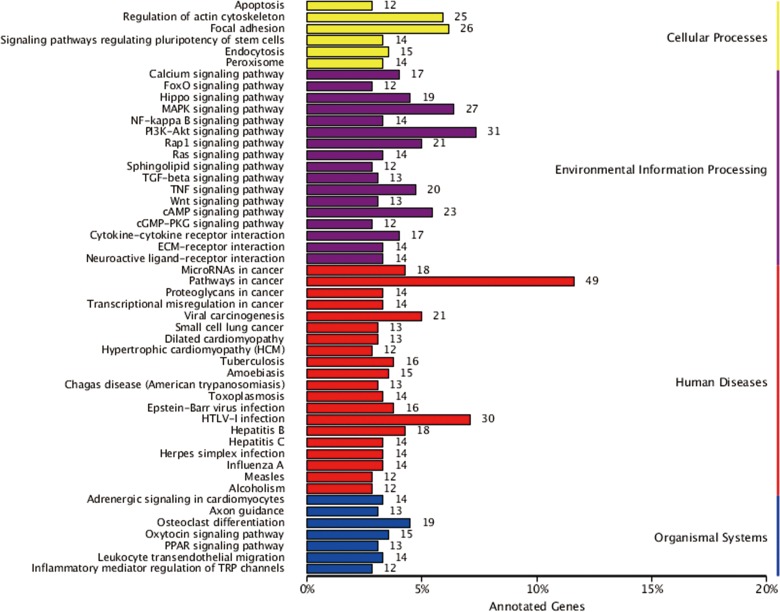
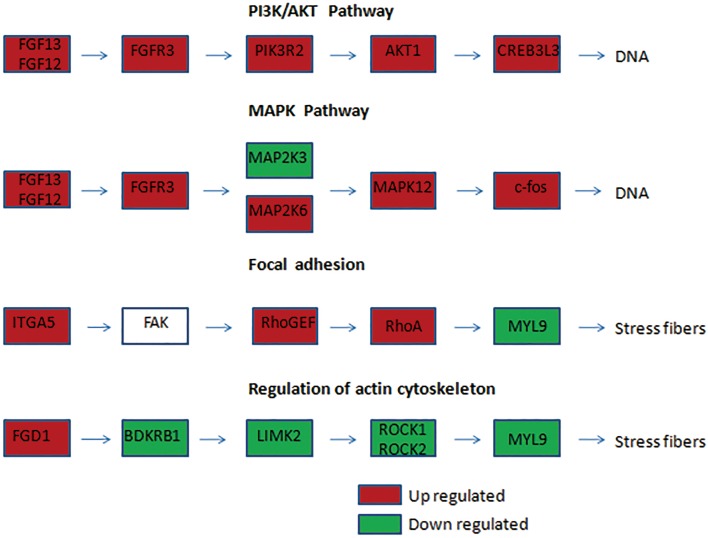
Acquired resistance to cisplatin-based chemotherapy frequently occurs in patients with non-small cell lung cancer, and the underlying molecular mechanisms are not well understood. The aim of this study was to investigate whether a distinct gene expression pattern is associated with acquired resistance to cisplatin in human lung adenocarcinoma. Whole-transcriptome sequencing was performed to compare the genome-wide gene expression patterns of the human lung adenocarcinoma A549 cisplatin-resistant cell line A549/DDP with those of its progenitor cell line A549. A total of 1214 differentially expressed genes (DEGs) were identified, 656 of which were upregulated and 558 were downregulated. Functional annotation of the DEGs in the Kyoto Encyclopedia of Genes and Genomes database revealed that most of the identified genes were enriched in the PI3K/AKT, mitogen-activated protein kinase, actin cytoskeleton regulation, and focal adhesion pathways in A549/DDP cells. These results support previous studies demonstrating that the pathways regulating cell proliferation and invasion confer resistance to chemotherapy. Furthermore, the results proved that cell adhesion and cytoskeleton regulation is associated with cisplatin resistance in human lung cancer. Our study provides new promising biomarkers for lung cancer prognosis and potential therapeutic targets for lung cancer treatment.
非小细胞肺癌患者中经常会出现对顺铂化疗的获得性耐药,其潜在的分子机制尚未完全明确。本研究的目的是调查在人肺腺癌中,一种独特的基因表达模式是否与对顺铂的获得性耐药相关。进行全转录组测序,以比较人肺腺癌顺铂耐药细胞系A549/DDP与其亲代细胞系A549的全基因组基因表达模式。共鉴定出1214个差异表达基因(DEG),其中656个上调,558个下调。在京都基因与基因组百科全书数据库中对这些差异表达基因进行功能注释,结果显示,在A549/DDP细胞中,大多数鉴定出的基因富集于PI3K/AKT、丝裂原活化蛋白激酶、肌动蛋白细胞骨架调节和粘着斑途径。这些结果支持了先前的研究,即调节细胞增殖和侵袭的途径赋予了对化疗的耐药性。此外,结果证明细胞粘附和细胞骨架调节与人肺癌中的顺铂耐药相关。我们的研究为肺癌预后提供了新的有前景的生物标志物,并为肺癌治疗提供了潜在的治疗靶点。