Lang Yanhe, Liu Zhi, Zheng Zhimin
State Key Laboratory of Tree Genetics and Breeding Laboratory, Ministry of Education, Alkali Soil Natural Environmental Science Center (ASNESC), College of Life Science, Northeast Forestry University Harbin Heilongjiang Province China
RSC Adv. 2020 Feb 12;10(11):6512-6519. doi: 10.1039/c9ra09535g. eCollection 2020 Feb 7.
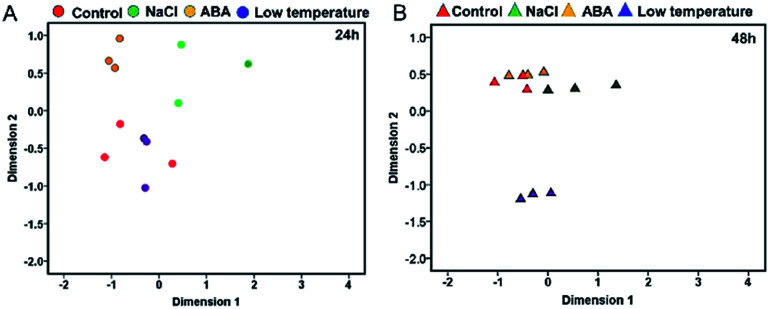
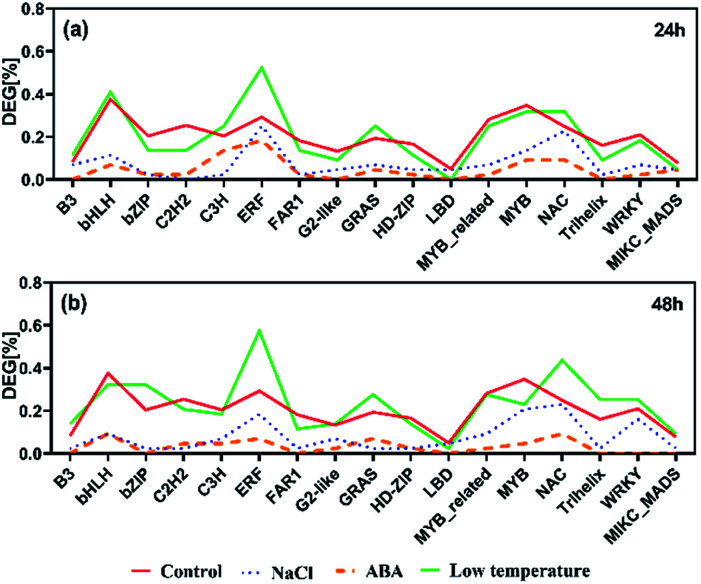
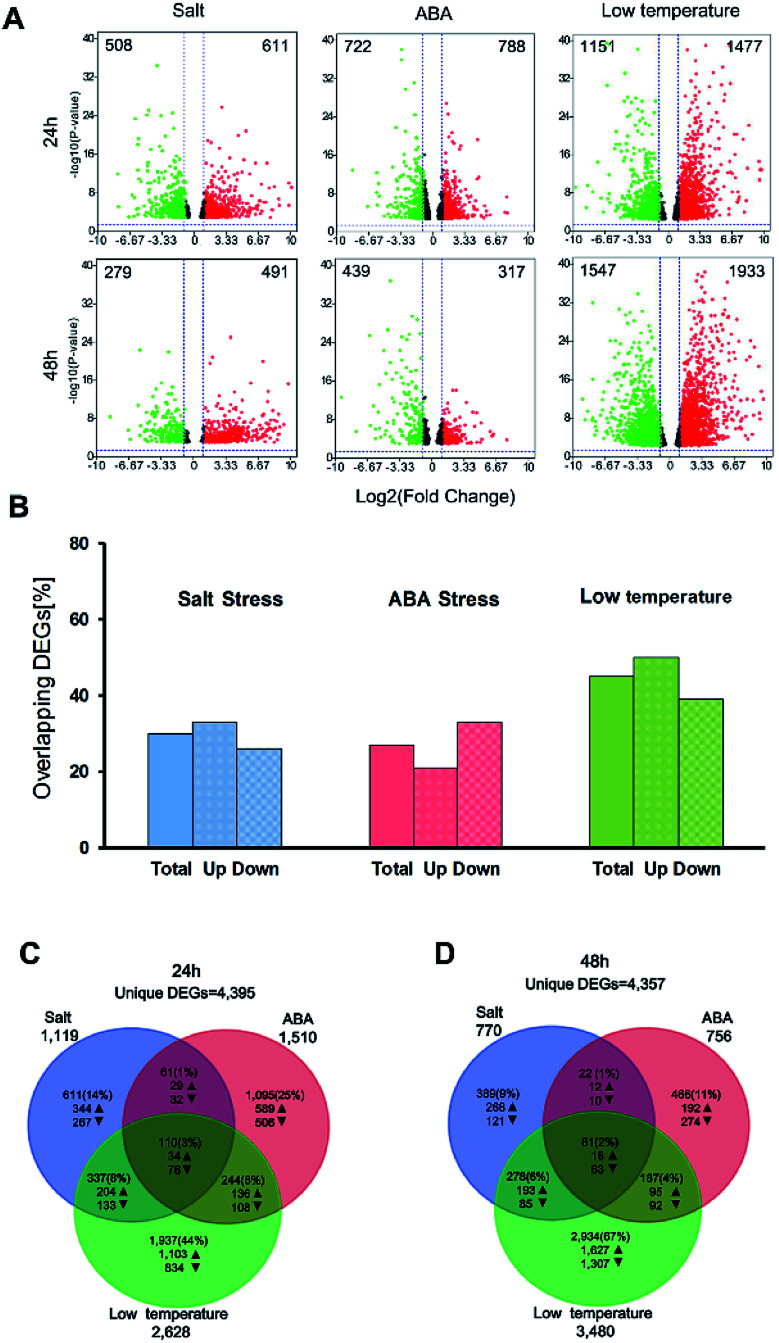
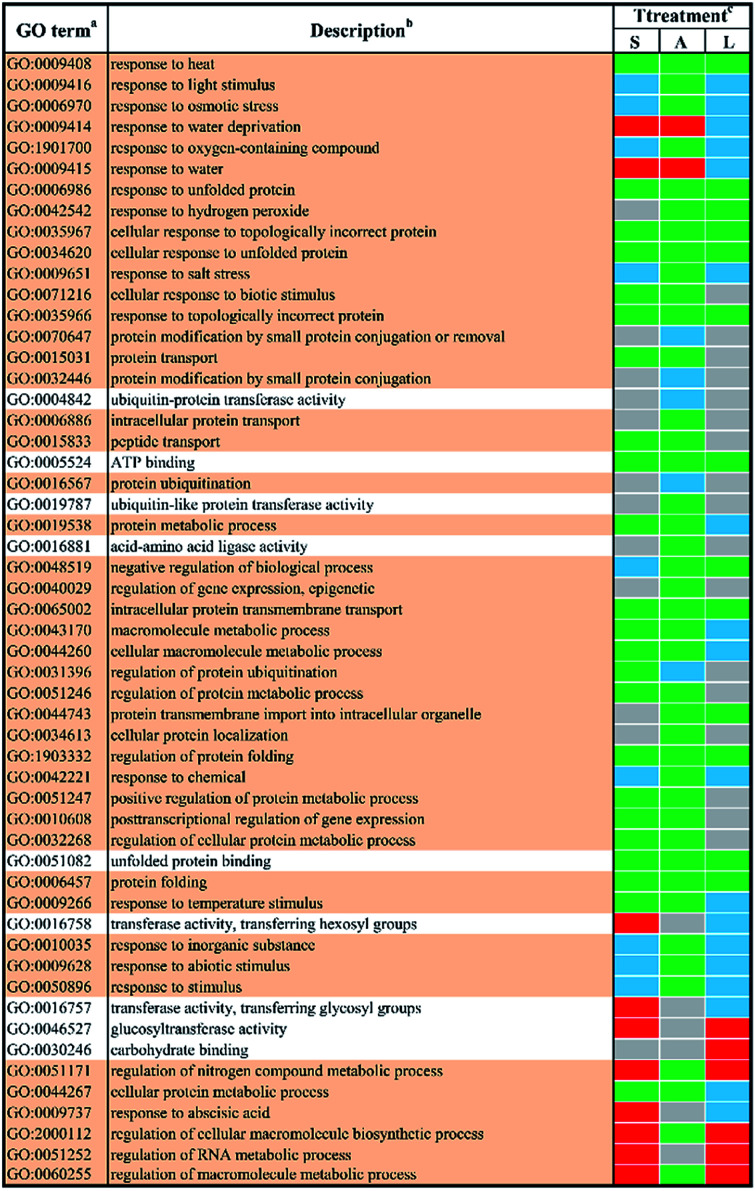
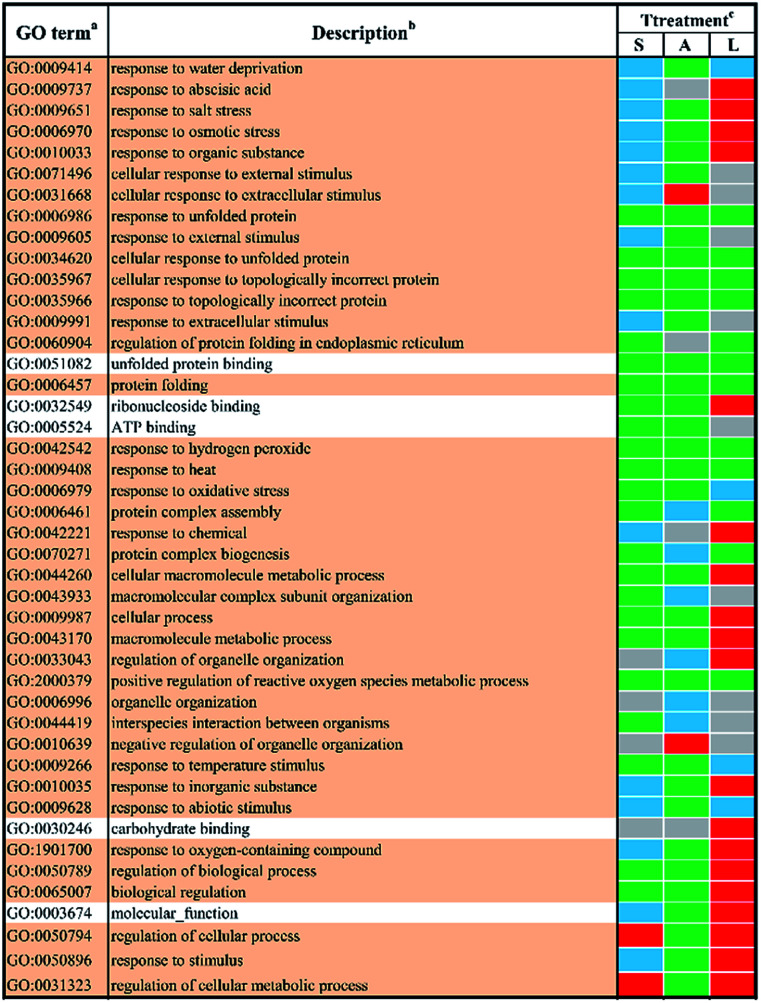
Yellow horn ( Bunge) is a well-known oil-rich seed shrub which can grow well in barren and arid environments in the northern part of China. Yellow horn has received worldwide attention because of its excellent economic and environmental value. However, because of its limited genetic data, little information can be found regarding the molecular defense mechanisms of yellow horn exposed to various abiotic stresses. In view of this, the current study aims to investigate the impact of different abiotic stresses ( NaCl, ABA and low temperature) on the transcriptome of yellow horn using RNA-Seq. Based on the transcriptome sequencing data, approximately 27% to 45% of stress-responsive genes were found highly expressed after stress treatment for 24 h. In addition, these genes were found to be still expressed after stress treatment for 48 h. However, many additional genes were stress-regulated after 48 h treatment compared with the 24 h treatment. GO enrichment analysis revealed that the expression patterns of the stress-responsive, type-specific terms were generally down-regulated. Most shared GO terms were primarily involved in protein folding, unfolding protein binding, protein transport and protein modification. Further, transcription factors (TFs), such as ERFs, bHLH, GRAS and NAC, were found to be enriched only in the low temperature treatment group, particularly the ERF TFs families. These combined results suggested that yellow horn may have developed specific molecular defense systems against diverse abiotic stresses.
文冠果(Bunge)是一种著名的富含油脂的种子灌木,能在中国北方贫瘠干旱的环境中良好生长。文冠果因其优异的经济和环境价值而受到全球关注。然而,由于其遗传数据有限,关于文冠果在各种非生物胁迫下的分子防御机制的信息很少。鉴于此,本研究旨在利用RNA测序技术研究不同非生物胁迫(NaCl、ABA和低温)对文冠果转录组的影响。基于转录组测序数据,发现约27%至45%的胁迫响应基因在胁迫处理24小时后高度表达。此外,这些基因在胁迫处理48小时后仍有表达。然而,与24小时处理相比,48小时处理后有许多额外的基因受到胁迫调控。GO富集分析表明,胁迫响应的类型特异性术语的表达模式普遍下调。大多数共享的GO术语主要涉及蛋白质折叠、未折叠蛋白结合、蛋白质运输和蛋白质修饰。此外,还发现转录因子(TFs),如ERFs、bHLH、GRAS和NAC,仅在低温处理组中富集,尤其是ERF TF家族。这些综合结果表明,文冠果可能已经针对不同的非生物胁迫发展出了特定的分子防御系统。