Edwards Rebecca G, Kopp Sarah J, Ifergan Igal, Shui Jr-Wen, Kronenberg Mitchell, Miller Stephen D, Longnecker Richard
Department of Microbiology and Immunology, Northwestern University Feinberg School of Medicine, Chicago, Illinois, United States.
Department of Microbiology and Immunology, Northwestern University Feinberg School of Medicine, Chicago, Illinois, United States 2Interdepartmental Immunobiology Center, Northwestern University Feinberg School of Medicine, Chicago, Illinois, United States.
Invest Ophthalmol Vis Sci. 2017 Jan 1;58(1):282-291. doi: 10.1167/iovs.16-20668.
To determine cellular and temporal expression patterns of herpes virus entry mediator (HVEM, Tnfrsf14) in the murine cornea during the course of herpes simplex virus 1 (HSV-1) infection, the impact of this expression on pathogenesis, and whether alterations in HVEM or downstream HVEM-mediated effects ameliorate corneal disease.
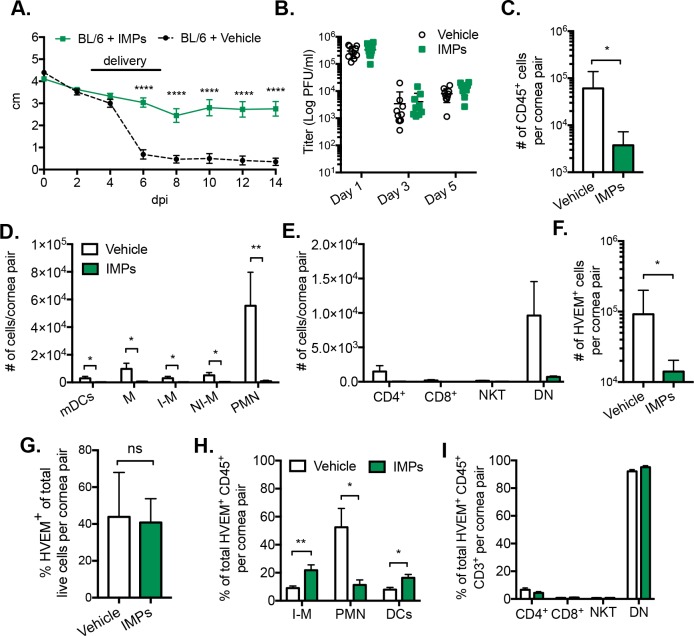
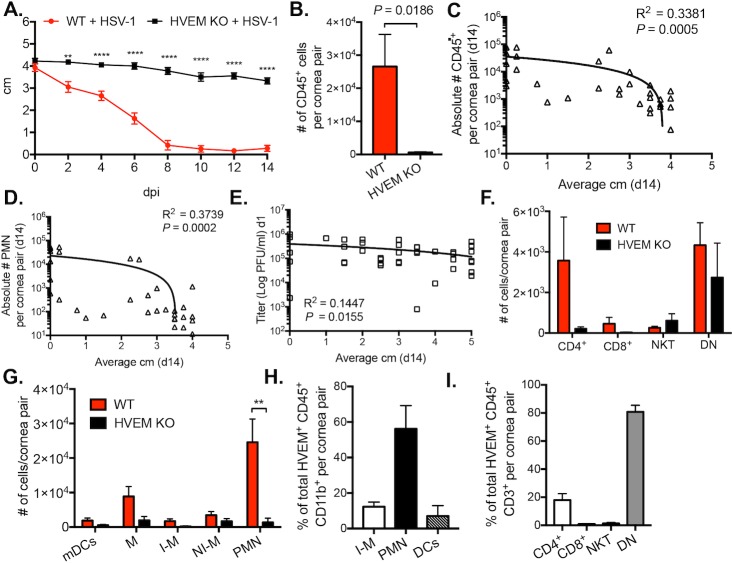
Corneal HVEM levels were assessed in C57BL/6 mice after infection with HSV-1(17). Leukocytic infiltrates and corneal sensitivity loss were measured in the presence, global absence (HVEM knockout [KO] mice; Tnfrsf14-/-), or partial absence of HVEM (HVEM conditional KO). Effects of immune-modifying nanoparticles (IMPs) on viral replication, corneal sensitivity, and corneal infiltrates were measured.
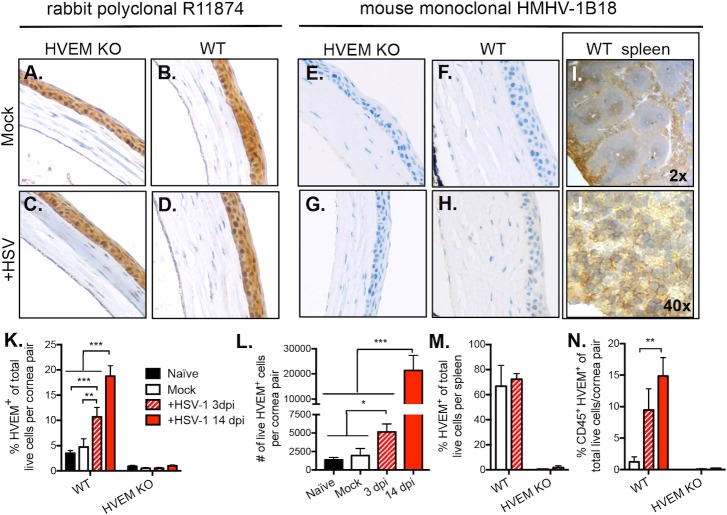
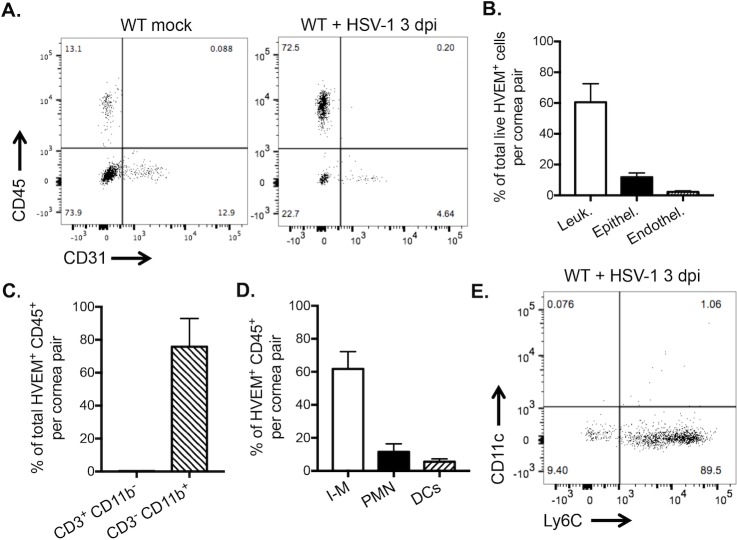
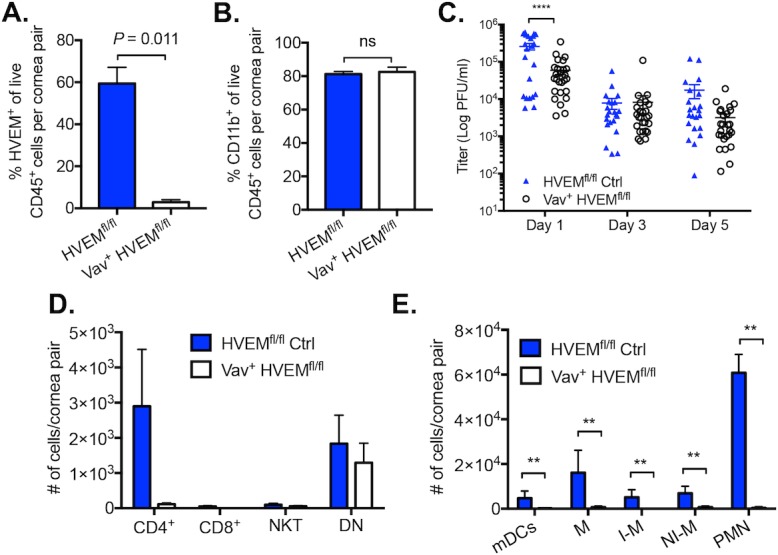
Corneal HVEM+ populations, particularly monocytes/macrophages during acute infection (3 days post infection [dpi]) and polymorphonuclear neutrophils (PMN) during the chronic inflammatory phase (14 dpi), increased after HSV-1 infection. Herpes virus entry mediator increased leukocytes in the cornea and corneal sensitivity loss. Ablation of HVEM from CD45+ cells, or intravenous IMP therapy, reduced infiltrates in the chronic phase and maintained corneal sensitivity.
Herpes virus entry mediator was expressed on two key populations: corneal monocytes/macrophages and PMNs. Herpes virus entry mediator promoted the recruitment of myeloid cells to the cornea in the chronic phase. Herpes virus entry mediator-associated corneal sensitivity loss preceded leukocytic infiltration, suggesting it may play an active role in recruitment. We propose that HVEM on resident corneal macrophages increases nerve damage and immune cell invasion, and we showed that prevention of late-phase infiltration of PMN and CD4+ T cells by IMP therapy improved clinical symptoms and mortality and reduced corneal sensitivity loss caused by HSV-1.
确定单纯疱疹病毒1型(HSV-1)感染过程中小鼠角膜中疱疹病毒进入介质(HVEM,肿瘤坏死因子受体超家族成员14)的细胞和时间表达模式,这种表达对发病机制的影响,以及HVEM或其下游介导效应的改变是否能改善角膜疾病。
在C57BL/6小鼠感染HSV-1(17)后评估角膜HVEM水平。在存在、完全缺失(HVEM基因敲除[KO]小鼠;Tnfrsf14-/-)或部分缺失HVEM(HVEM条件性KO)的情况下,测量白细胞浸润和角膜感觉丧失情况。测量免疫修饰纳米颗粒(IMP)对病毒复制、角膜感觉和角膜浸润的影响。
HSV-1感染后,角膜HVEM+群体增加,特别是急性感染期(感染后3天[dpi])的单核细胞/巨噬细胞和慢性炎症期(14 dpi)的多形核中性粒细胞(PMN)。疱疹病毒进入介质增加了角膜中的白细胞和角膜感觉丧失。从CD45+细胞中去除HVEM或静脉注射IMP治疗,可减少慢性期的浸润并维持角膜感觉。
疱疹病毒进入介质在两个关键群体上表达:角膜单核细胞/巨噬细胞和PMN。疱疹病毒进入介质在慢性期促进髓样细胞向角膜募集。疱疹病毒进入介质相关的角膜感觉丧失先于白细胞浸润,表明其可能在募集中发挥积极作用。我们提出,驻留角膜巨噬细胞上的HVEM会增加神经损伤和免疫细胞入侵,并且我们表明IMP治疗预防PMN和CD4+ T细胞的晚期浸润可改善临床症状和死亡率,并减少HSV-1引起的角膜感觉丧失。