Molecular Medicine Laboratory, Rambam Health Care Campus and Rappaport Faculty of Medicine, Technion, Haifa 31096, Israel.
Department of Molecular and Cellular Biology and Genome Center, University of California, Davis, California 95616, USA.
Nat Commun. 2017 Jan 24;8:14015. doi: 10.1038/ncomms14015.
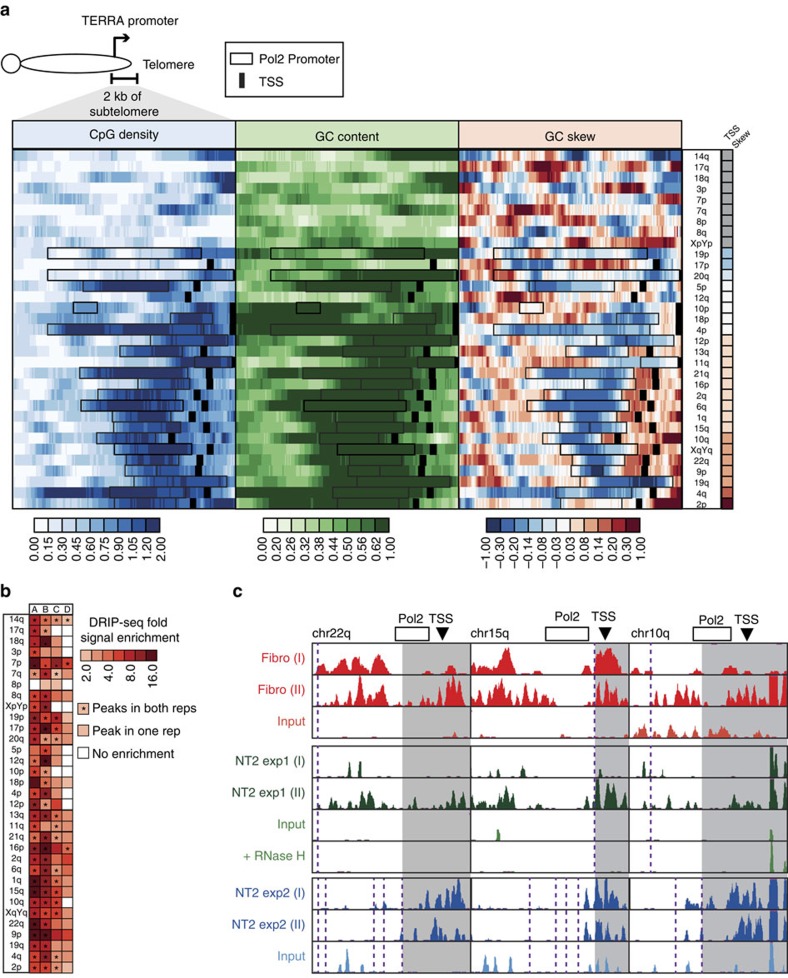
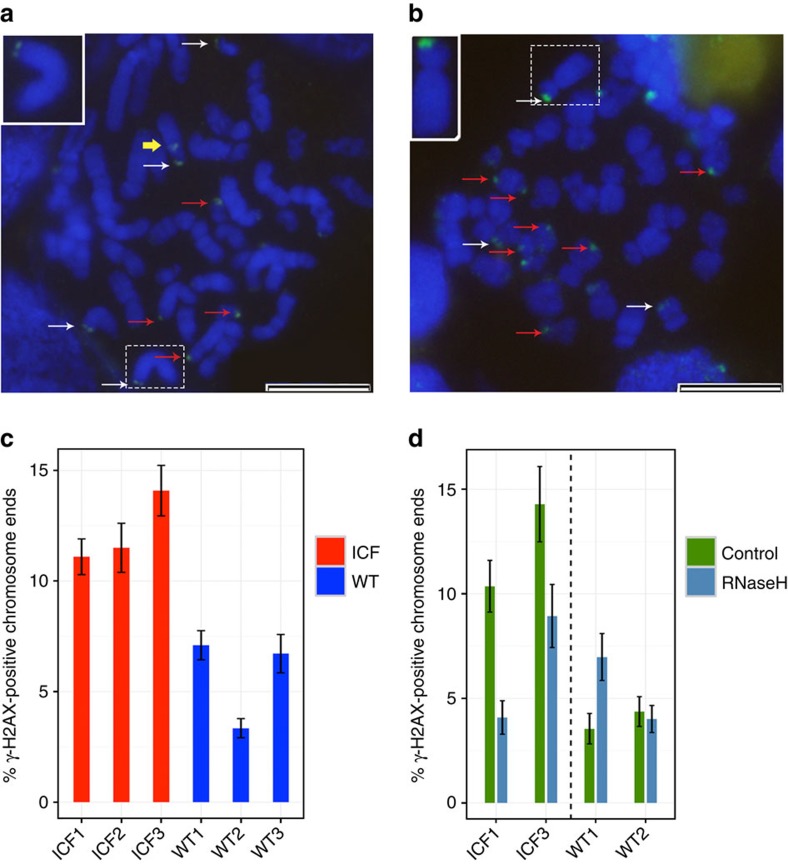
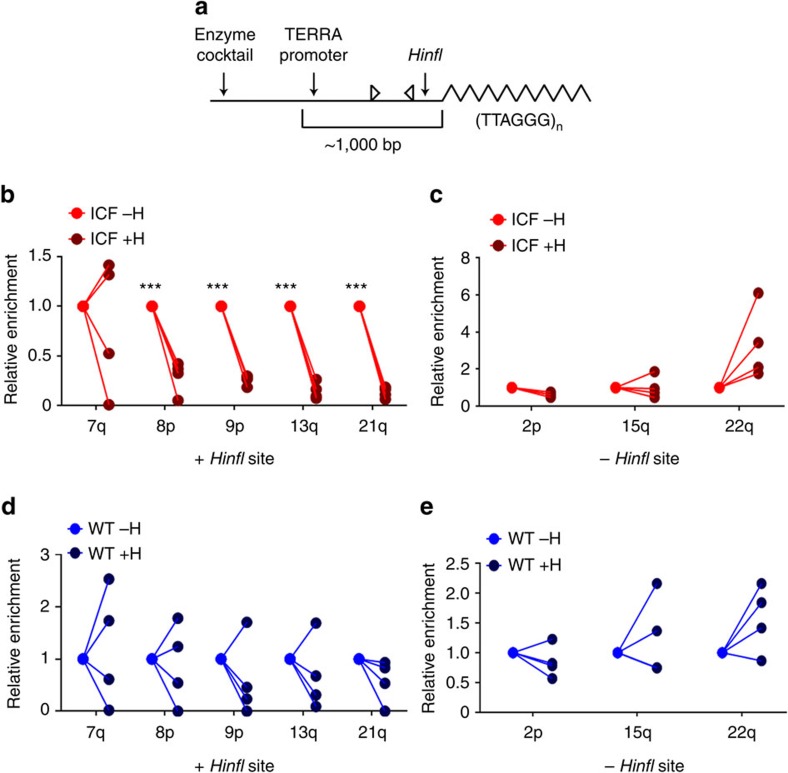
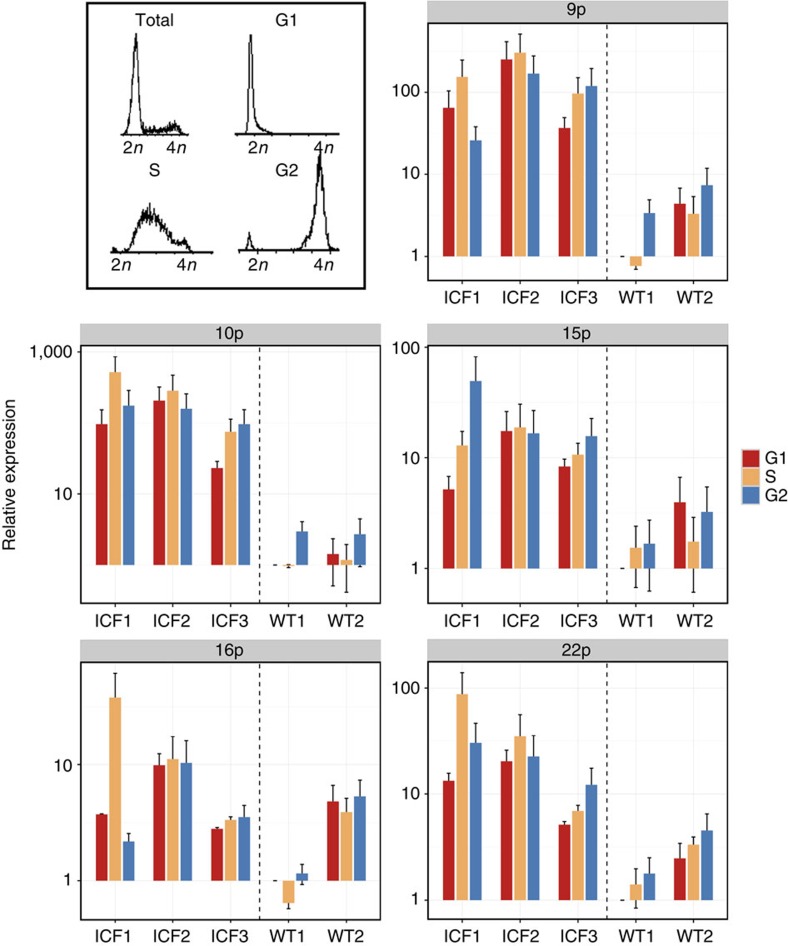
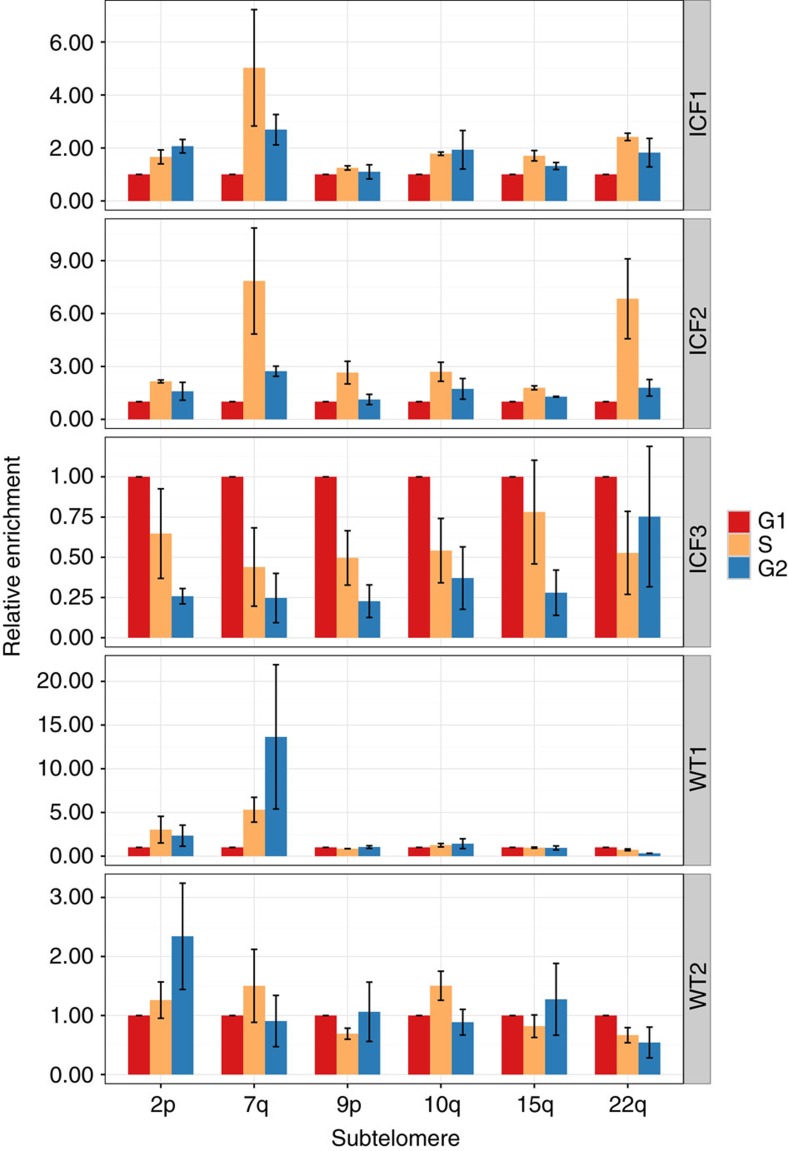
RNA hybrids, nucleic acid structures with diverse physiological functions, can disrupt genome integrity when dysregulated. Human telomeres were shown to form hybrids with the lncRNA TERRA, yet the formation and distribution of these hybrids among telomeres, their regulation and their cellular effects remain elusive. Here we predict and confirm in several human cell types that DNA:RNA hybrids form at many subtelomeric and telomeric regions. We demonstrate that ICF syndrome cells, which exhibit short telomeres and elevated TERRA levels, are enriched for hybrids at telomeric regions throughout the cell cycle. Telomeric hybrids are associated with high levels of DNA damage at chromosome ends in ICF cells, which are significantly reduced with overexpression of RNase H1. Our findings suggest that abnormally high TERRA levels in ICF syndrome lead to accumulation of telomeric hybrids that, in turn, can result in telomeric dysfunction.
RNA 杂交体是具有多种生理功能的核酸结构,如果失调,会破坏基因组的完整性。已经表明人类端粒与长链非编码 RNA TERRA 形成杂交体,但这些杂交体在端粒中的形成和分布、它们的调控以及它们的细胞效应仍然难以捉摸。在这里,我们在几种人类细胞类型中预测并证实了 DNA:RNA 杂交体在许多端粒和端粒区域形成。我们证明,表现出短端粒和高 TERRA 水平的 ICF 综合征细胞在整个细胞周期中富含端粒区域的杂交体。端粒杂交体与 ICF 细胞染色体末端的高水平 DNA 损伤有关,用 RNase H1 过表达可显著降低这种损伤。我们的研究结果表明,ICF 综合征中异常高的 TERRA 水平导致端粒杂交体的积累,进而导致端粒功能障碍。