Yi Fan, Sun Le, Xu Li-Jia, Peng Yong, Liu Hai-Bo, He Chun-Nian, Xiao Pei-Gen
Institute of Medicinal Plant Development, Peking Union Medical College, Chinese Academy of Medical SciencesBeijing, China; Key Laboratory of Bioactive Substances and Resources Utilization of Chinese Herbal Medicine, Ministry of EducationBeijing, China.
Front Pharmacol. 2017 Jan 9;7:531. doi: 10.3389/fphar.2016.00531. eCollection 2016.
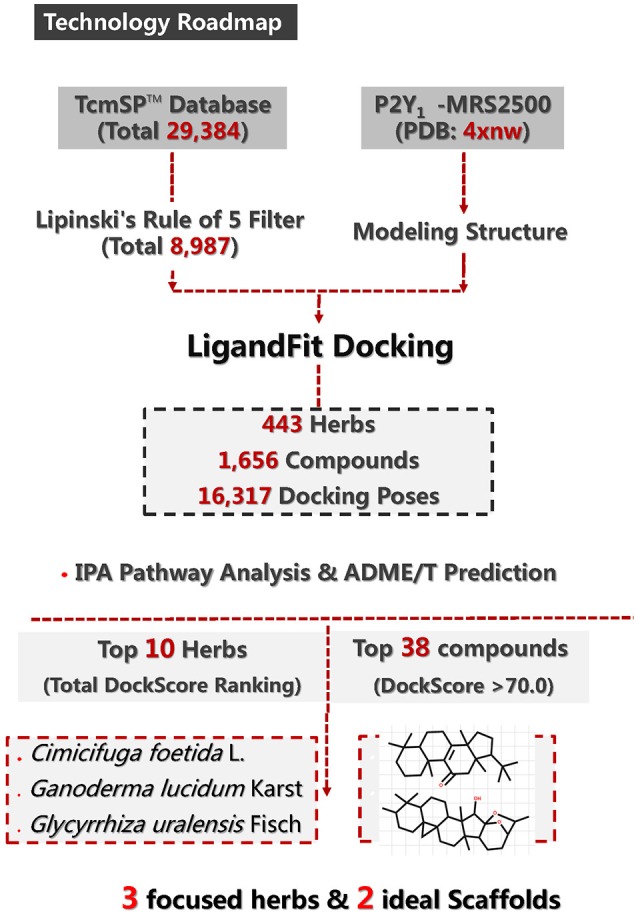
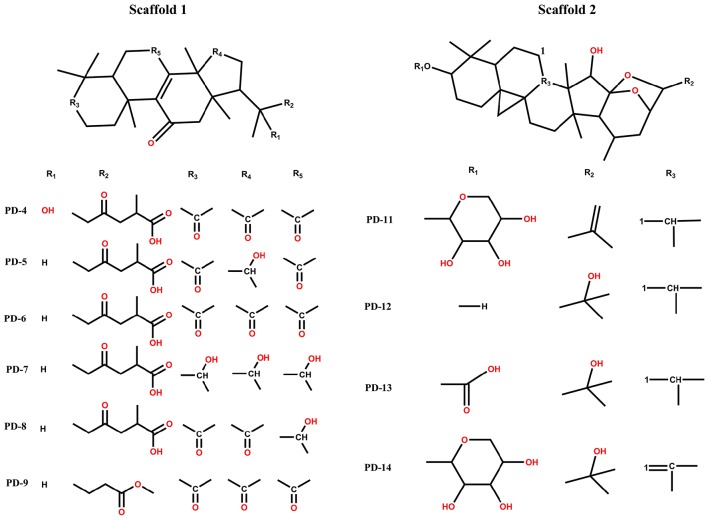
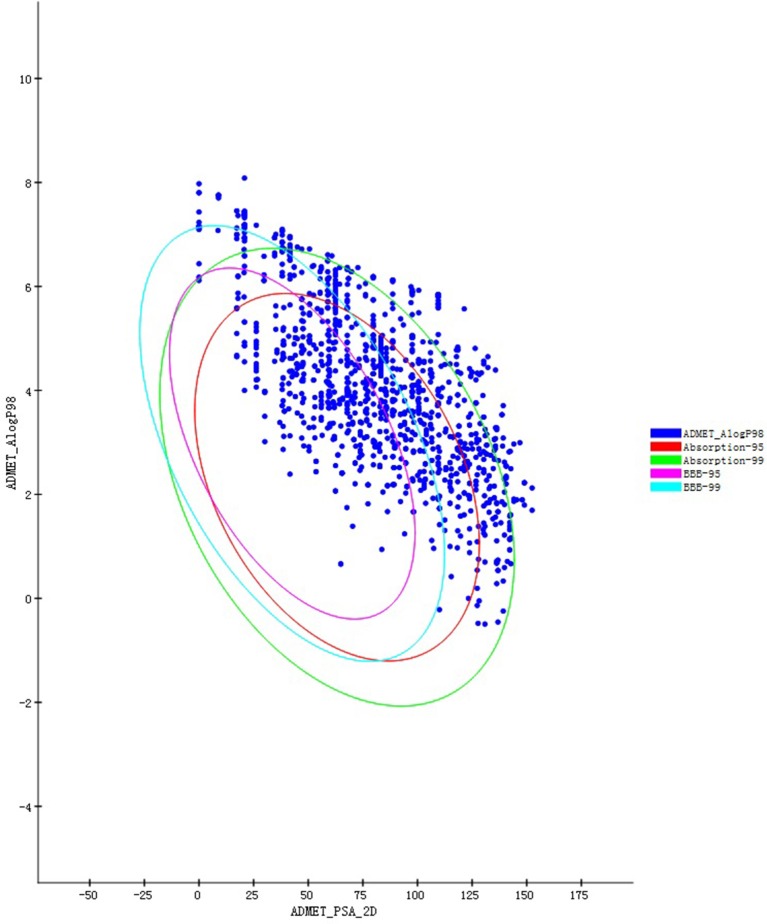
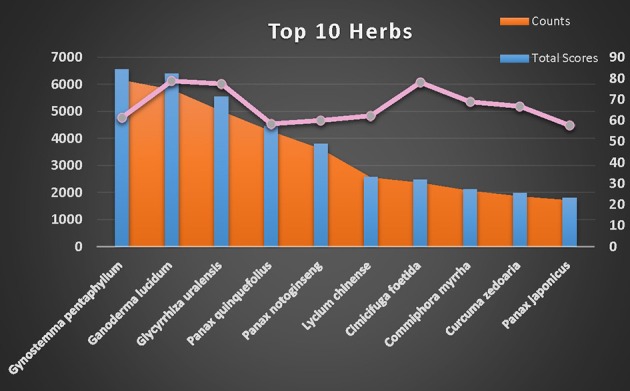
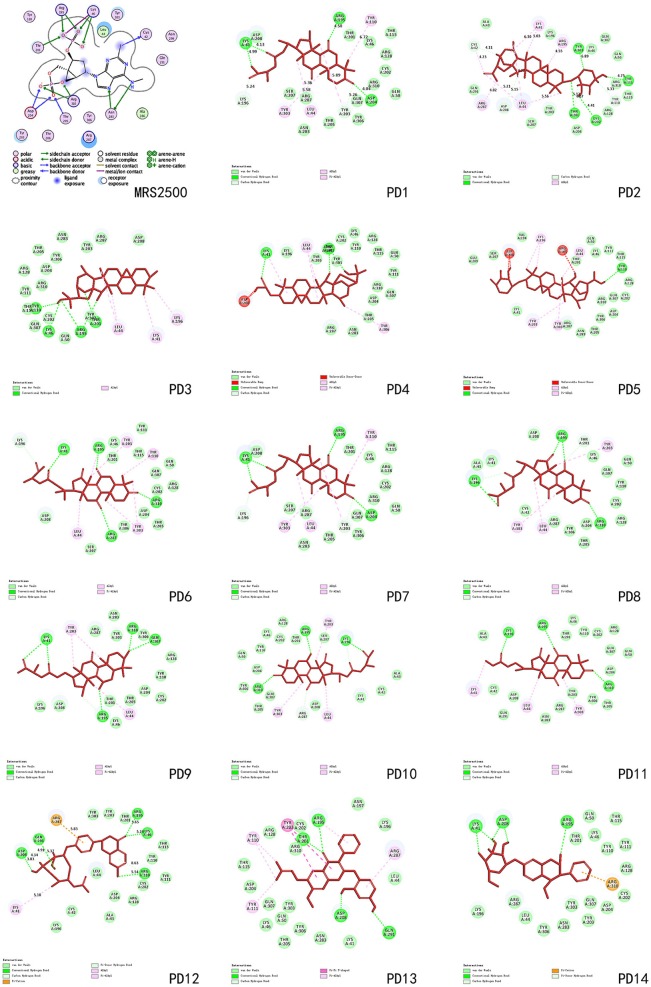
Cardiovascular diseases (CVDs), including thrombosis, which is induced by platelet aggregation, are the leading cause of mortality worldwide. The P2Y receptor (P2YR) facilitates platelet aggregation and is thus an important potential anti-thrombotic drug target. The P2YR protein structure contains a binding site for receptor antagonist MRS2500 within its seven-transmembrane bundle, which also provides suitable pockets for numerous other ligands to act as nucleotide antagonists of P2YR. The Traditional Chinese Medicine Systems Pharmacology Database and Analysis Platform (TCMSP) comprises 499 Chinese Pharmacopoeia-registered herbs and the structure information for 29,384 ingredients. docking of these compounds into the P2YR protein structure within the MRS2500 pocket can identify potential antithrombotic drugs from natural medicinal plants. Docking studies were performed and scored to evaluate ligand-binding affinities. In this study, a total of 8987 compounds from Traditional Chinese Medicine (TCM) were filtered by Lipinski's rule of five, and their ideal oral-intake properties were evaluated. Of these, 1656 compounds distributed in 443 herbs docked into the P2YR-MRS2500 structure in 16,317 poses. A total of 38 compounds were ranked with a DockScore above 70, and these may have significant potential for development into anti-thrombosis drugs. These computational results suggested that licorice ( Fisch), cimicifugae ( L.), and ganoderma ( Karst) and their chemical constituents, which have not previously been widely used for anti-thrombosis, may have unexpected effects on platelet aggregation. Moreover, two types of triterpene scaffolds summarized from 10 compounds were distributed in these three herbs and also docked into P2YR. These scaffold structures may be utilized for the development of drugs to inhibit platelet aggregation.
心血管疾病(CVDs),包括由血小板聚集诱导的血栓形成,是全球范围内主要的死亡原因。P2Y受体(P2YR)促进血小板聚集,因此是一个重要的潜在抗血栓药物靶点。P2YR蛋白结构在其七跨膜束内含有受体拮抗剂MRS2500的结合位点,这也为许多其他配体提供了合适的口袋,使其能够作为P2YR的核苷酸拮抗剂。中药系统药理学数据库与分析平台(TCMSP)包含499种中国药典收录的草药以及29384种成分的结构信息。将这些化合物对接至MRS2500口袋内的P2YR蛋白结构中,可以从天然药用植物中鉴定出潜在的抗血栓药物。进行对接研究并评分以评估配体结合亲和力。在本研究中,共有8987种中药化合物根据Lipinski五规则进行筛选,并评估了它们理想的口服特性。其中,分布在443种草药中的1656种化合物以16317种构象对接至P2YR-MRS2500结构中。共有38种化合物的对接分数高于70,这些化合物可能具有开发成抗血栓药物的显著潜力。这些计算结果表明,以前未广泛用于抗血栓的甘草、升麻和灵芝及其化学成分可能对血小板聚集有意外作用。此外,从10种化合物中总结出的两种三萜支架结构分布在这三种草药中,并且也对接至P2YR。这些支架结构可用于开发抑制血小板聚集的药物。