State Key Laboratory of Bioactive Substances and Functions of Natural Medicines, Institute of Materia Medica, Chinese Academy of Medical Sciences and Peking Union Medical College, Beijing, 100050, China.
Beijing Key Laboratory of Drug Target Identification and Drug Screening, Institute of Materia Medica, Chinese Academy of Medical Sciences and Peking Union Medical College, Beijing, 100050, China.
BMC Complement Med Ther. 2023 Jul 20;23(1):252. doi: 10.1186/s12906-023-04024-6.
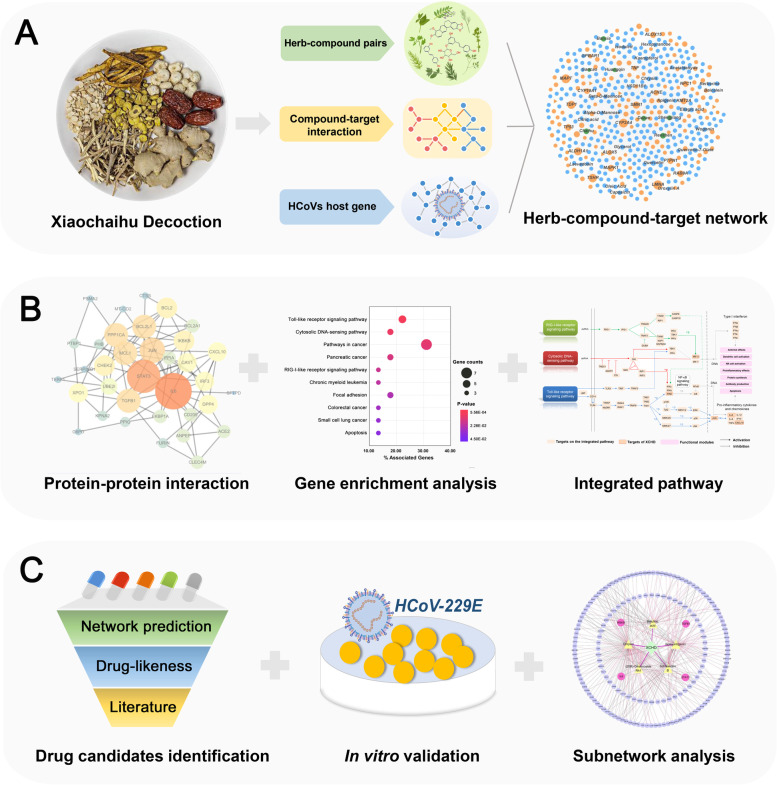
Although coronavirus disease 2019 (COVID-19) pandemic is still rage worldwide, there are still very limited treatments for human coronaviruses (HCoVs) infections. Xiaochahu decoction (XCHD), which is one of the traditional Chinese medicine (TCM) prescriptions in Qingfeipaidu decoction (QFPDD), is widely used for COVID-19 treatment in China and able to relieve the symptoms of fever, fatigue, anorexia, and sore throat. To explore the role and mechanisms of XCHD against HCoVs, we presented an integrated systems pharmacology framework in this study.
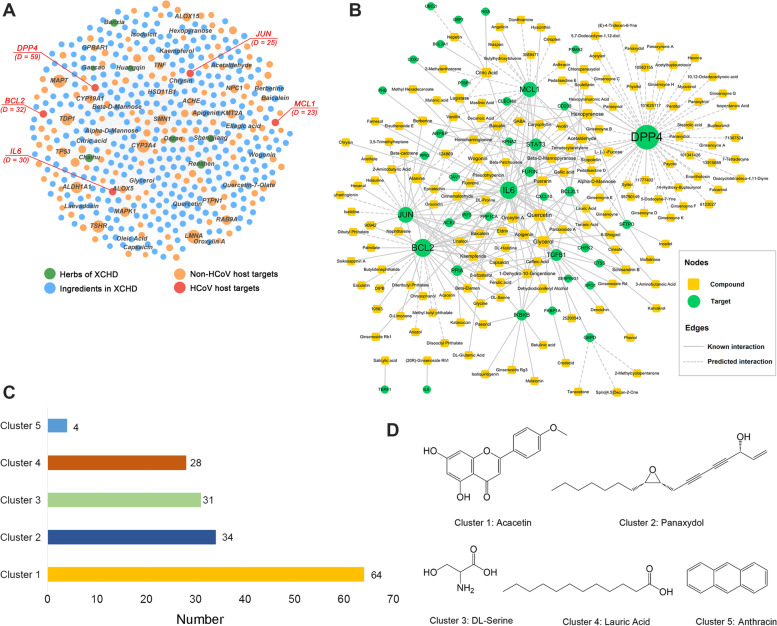
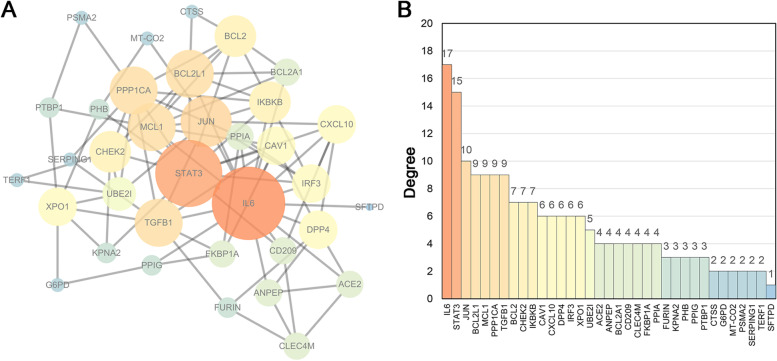
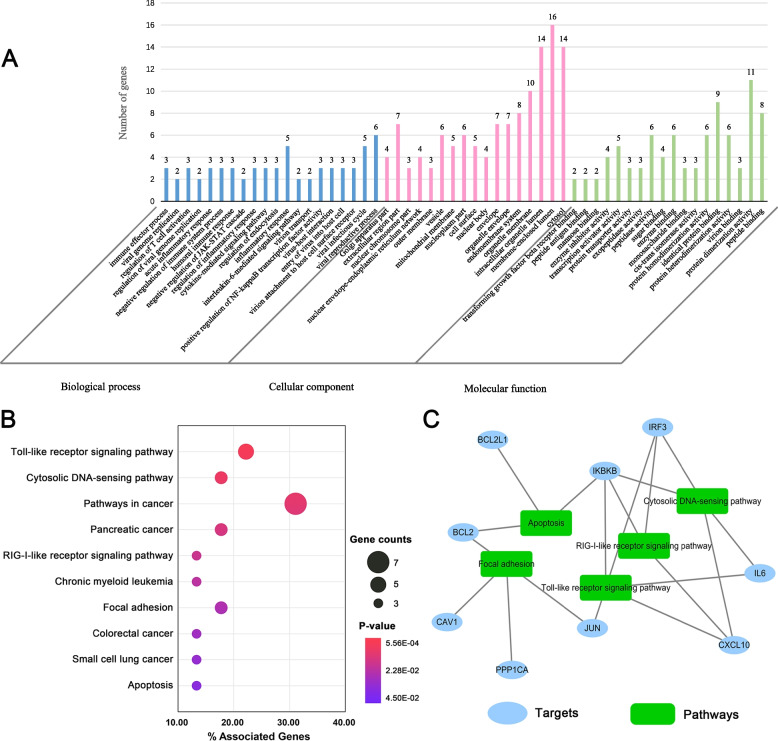
We constructed a global herb-compound-target (H-C-T) network of XCHD against HCoVs. Multi-level systems pharmacology analyses were conducted to highlight the key XCHD-regulated proteins, and reveal multiple HCoVs relevant biological functions affected by XCHD. We further utilized network-based prediction, drug-likeness analysis, combining with literature investigations to uncover the key ani-HCoV constituents in XCHD, whose effects on anit-HCoV-229E virus were validated using cytopathic effect (CPE) assay. Finally, we proposed potential molecular mechanisms of these compounds against HCoVs via subnetwork analysis.
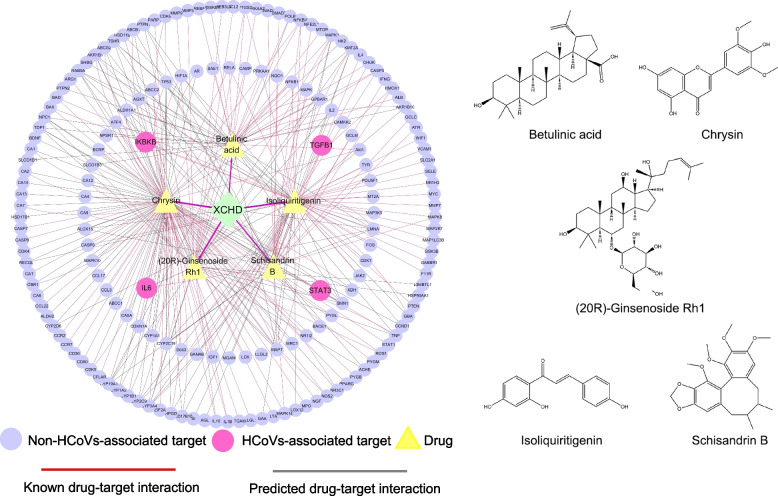
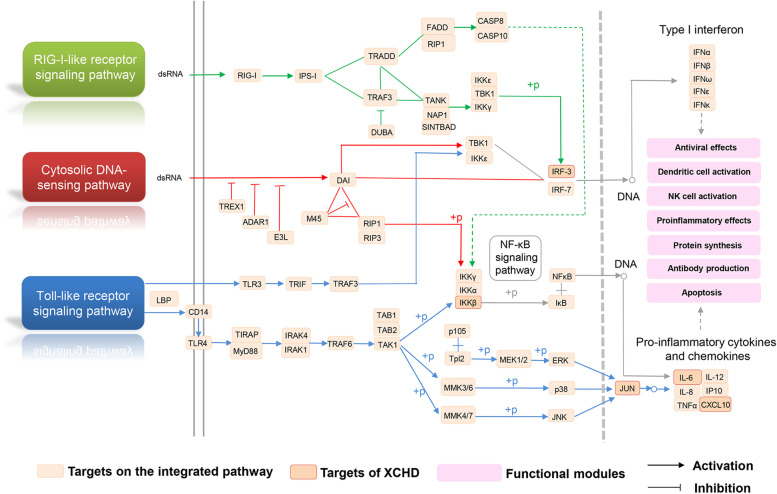
Based on the systems pharmacology framework, we identified 161 XCHD-derived compounds interacting with 37 HCoV-associated proteins. An integrated pathway analysis revealed that the mechanism of XCHD against HCoVs is related to TLR signaling pathway, RIG-I-like receptor signaling pathway, cytoplasmic DNA sensing pathway, and IL-6/STAT3 pro-inflammatory signaling pathway. Five compounds from XCHD, including betulinic acid, chrysin, isoliquiritigenin, schisandrin B, and (20R)-Ginsenoside Rh1 exerted inhibitory activity against HCoV-229E virus in Huh7 cells using in vitro CPE assay.
Our work presented a comprehensive systems pharmacology approach to identify the effective molecules and explore the molecular mechanism of XCHD against HCoVs.
尽管 2019 年冠状病毒病(COVID-19)大流行仍在全球肆虐,但人类冠状病毒(HCoV)感染的治疗方法仍然非常有限。小柴胡汤(XCHD)是清肺排毒汤(QFPDD)中的一种中药(TCM)处方,在中国被广泛用于 COVID-19 的治疗,可以缓解发热、乏力、食欲不振和喉咙痛等症状。为了探索 XCHD 对 HCoV 的作用和机制,我们在本研究中提出了一个综合的系统药理学框架。
我们构建了一个针对 HCoV 的 XCHD 整体草药-化合物-靶标(H-C-T)网络。进行多层次系统药理学分析,以突出 XCHD 调节的关键蛋白,并揭示 XCHD 影响的多个与 HCoV 相关的生物学功能。我们进一步利用网络预测、药物相似性分析,并结合文献研究,揭示 XCHD 中的关键抗 HCoV 成分,并用细胞病变效应(CPE)测定法验证这些成分对抗 HCoV-229E 病毒的作用。最后,我们通过子网络分析提出了这些化合物针对 HCoV 的潜在分子机制。
基于系统药理学框架,我们确定了 161 种 XCHD 衍生化合物与 37 种 HCoV 相关蛋白相互作用。综合途径分析表明,XCHD 针对 HCoVs 的机制与 TLR 信号通路、RIG-I 样受体信号通路、细胞质 DNA 感应通路和 IL-6/STAT3 促炎信号通路有关。XCHD 中的五种化合物,包括白桦脂酸、白杨素、异甘草素、五味子 B 和(20R)-人参皂苷 Rh1,在体外 CPE 测定中对 Huh7 细胞中的 HCoV-229E 病毒具有抑制活性。
我们的工作提出了一种全面的系统药理学方法来鉴定 XCHD 针对 HCoVs 的有效分子并探索其分子机制。