Harada S, Zhou Y, Duncan S, Armstead A R, Coshatt G M, Dillon C, Brott B C, Willig J, Alsip J A, Hillegass W B, Limdi N A
Department of Pathology, University of Alabama at Birmingham, Birmingham, Alabama, USA.
Department of Pathology, University of Oklahoma Health Sciences Center, Norman, Oklahoma, USA.
Clin Pharmacol Ther. 2017 Sep;102(3):493-501. doi: 10.1002/cpt.631. Epub 2017 Jun 1.
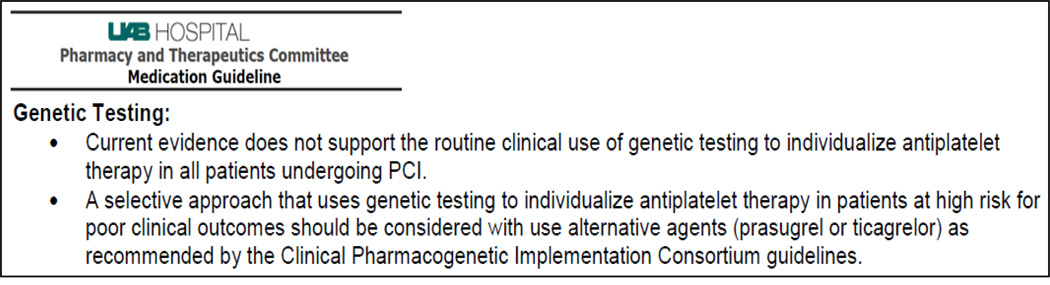
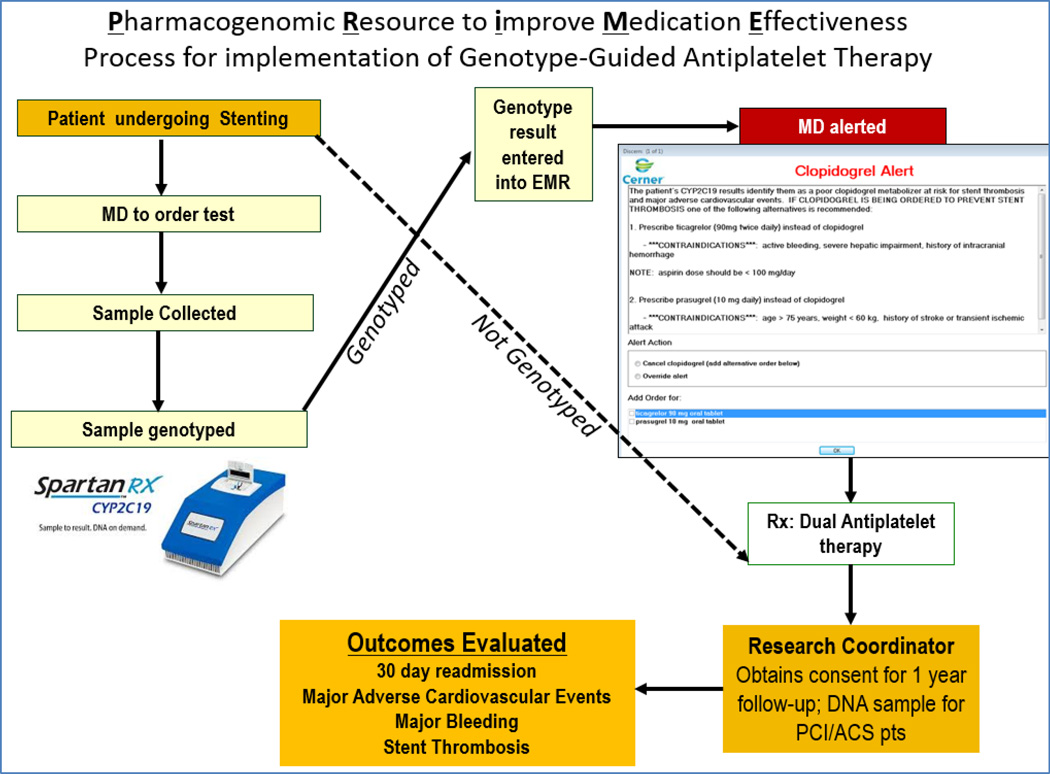
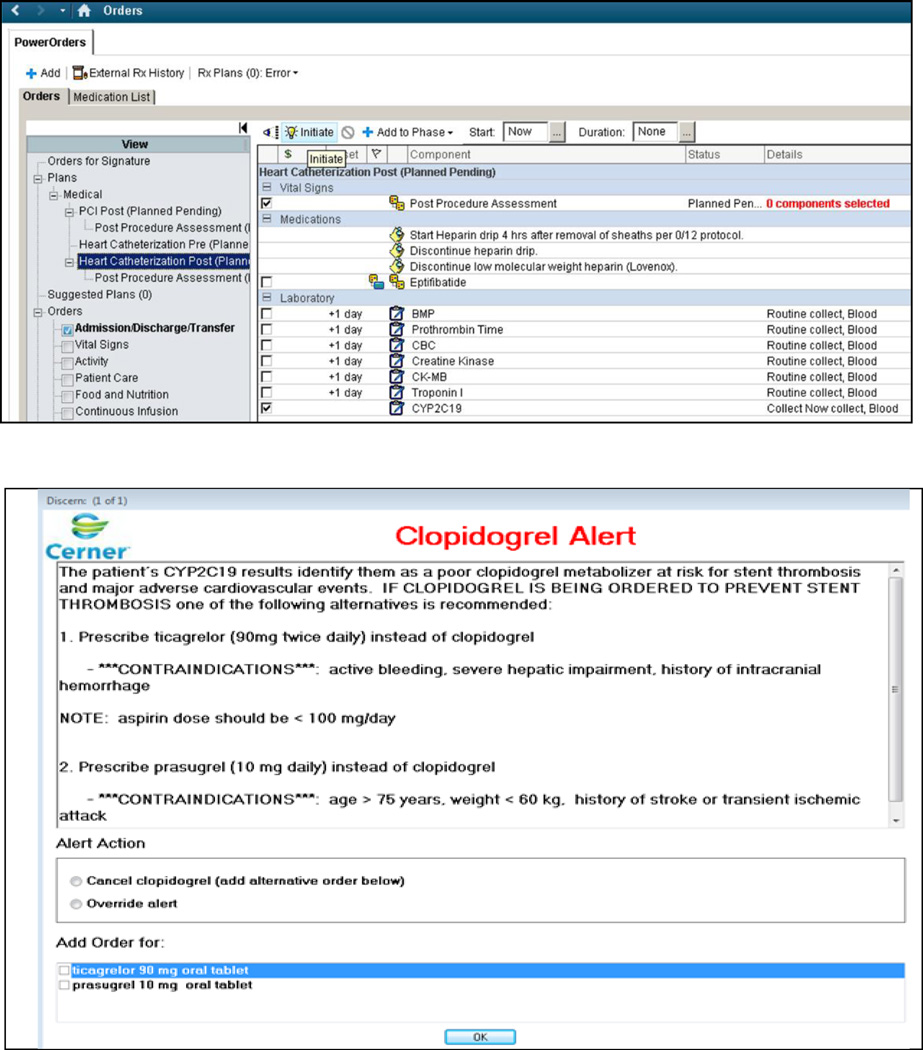
Precision medicine entails tailoring treatment based on patients' unique characteristics. As drug therapy constitutes the cornerstone of treatment for most chronic diseases, pharmacogenomics (PGx), the study of genetic variation influencing individual response to drugs, is an important component of precision medicine. Over the past decade investigations have identified genes and single-nucleotide polymorphisms (SNPs) and quantified their effect on drug response. Parallel development of point-of-care (POC) genotyping platforms has enabled the interrogation of the genes/SNPs within a timeline conducive to the provision of care. Despite these advances, the pace of integration of genotype-guided drug therapy (GGTx) into practice has faced significant challenges. These include difficulty in identifying SNPs with sufficiently robust evidence to guide clinical decision making, lack of clinician training on how to order and use genotype data, lack of clinical decision support (CDS) to guide treatment, and limited reimbursement. The University of Alabama at Birmingham's (UAB) efforts in precision medicine were initiated to address these challenges and improve the health of the racially diverse patients we treat.
精准医学需要根据患者的独特特征量身定制治疗方案。由于药物治疗是大多数慢性病治疗的基石,药物基因组学(PGx),即研究影响个体对药物反应的基因变异,是精准医学的重要组成部分。在过去十年中,研究已经鉴定出基因和单核苷酸多态性(SNP),并量化了它们对药物反应的影响。即时检测(POC)基因分型平台的同步发展使得能够在有利于提供医疗服务的时间范围内对基因/SNP进行检测。尽管取得了这些进展,但基因型指导药物治疗(GGTx)在实际应用中的整合速度仍面临重大挑战。这些挑战包括难以识别具有足够有力证据来指导临床决策的SNP、临床医生缺乏关于如何订购和使用基因型数据的培训、缺乏指导治疗的临床决策支持(CDS)以及报销有限。阿拉巴马大学伯明翰分校(UAB)在精准医学方面所做的努力旨在应对这些挑战,并改善我们所治疗的不同种族患者的健康状况。