Kang Hongtao, Liu Dafei, Tian Jin, Hu Xiaoliang, Zhang Xiaozhan, Yin Hang, Wu Hongxia, Liu Chunguo, Guo Dongchun, Li Zhijie, Jiang Qian, Liu Jiasen, Qu Liandong
Division of Zoonosis of Natural Foci, State Key Laboratory of Veterinary Biotechnology, Harbin Veterinary Research Institute, Chinese Academy of Agricultural Sciences, 678 Haping road, Xiangfang District, Harbin 150000, China.
College of Veterinary Medicine, Northeast Agricultural University, Harbin 150000, China.
Viruses. 2017 Jan 23;9(1):23. doi: 10.3390/v9010023.
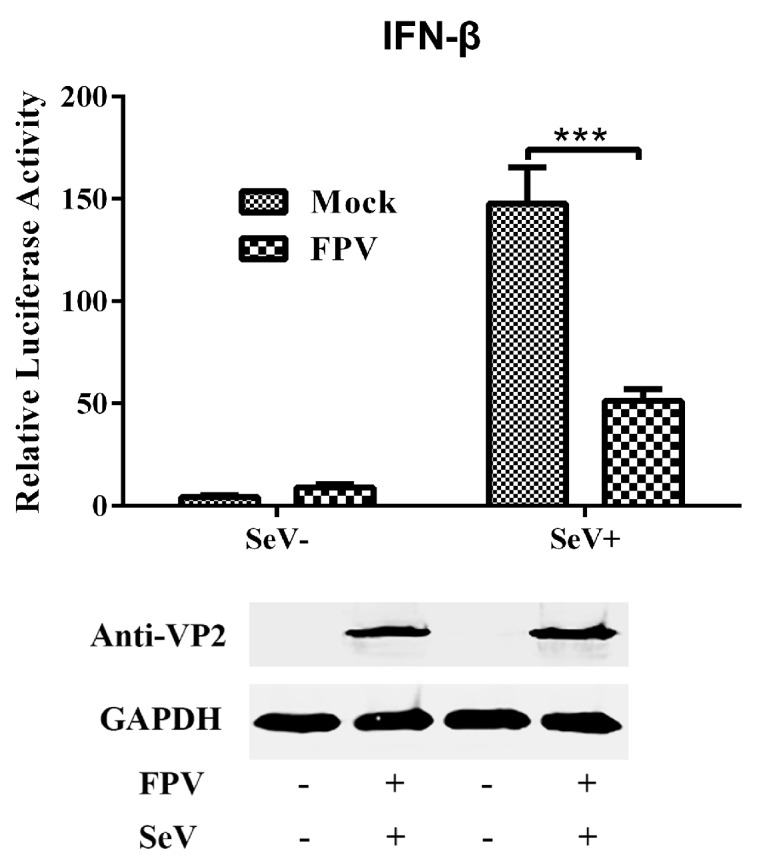
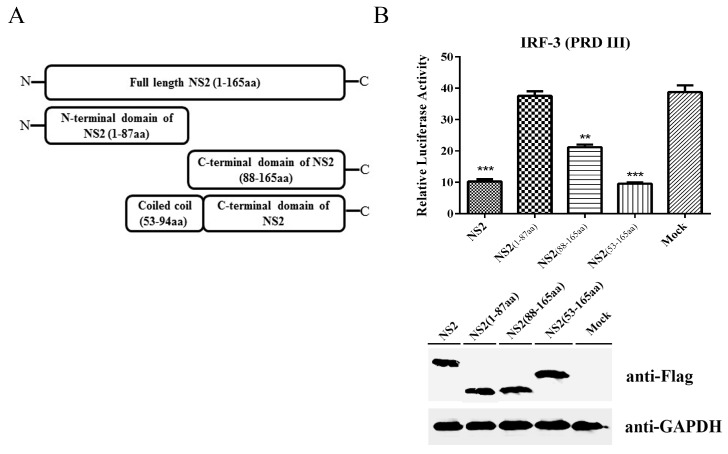
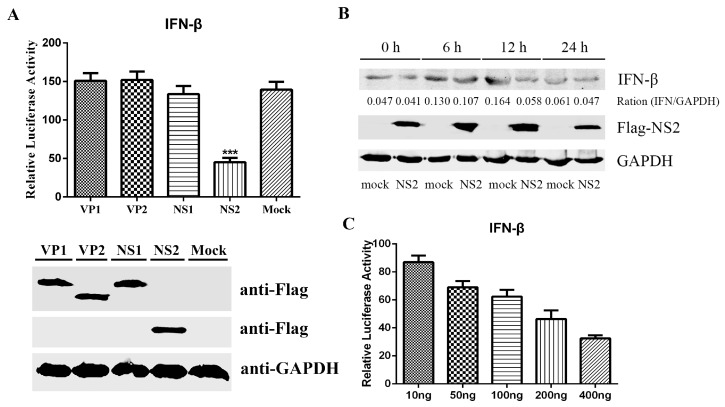
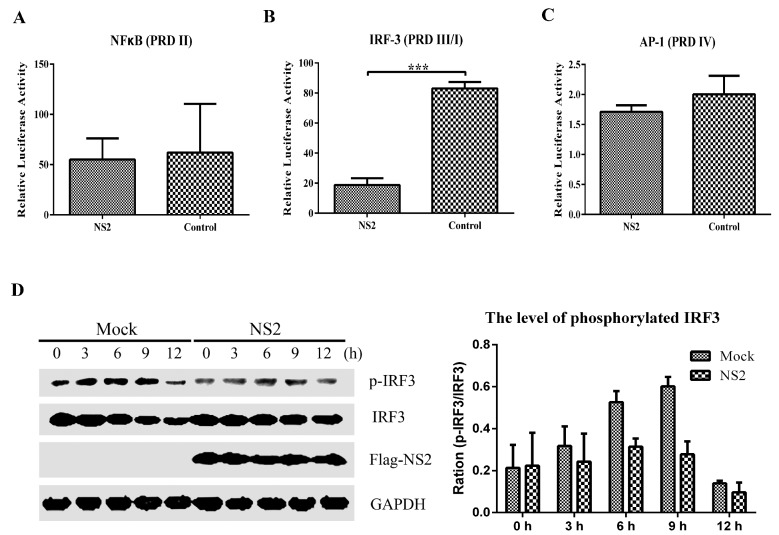
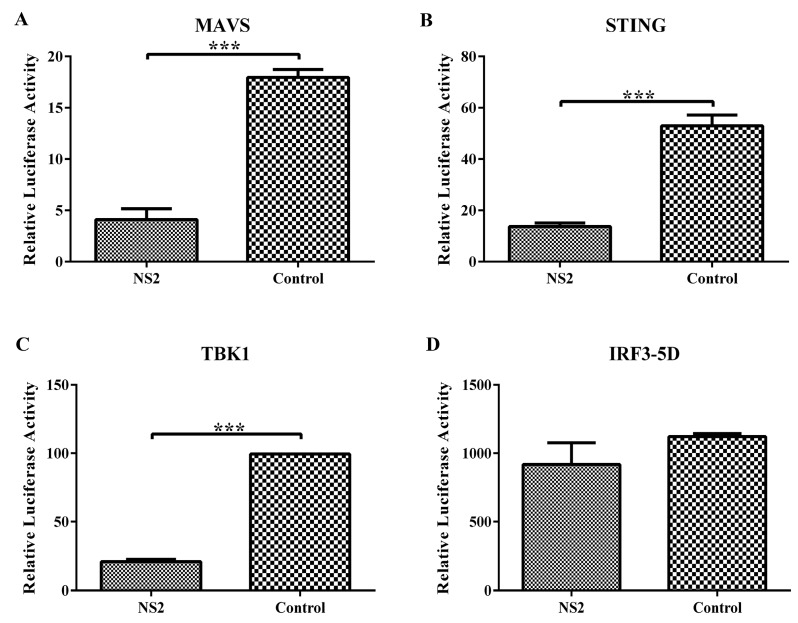
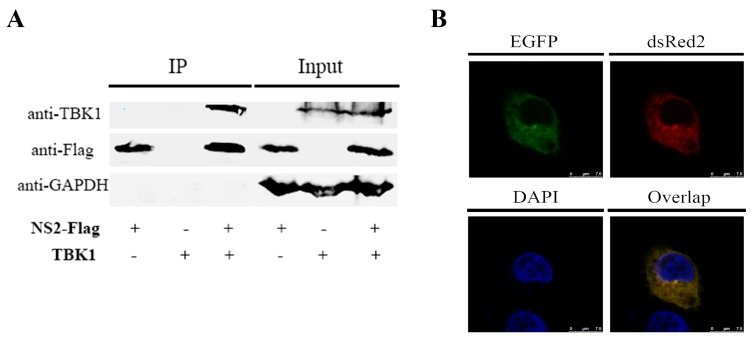
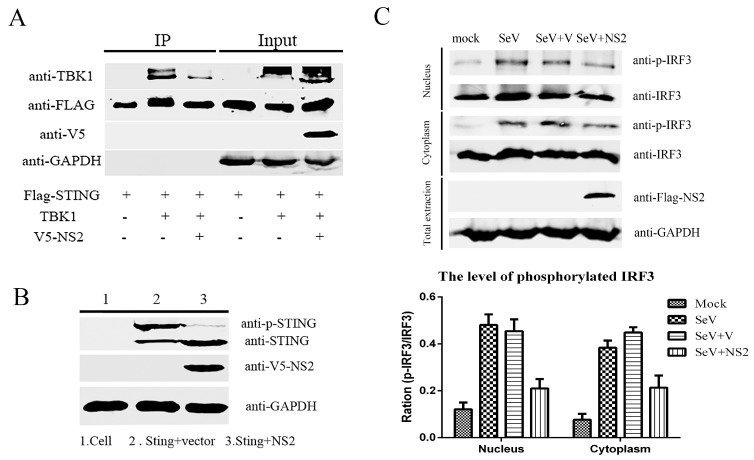
Feline panleucopenia virus (FPV) is a highly infectious pathogen that causes severe diseases in pets, economically important animals and wildlife in China. Although FPV was identified several years ago, little is known about how it overcomes the host innate immunity. In the present study, we demonstrated that infection with the FPV strain Philips-Roxane failed to activate the interferon β (IFN-β) pathway but could antagonize the induction of IFN stimulated by Sendai virus (SeV) in F81 cells. Subsequently, by screening FPV nonstructural and structural proteins, we found that only nonstructural protein 2 (NS2) significantly suppressed IFN expression. We demonstrated that the inhibition of SeV-induced IFN-β production by FPV NS2 depended on the obstruction of the IFN regulatory factor 3 (IRF3) signaling pathway. Further, we verified that NS2 was able to target the serine/threonine-protein kinase TBK1 and prevent it from being recruited by stimulator of interferon genes (STING) protein, which disrupted the phosphorylation of the downstream protein IRF3. Finally, we identified that the C-terminus plus the coiled coil domain are the key domains of NS2 that are required for inhibiting the IFN pathway. Our study has yielded strong evidence for the FPV mechanisms that counteract the host innate immunity.
猫泛白细胞减少症病毒(FPV)是一种高传染性病原体,可在中国的宠物、具有重要经济价值的动物和野生动物中引发严重疾病。尽管FPV在数年前就已被鉴定出来,但对于它如何克服宿主固有免疫却知之甚少。在本研究中,我们证明,用FPV毒株飞利浦-罗克珊感染未能激活干扰素β(IFN-β)途径,但能拮抗仙台病毒(SeV)在F81细胞中刺激产生的IFN。随后,通过筛选FPV的非结构蛋白和结构蛋白,我们发现只有非结构蛋白2(NS2)能显著抑制IFN表达。我们证明,FPV NS2对SeV诱导的IFN-β产生的抑制作用取决于对IFN调节因子3(IRF3)信号通路的阻断。此外,我们证实NS2能够靶向丝氨酸/苏氨酸蛋白激酶TBK1,并阻止其被干扰素基因刺激物(STING)蛋白招募,从而破坏下游蛋白IRF3的磷酸化。最后,我们确定C末端加上卷曲螺旋结构域是NS2抑制IFN途径所需的关键结构域。我们的研究为FPV对抗宿主固有免疫的机制提供了有力证据。