Department of Surgery, European Pancreas Center, University Hospital Heidelberg, 69120 Heidelberg, Germany.
Department of Anesthesiology, University Hospital Heidelberg, 69120 Heidelberg, Germany.
Viruses. 2021 May 28;13(6):1019. doi: 10.3390/v13061019.
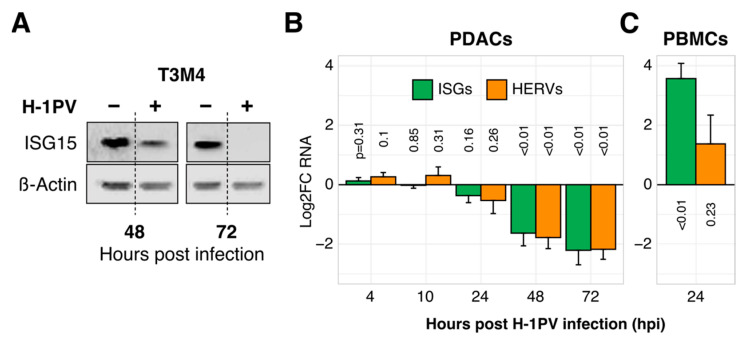
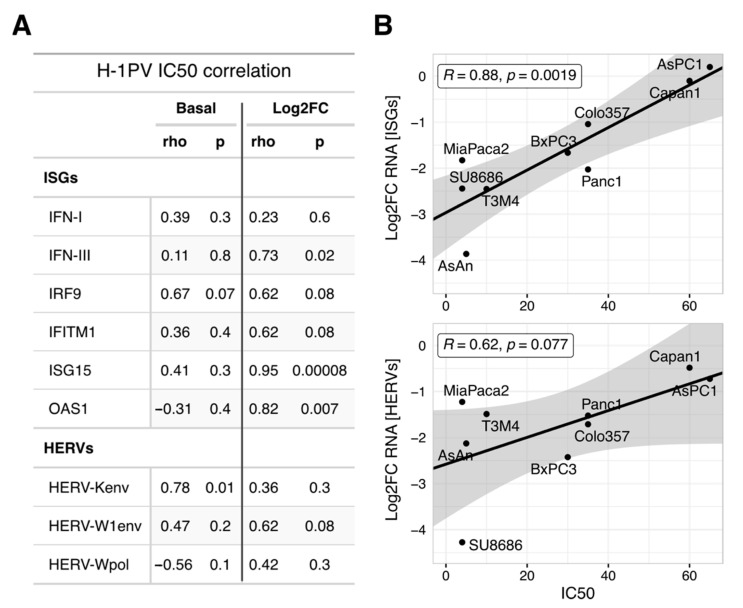
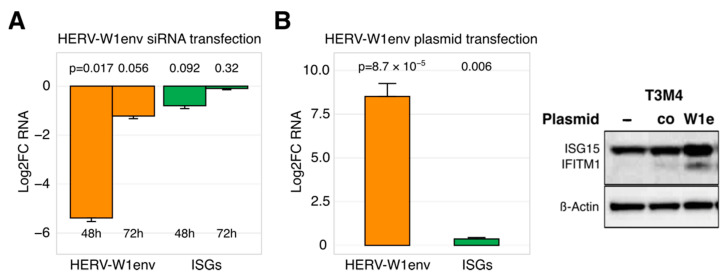
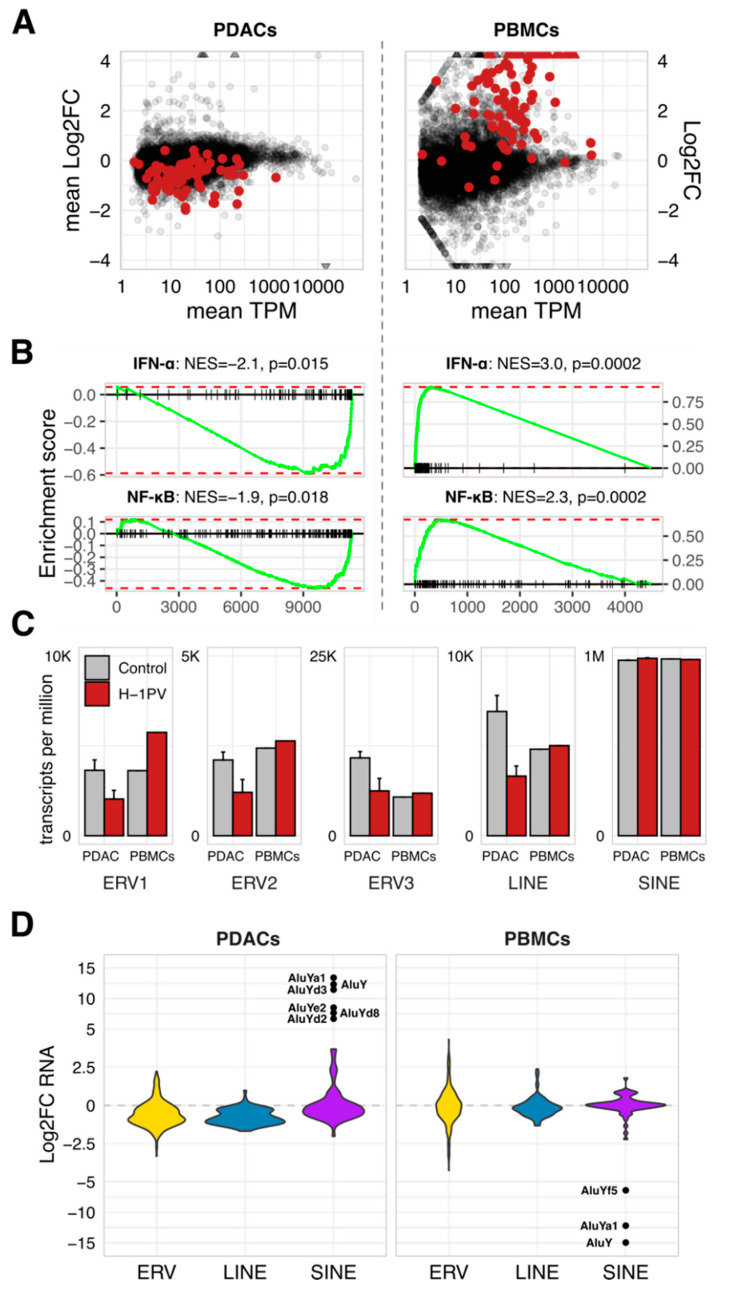
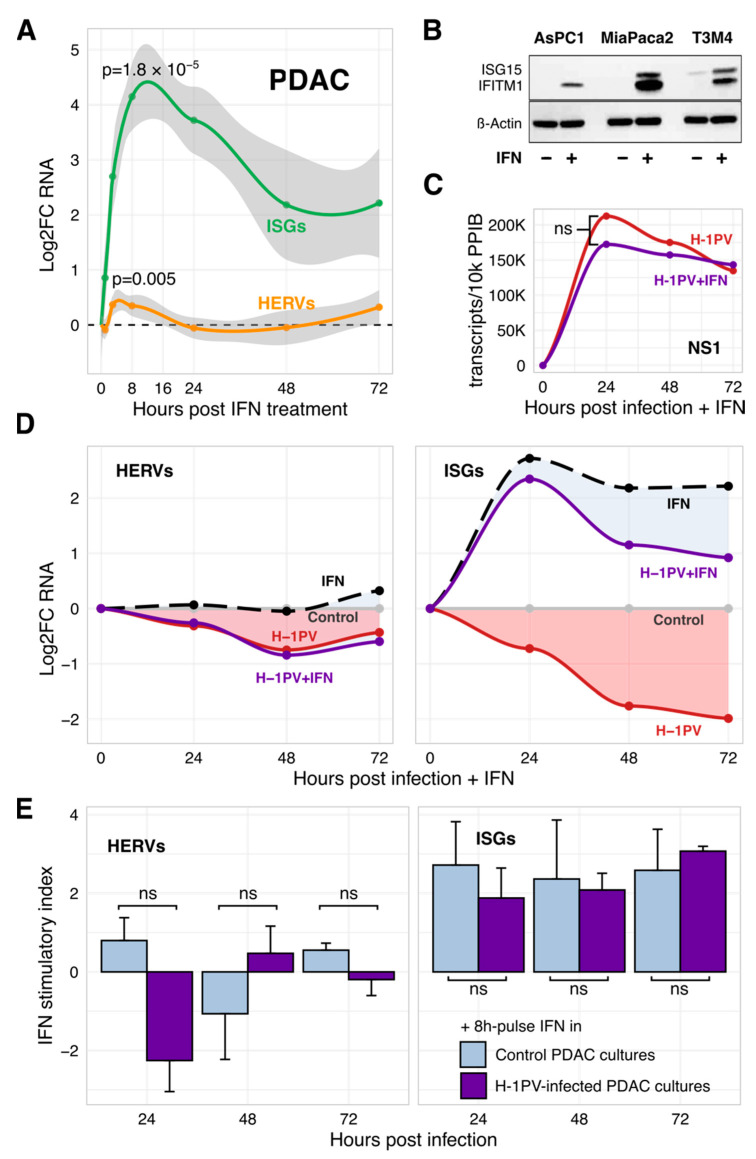
Although the oncolytic parvovirus H-1PV has entered clinical trials, predicting therapeutic success remains challenging. We investigated whether the antiviral state in tumor cells determines the parvoviral oncolytic efficacy. The interferon/interferon-stimulated genes (IFN/ISG)-circuit and its major configurator, human endogenous retroviruses (HERVs), were evaluated using qRT-PCR, ELISA, Western blot, and RNA-Seq techniques. In pancreatic cancer cell lines, H-1PV caused a late global shutdown of innate immunity, whereby the concomitant inhibition of HERVs and IFN/ISGs was co-regulatory rather than causative. The growth-inhibitory IC50 doses correlated with the power of suppression but not with absolute ISG levels. Moreover, H-1PV was not sensitive to exogenous IFN despite upregulated antiviral ISGs. Such resistance questioned the biological necessity of the oncotropic ISG-shutdown, which instead might represent a surrogate marker for personalized oncolytic efficacy. The disabled antiviral homeostasis may modify the activity of other viruses, as demonstrated by the reemergence of endogenous AluY-retrotransposons. This way of suppression may compromise the interferogenicity of drugs having gemcitabine-like mechanisms of action. This shortcoming in immunogenic cell death induction is however amendable by immune cells which release IFN in response to H-1PV.
虽然溶瘤细小病毒 H-1PV 已进入临床试验阶段,但预测治疗效果仍然具有挑战性。我们研究了肿瘤细胞中的抗病毒状态是否决定了细小病毒的溶瘤疗效。我们使用 qRT-PCR、ELISA、Western blot 和 RNA-Seq 技术评估了干扰素/干扰素刺激基因 (IFN/ISG) 回路及其主要调节因子人类内源性逆转录病毒 (HERV)。在胰腺癌细胞系中,H-1PV 导致先天免疫的晚期全局性关闭,由此,HERV 和 IFN/ISG 的同时抑制是协同调节的,而不是因果关系。生长抑制的 IC50 剂量与抑制能力相关,而与绝对 ISG 水平无关。此外,尽管抗病毒 ISGs 上调,H-1PV 对外源性 IFN 不敏感。这种耐药性使针对致癌性 ISG 关闭的生物学必要性受到质疑,而这种关闭可能是个体化溶瘤疗效的替代标志物。被削弱的抗病毒平衡可能会改变其他病毒的活性,如内源性 AluY-逆转录转座子的重新出现所证明的那样。这种抑制方式可能会损害具有类似吉西他滨作用机制的药物的干扰素生成能力。然而,免疫细胞可以通过释放 IFN 来响应 H-1PV 来弥补免疫原性细胞死亡诱导的这一缺陷。