Scholz Bettina, Küpper Frithjof C, Vyverman Wim, Ólafsson Halldór G, Karsten Ulf
BioPol ehf., Einbúastig 2, 545 Skagaströnd, Iceland.
Faculty of Natural Resource Sciences, University of Akureyri, Borgir v. Nordurslod, IS 600 Akureyri, Iceland.
Mar Drugs. 2017 Jan 25;15(2):26. doi: 10.3390/md15020026.
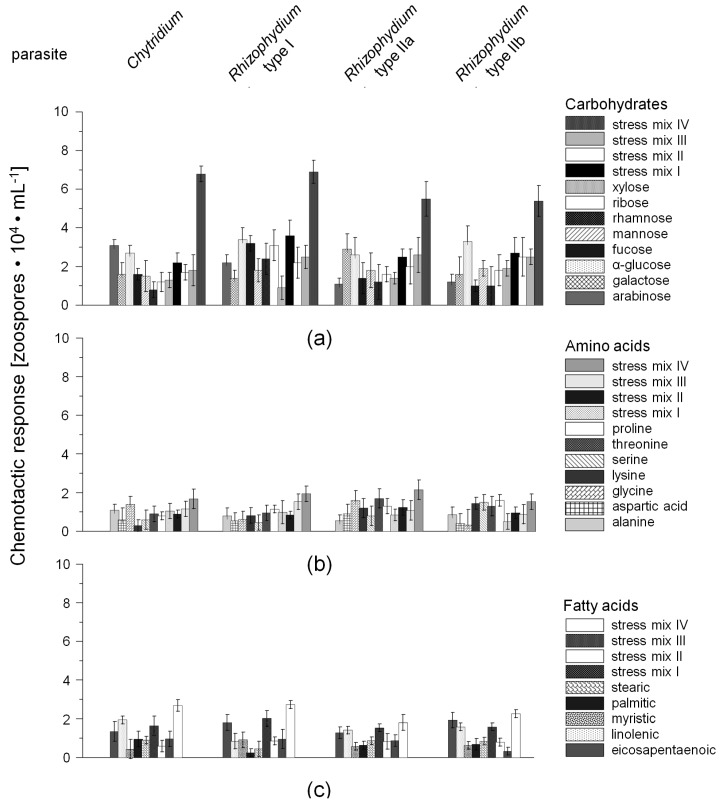
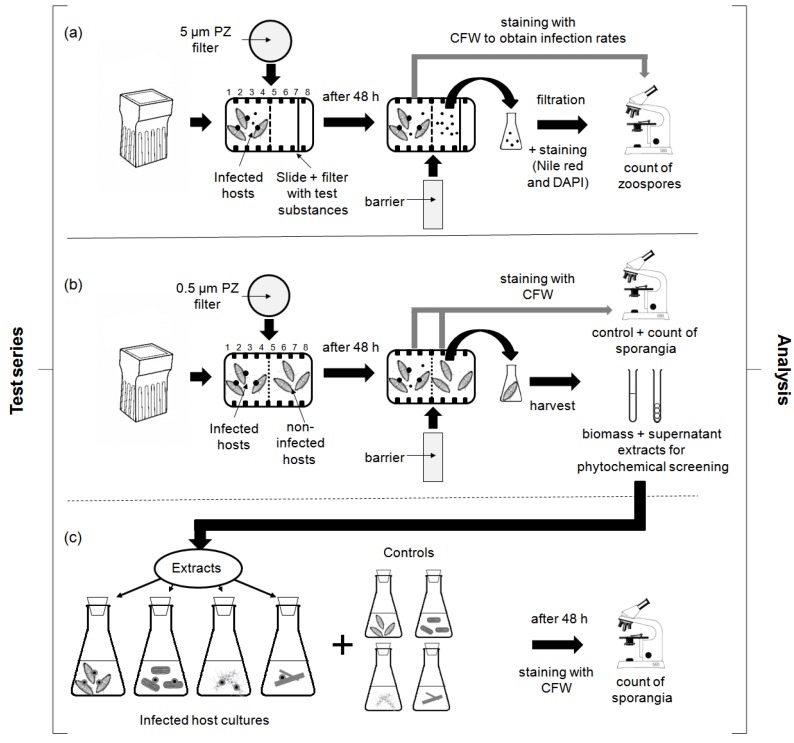
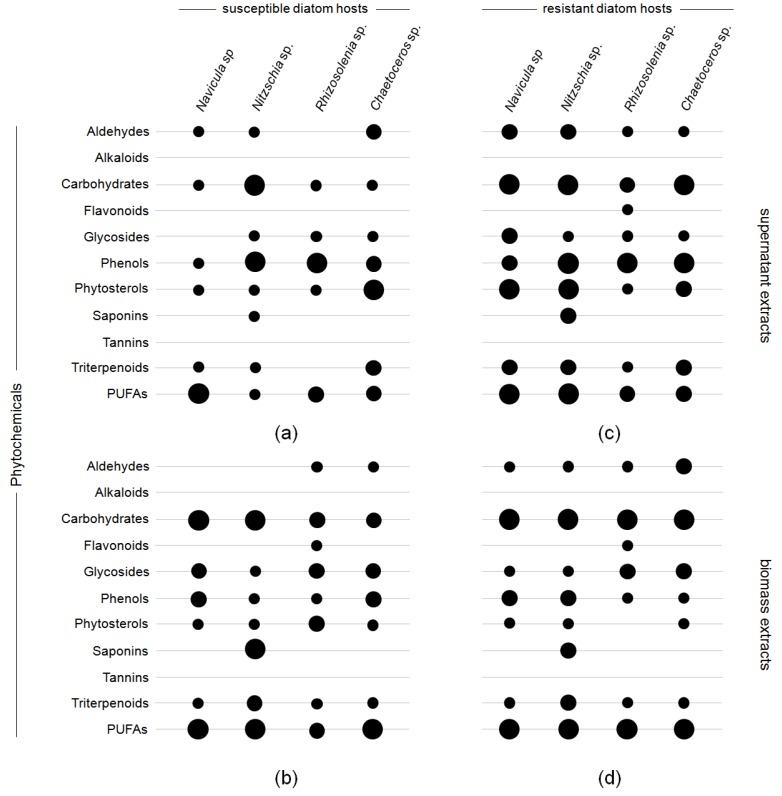
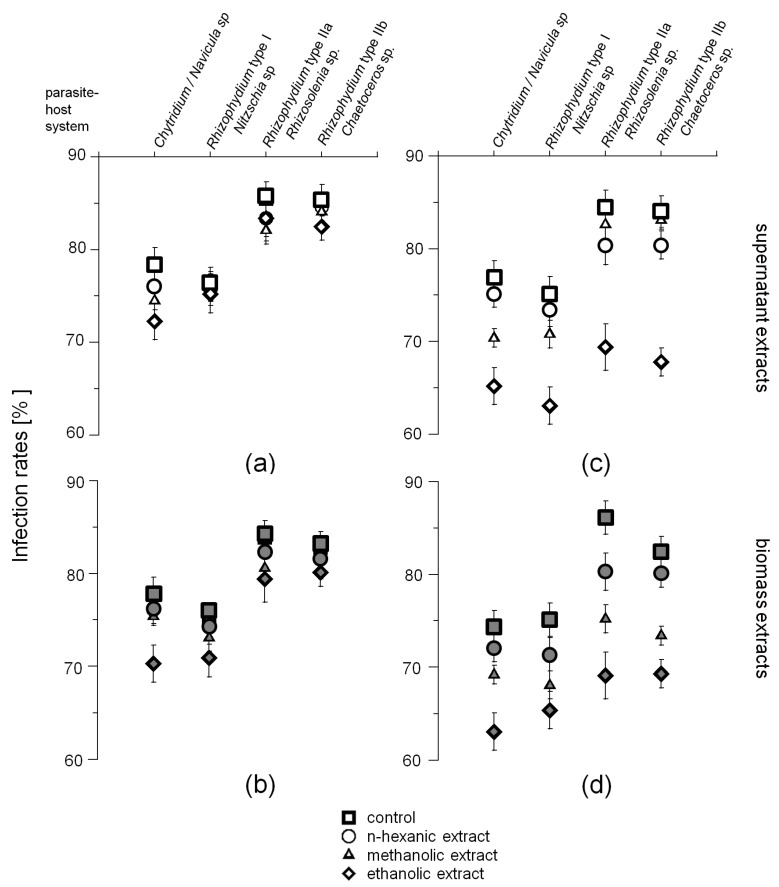
Little is known about the role of chemotaxis in the location and attachment of chytrid zoospores to potential diatom hosts. Hypothesizing that environmental stress parameters affect parasite-host recognition, four chytrid-diatom tandem cultures ( sp./ sp., type I/ sp., type IIa/ sp., type IIb/ sp.) were used to test the chemotaxis of chytrid zoospores and the presence of potential defense molecules in a non-contact-co-culturing approach. As potential triggers in the chemotaxis experiments, standards of eight carbohydrates, six amino acids, five fatty acids, and three compounds known as compatible solutes were used in individual and mixed solutions, respectively. In all tested cases, the whole-cell extracts of the light-stressed (continuous light exposure combined with 6 h UV radiation) hosts attracted the highest numbers of zoospores (86%), followed by the combined carbohydrate standard solution (76%), while all other compounds acted as weak triggers only. The results of the phytochemical screening, using biomass and supernatant extracts of susceptible and resistant host-diatom cultures, indicated in most of the tested extracts the presence of polyunsaturated fatty acids, phenols, and aldehydes, whereas the bioactivity screenings showed that the zoospores of the chytrid parasites were only significantly affected by the ethanolic supernatant extract of the resistant hosts.
关于趋化作用在壶菌游动孢子定位并附着于潜在硅藻宿主过程中的作用,人们了解甚少。假设环境应激参数会影响寄生虫与宿主的识别,我们采用了四种壶菌 - 硅藻串联培养物(种/种,I型/种,IIa型/种,IIb型/种),以非接触共培养的方式测试壶菌游动孢子的趋化性以及潜在防御分子的存在情况。在趋化性实验中,分别将八种碳水化合物、六种氨基酸、五种脂肪酸和三种已知为相容性溶质的化合物标准品用于单独溶液和混合溶液中,作为潜在触发因素。在所有测试案例中,光照应激(连续光照并结合6小时紫外线辐射)宿主的全细胞提取物吸引的游动孢子数量最多(86%),其次是碳水化合物标准品混合溶液(76%),而所有其他化合物仅作为较弱的触发因素起作用。使用易感和抗性宿主硅藻培养物的生物质和上清液提取物进行的植物化学筛选结果表明,在大多数测试提取物中都存在多不饱和脂肪酸、酚类和醛类,而生物活性筛选表明,壶菌寄生虫的游动孢子仅受到抗性宿主乙醇上清液提取物的显著影响。