Tribolo Chantal, Asrat Asfawossen, Bahain Jean-Jacques, Chapon Cécile, Douville Eric, Fragnol Carole, Hernandez Marion, Hovers Erella, Leplongeon Alice, Martin Loïc, Pleurdeau David, Pearson Osbjorn, Puaud Simon, Assefa Zelalem
IRAMAT-CRP2A, UMR 5060, CNRS, Université de Bordeaux, Pessac, France.
School of Earth Sciences, Addis Ababa University, Addis Ababa, Ethiopia.
PLoS One. 2017 Jan 26;12(1):e0169418. doi: 10.1371/journal.pone.0169418. eCollection 2017.
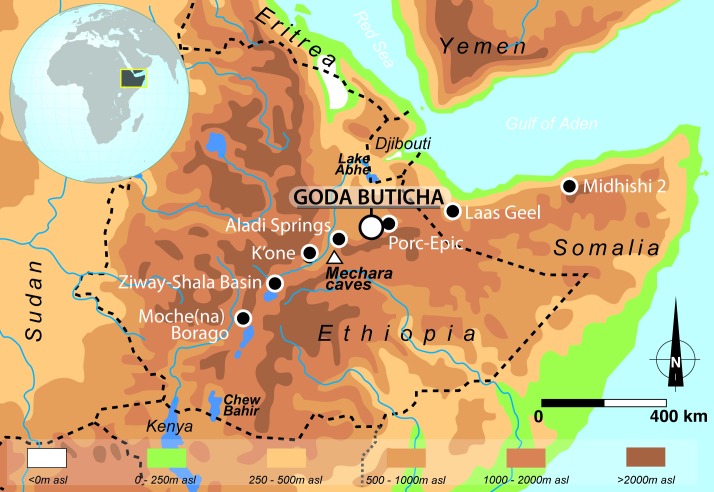
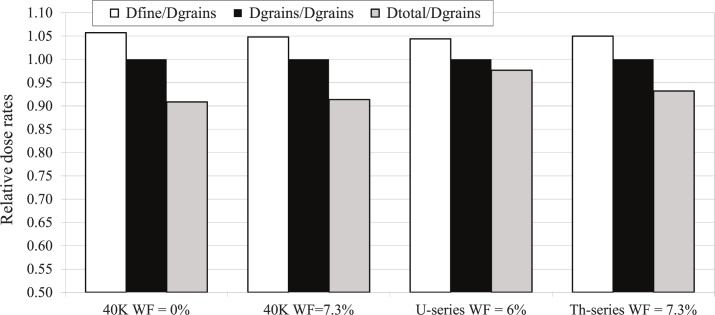
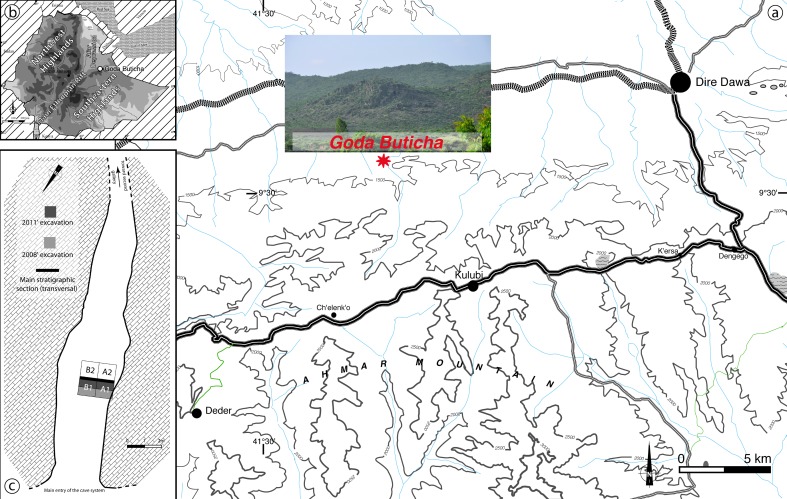
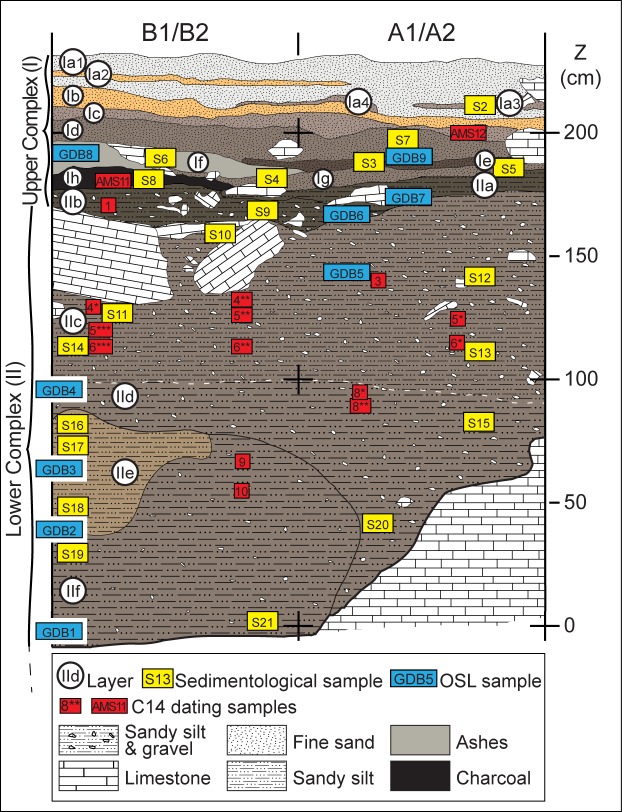
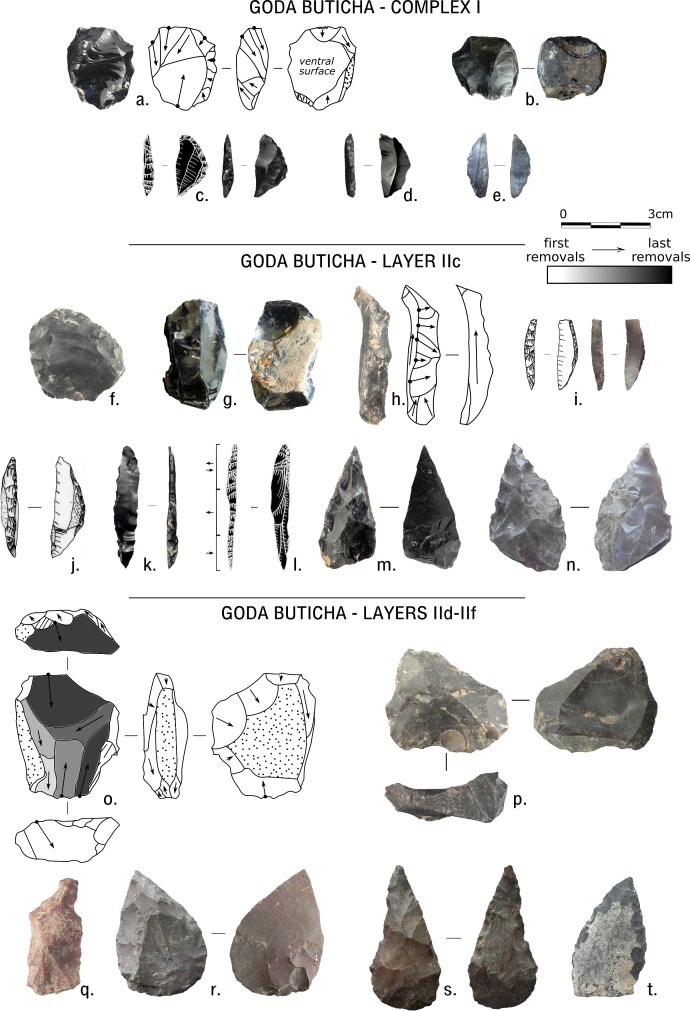
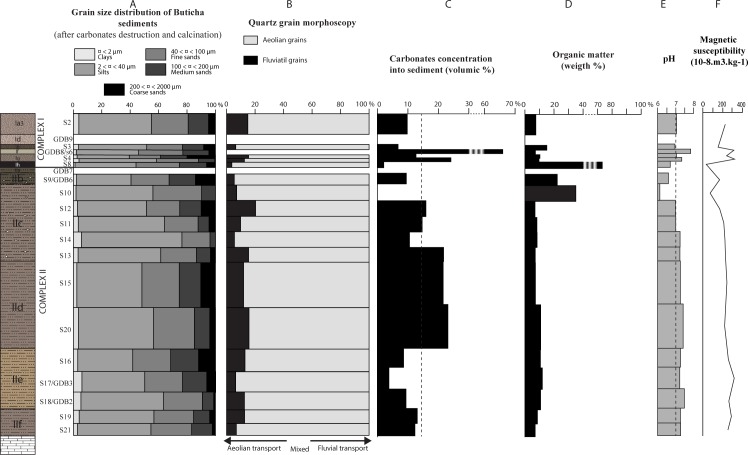
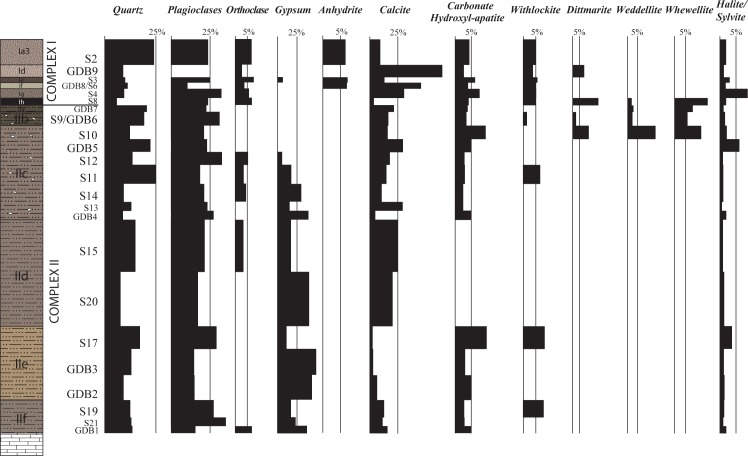
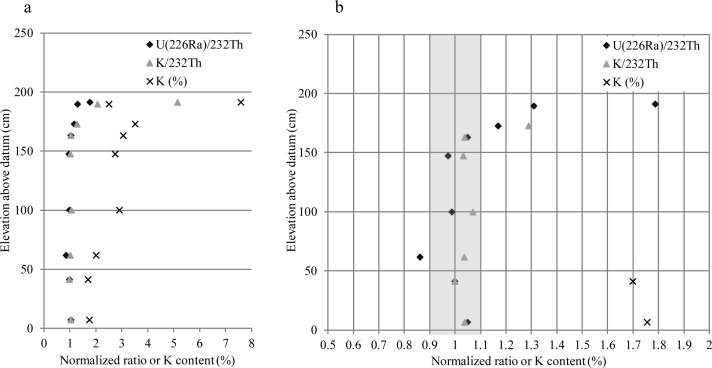
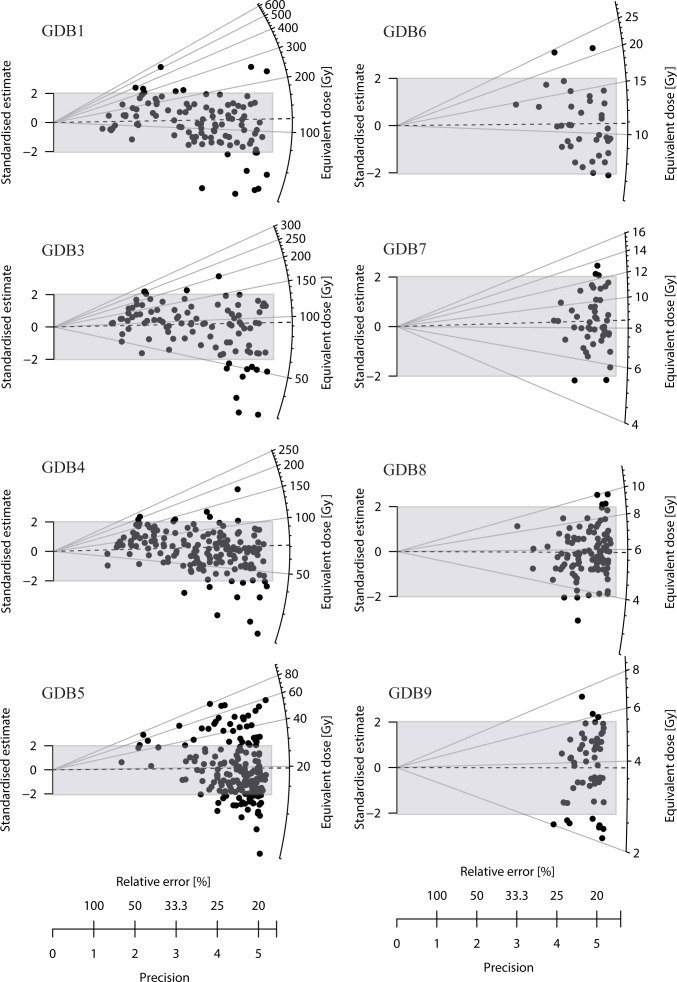
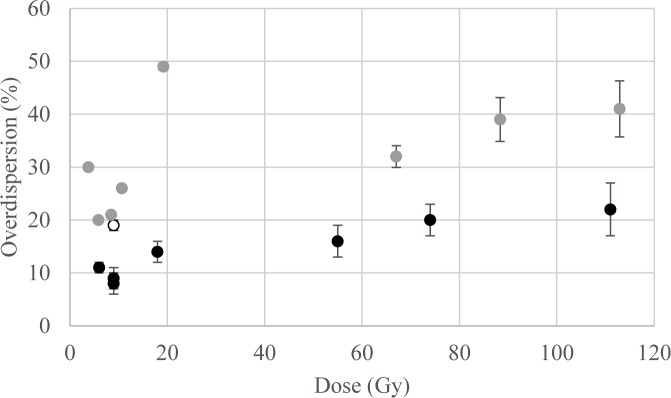
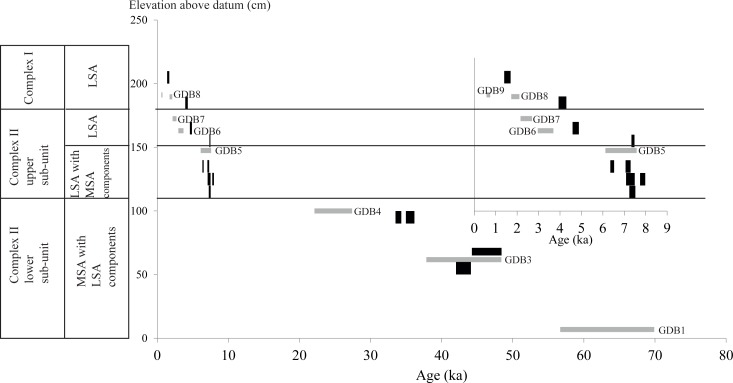
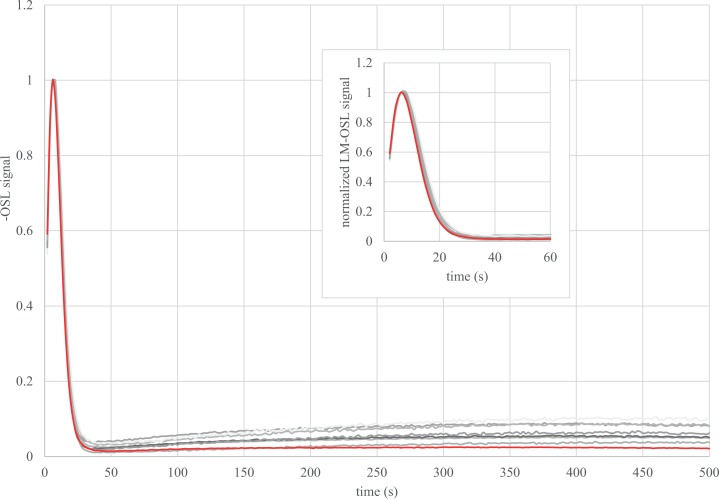
Goda Buticha is a cave site near Dire Dawa in southeastern Ethiopia that contains an archaeological sequence sampling the late Pleistocene and Holocene of the region. The sedimentary sequence displays complex cultural, chronological and sedimentological histories that seem incongruent with one another. A first set of radiocarbon ages suggested a long sedimentological gap from the end of Marine Isotopic Stage (MIS) 3 to the mid-Holocene. Macroscopic observations suggest that the main sedimentological change does not coincide with the chronostratigraphic hiatus. The cultural sequence shows technological continuity with a late persistence of artifacts that are usually attributed to the Middle Stone Age into the younger parts of the stratigraphic sequence, yet become increasingly associated with lithic artifacts typically related to the Later Stone Age. While not a unique case, this combination of features is unusual in the Horn of Africa. In order to evaluate the possible implications of these observations, sedimentological analyses combined with optically stimulated luminescence (OSL) were conducted. The OSL data now extend the radiocarbon chronology up to 63 ± 7 ka; they also confirm the existence of the chronological gap between 24.8 ± 2.6 ka and 7.5 ± 0.3 ka. The sedimentological analyses suggest that the origin and mode of deposition were largely similar throughout the whole sequence, although the anthropic and faunal activities increased in the younger levels. Regional climatic records are used to support the sedimentological observations and interpretations. We discuss the implications of the sedimentological and dating analyses for understanding cultural processes in the region.
戈达布蒂查是埃塞俄比亚东南部迪雷达瓦附近的一个洞穴遗址,其中包含该地区晚更新世和全新世的考古序列样本。沉积序列展现出复杂的文化、年代学和沉积学历史,这些历史似乎相互矛盾。第一批放射性碳年代测定结果表明,从海洋同位素阶段(MIS)3末期到全新世中期存在很长的沉积学间断。宏观观察表明,主要的沉积学变化与年代地层间断并不一致。文化序列显示出技术上的连续性,一些通常被认为属于中石器时代的人工制品在较年轻的地层序列中持续存在,但越来越多地与通常与晚石器时代相关的石器人工制品联系在一起。虽然这并非唯一的情况,但这种特征组合在非洲之角并不常见。为了评估这些观察结果可能产生的影响,我们进行了沉积学分析,并结合了光释光(OSL)技术。OSL数据现在将放射性碳年代学延伸至63±7千年;它们还证实了在24.8±2.6千年和7.5±0.3千年之间存在年代间断。沉积学分析表明,尽管在较年轻的地层中人类和动物活动有所增加,但整个序列的沉积物来源和沉积方式在很大程度上是相似的。我们利用区域气候记录来支持沉积学观察和解释。我们讨论了沉积学和年代测定分析对于理解该地区文化过程的意义。