Hrbáček Jan, Čapoun Otakar, Minárik Ivo, Kýr Michal, Hanuš Tomáš, Babjuk Marek, Sobotka Roman
Department of Urology, 2 Faculty of Medicine and Motol University Hospital, Charles University Praha, Czech Republic.
Department of Urology, 1 Faculty of Medicine and General Teaching Hospital, Charles University Praha, Czech Republic.
Cent European J Urol. 2016;69(4):347-352. doi: 10.5173/ceju.2016.910. Epub 2016 Nov 30.
Extended transrectal ultrasound-guided prostate biopsy is a state-of-the-art tool for prostate cancer detection. Nevertheless, approximately 1/3 of cancers are missed when using this method and repeat biopsy sessions are often required. The aim of this study was to investigate how sampling density (a compound variable reflecting the number of biopsy cores and prostate volume) impacts on detection rate in multiple repeat TRUS-biopsies.
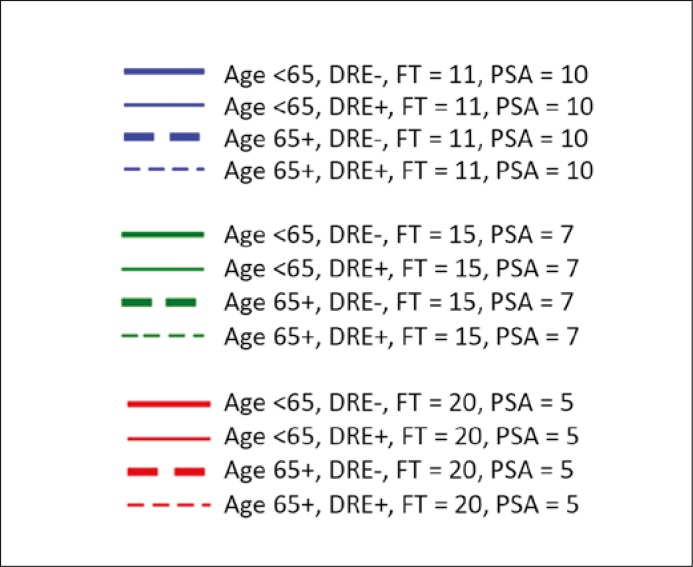
A total of 1007 consecutive patients undergoing their 1, 2, 3 and any further repeat prostate biopsies were included. The relationship between sampling density and other clinical variables (age, prostate-specific antigen level, free/total PSA ratio, digital rectal examination, number of previous biopsies) and cancer detection rate were assessed by interaction analysis.
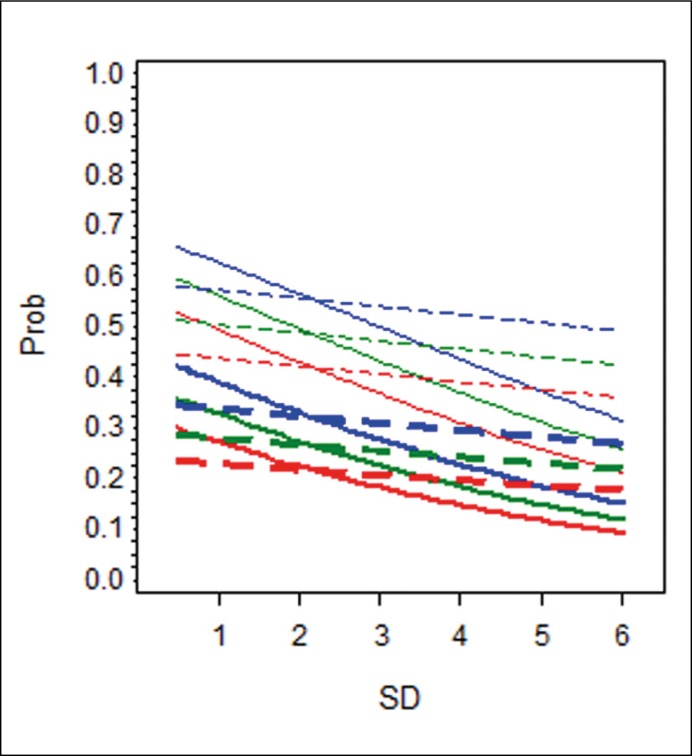
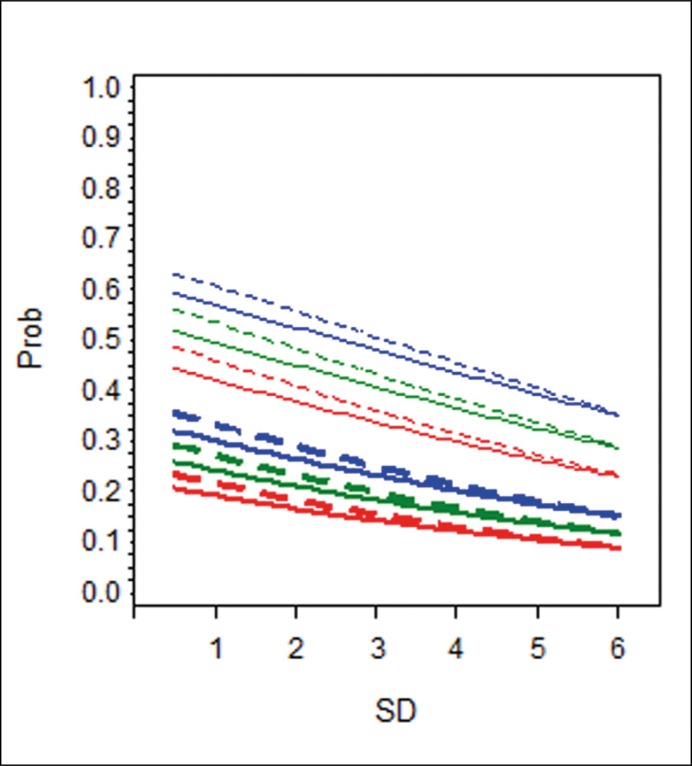
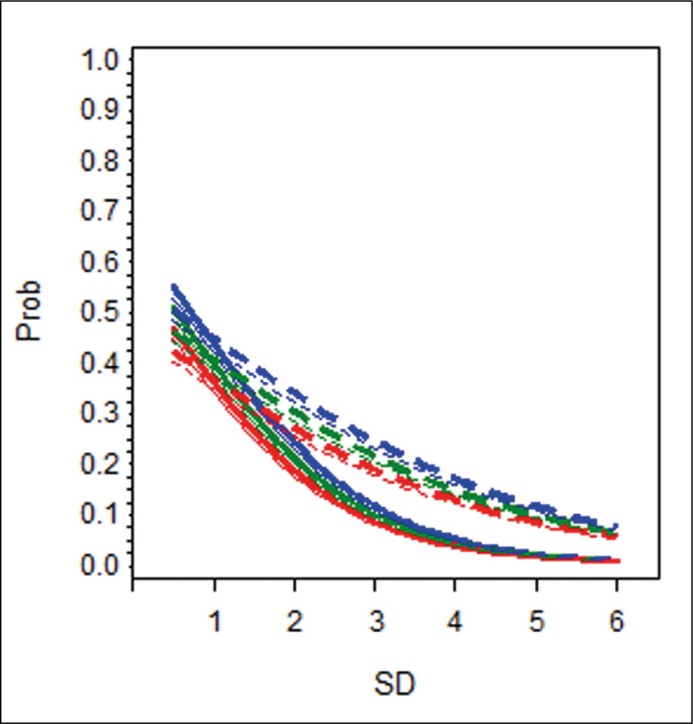
There were 562 primary re-biopsies, 267 second re-biopsies and 178 third and further re-biopsies included in the study. Detection rate was 25.4%, 25.8% and 25.3%, respectively. Interaction of sampling density with age was demonstrated in patients undergoing their first repeat biopsy (but not further re-biopsies). No interaction was observed with other variables investigated.
A more extensive prostate sampling leads to a higher cancer detection rate on repeat prostate biopsies, as shown previously. However, this effect seems to be particularly pronounced in men younger than 65 years undergoing their first repeat prostate biopsy.
经直肠超声引导下的前列腺穿刺活检术是目前前列腺癌检测的先进技术。然而,使用该方法时仍有大约三分之一的癌症会被漏诊,因此常常需要进行重复活检。本研究旨在探讨采样密度(一个反映活检针数和前列腺体积的复合变量)对多次重复经直肠超声引导下前列腺穿刺活检的癌症检出率有何影响。
本研究共纳入1007例连续进行首次、第二次、第三次及后续重复前列腺穿刺活检的患者。通过交互分析评估采样密度与其他临床变量(年龄、前列腺特异性抗原水平、游离/总前列腺特异性抗原比值、直肠指检、既往活检次数)之间的关系以及癌症检出率。
本研究纳入了562例首次重复活检、267例第二次重复活检以及178例第三次及后续重复活检的患者。检出率分别为25.4%、25.8%和25.3%。在进行首次重复活检的患者中(而非后续重复活检患者),采样密度与年龄之间存在交互作用。在研究的其他变量中未观察到交互作用。
如先前所示,更广泛的前列腺采样可提高重复前列腺穿刺活检的癌症检出率。然而,这种效应在65岁以下进行首次重复前列腺穿刺活检的男性中似乎尤为明显。