Department of hepatobiliary surgery and organ transplantation, the First Hospital of China Medical University, Shenyang 110001, China.
Sci Rep. 2017 Jan 30;7:41555. doi: 10.1038/srep41555.
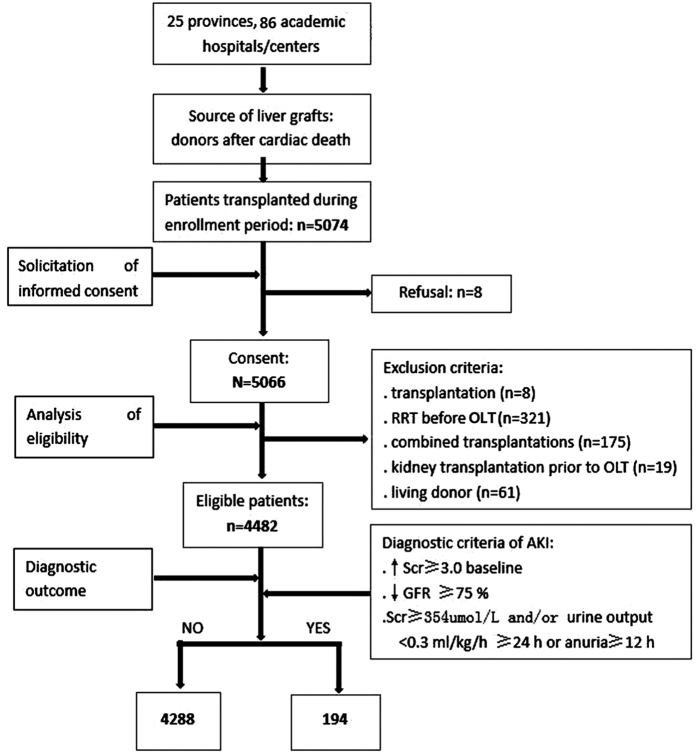
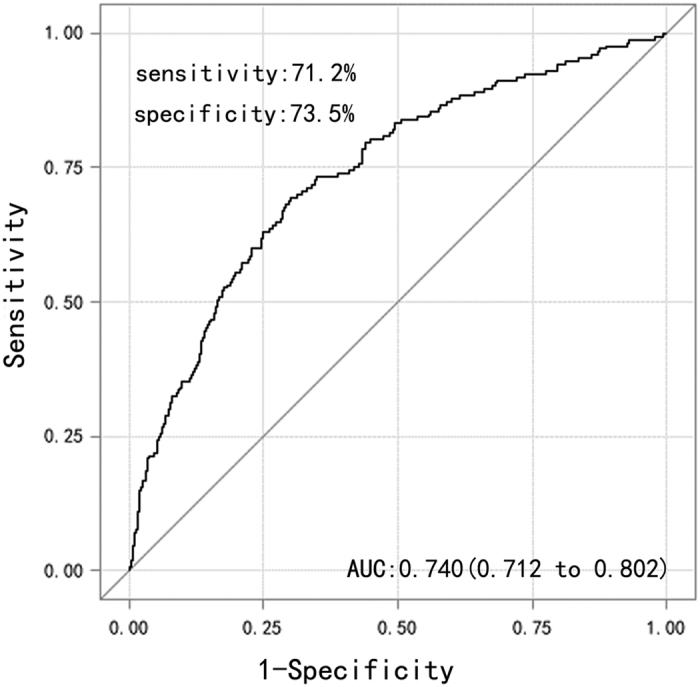
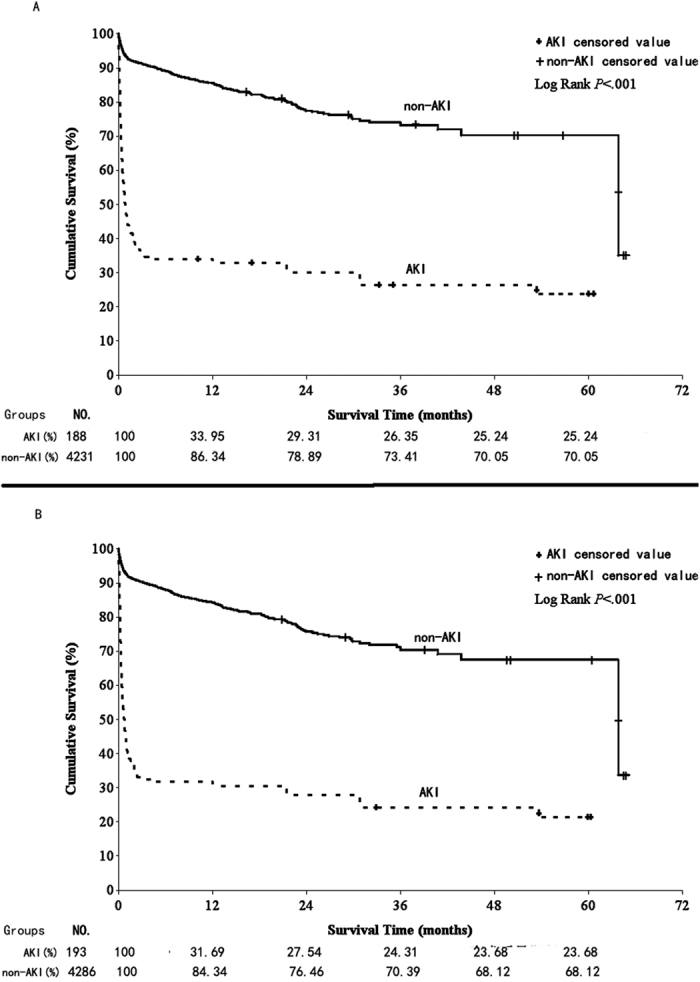
In this study, we determined the risk factors for acute kidney injury (AKI) following orthotopic liver transplantation (OLT) in China. We collected 5074 donation after cardiac death (DCD) OLT recipients who underwent surgery between January 1, 2010, and December 31, 2015, in 86 academic hospitals or transplant centers in China. Univariate and multivariate analyses were used to investigate the criticality of donor, graft, or recipient variables in the development of post-OLT AKI. In all, 4482 patients were included (median age, 49.31 years). Post-OLT AKI occurred in 3.97% patients, and 73.6% of all OLT patients were male. The 1- and 5-year cumulative survival rates (CSRs) of the AKI group were 33.95% and 25.24%, respectively, compared with 86.34% and 70.05%, respectively, of the non-AKI group (P < 0.001). The independent risk factors for post-OLT AKI were blood loss, cold ischemia time, warm ischemia time, preoperative serum creatinine, the treatment period with dopamine, overexposure to calcineurin inhibitor, and combined mycophenolate mofetil use (P < 0.05). These had a high prediction accuracy for post-OLT AKI (area under the curve [AUC] = 0.740).
在这项研究中,我们确定了中国原位肝移植(OLT)后急性肾损伤(AKI)的危险因素。我们收集了 2010 年 1 月 1 日至 2015 年 12 月 31 日期间在中国 86 家学术医院或移植中心接受手术的 5074 例心脏死亡后供体(DCD)OLT 受者的数据。使用单变量和多变量分析来研究供体、移植物或受者变量在 OLT 后 AKI 发展中的重要性。共有 4482 例患者(中位年龄 49.31 岁)纳入本研究。3.97%的患者发生 OLT 后 AKI,73.6%的 OLT 患者为男性。AKI 组的 1 年和 5 年累积生存率(CSR)分别为 33.95%和 25.24%,而非 AKI 组分别为 86.34%和 70.05%(P<0.001)。OLT 后 AKI 的独立危险因素是失血量、冷缺血时间、热缺血时间、术前血清肌酐、多巴胺治疗时间、钙调神经磷酸酶抑制剂过度暴露和联合使用霉酚酸酯(P<0.05)。这些因素对 OLT 后 AKI 具有较高的预测准确性(曲线下面积 [AUC] = 0.740)。