Wuest Simon L, Stern Philip, Casartelli Ernesto, Egli Marcel
Lucerne University of Applied Sciences and Arts, School of Engineering and Architecture, CC Aerospace Biomedical Science and Technology, Space Biology Group, Hergiswil, Switzerland.
Lucerne University of Applied Sciences and Arts, School of Engineering and Architecture, CC Fluid Mechanics and Hydraulic Machines, Horw, Switzerland.
PLoS One. 2017 Jan 30;12(1):e0170826. doi: 10.1371/journal.pone.0170826. eCollection 2017.
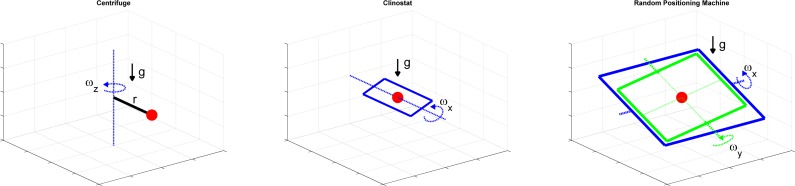
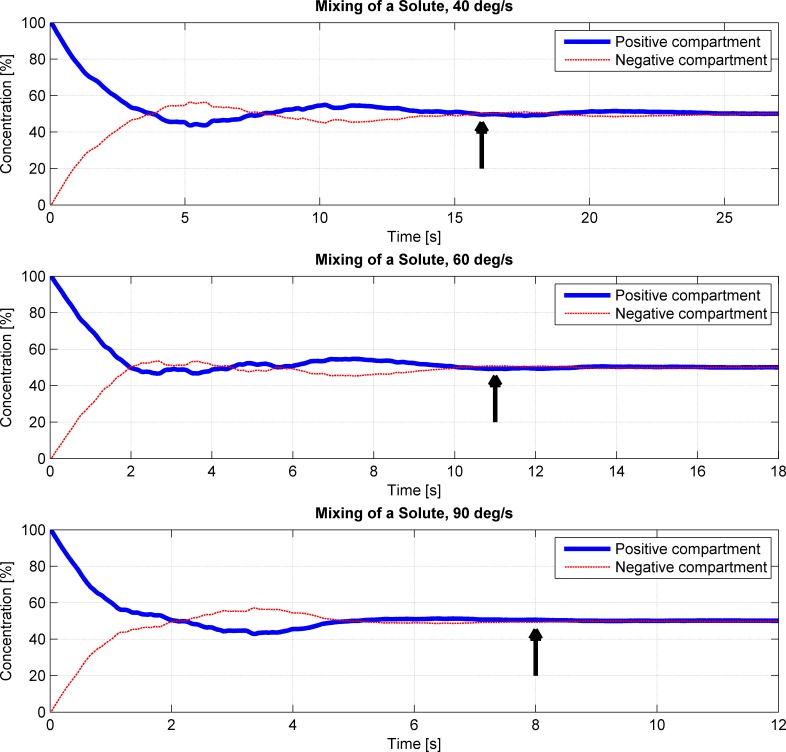
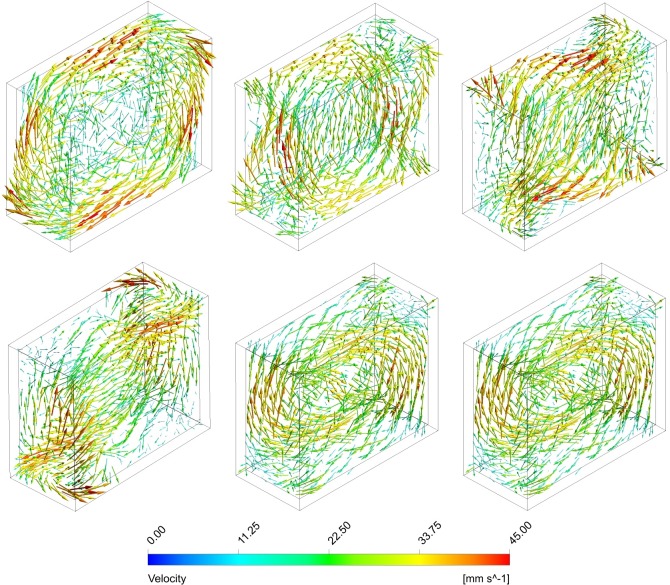
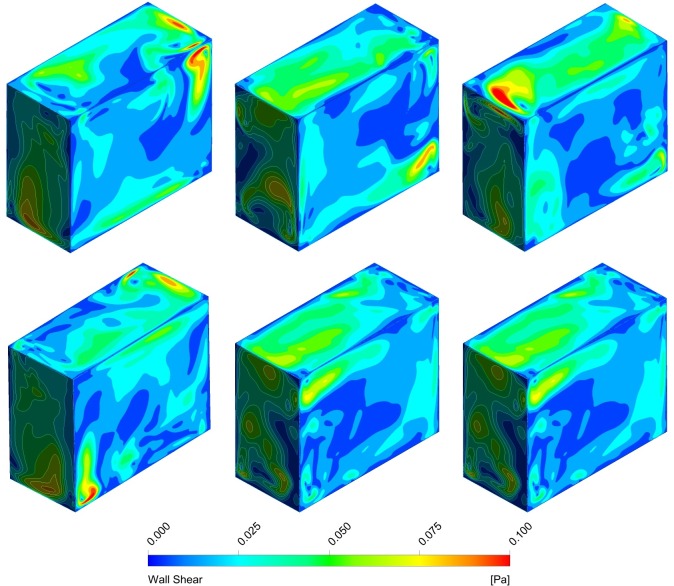
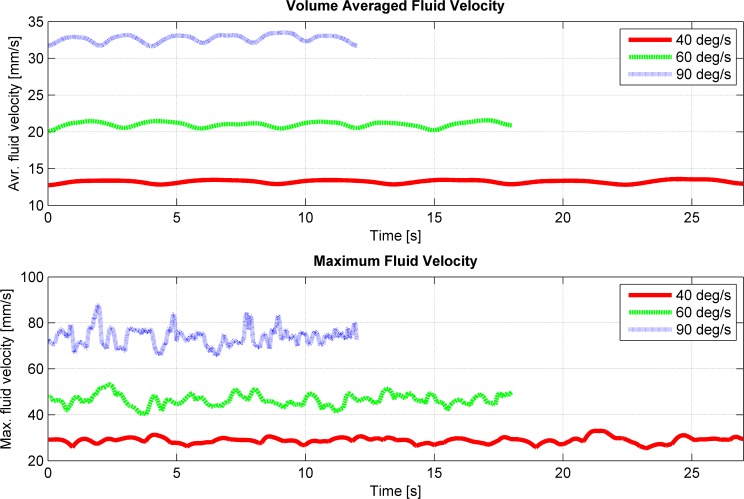
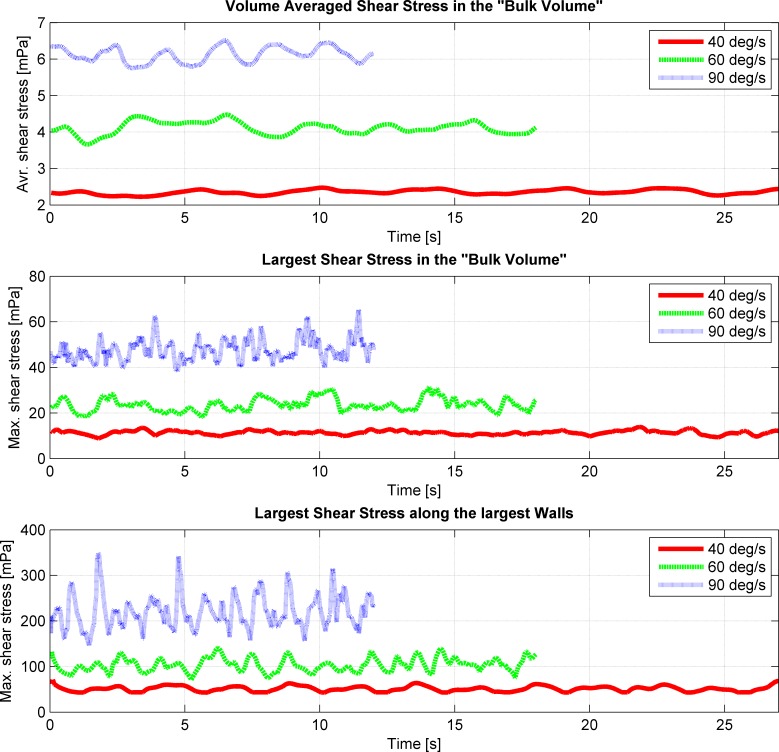
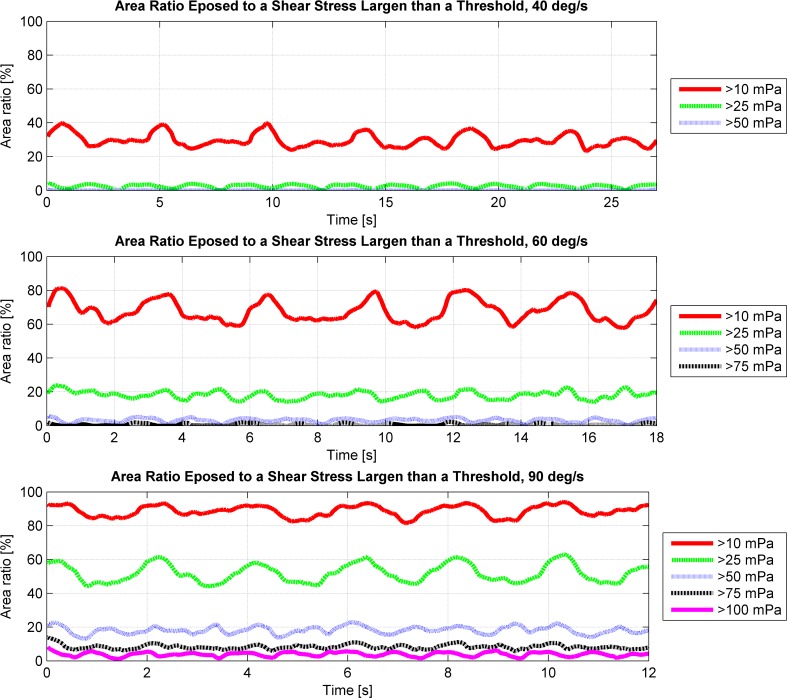
Random Positioning Machines (RPMs) are widely used as tools to simulate microgravity on ground. They consist of two gimbal mounted frames, which constantly rotate biological samples around two perpendicular axes and thus distribute the Earth's gravity vector in all directions over time. In recent years, the RPM is increasingly becoming appreciated as a laboratory instrument also in non-space-related research. For instance, it can be applied for the formation of scaffold-free spheroid cell clusters. The kinematic rotation of the RPM, however, does not only distribute the gravity vector in such a way that it averages to zero, but it also introduces local forces to the cell culture. These forces can be described by rigid body analysis. Although RPMs are commonly used in laboratories, the fluid motion in the cell culture flasks on the RPM and the possible effects of such on cells have not been examined until today; thus, such aspects have been widely neglected. In this study, we used a numerical approach to describe the fluid dynamic characteristic occurring inside a cell culture flask turning on an operating RPM. The simulations showed that the fluid motion within the cell culture flask never reached a steady state or neared a steady state condition. The fluid velocity depends on the rotational velocity of the RPM and is in the order of a few centimeters per second. The highest shear stresses are found along the flask walls; depending of the rotational velocity, they can reach up to a few 100 mPa. The shear stresses in the "bulk volume," however, are always smaller, and their magnitude is in the order of 10 mPa. In conclusion, RPMs are highly appreciated as reliable tools in microgravity research. They have even started to become useful instruments in new research fields of mechanobiology. Depending on the experiment, the fluid dynamic on the RPM cannot be neglected and needs to be taken into consideration. The results presented in this study elucidate the fluid motion and provide insight into the convection and shear stresses that occur inside a cell culture flask during RPM experiments.
随机定位机(RPMs)被广泛用作在地面模拟微重力的工具。它们由两个安装在万向架上的框架组成,这些框架不断地使生物样本围绕两个垂直轴旋转,从而随着时间的推移将地球重力矢量在各个方向上进行分布。近年来,随机定位机在非空间相关研究中作为实验室仪器也越来越受到重视。例如,它可用于形成无支架的球状细胞簇。然而,随机定位机的运动学旋转不仅以重力矢量平均为零的方式分布重力矢量,还会给细胞培养引入局部力。这些力可以通过刚体分析来描述。尽管随机定位机在实验室中普遍使用,但直到现在还没有研究过随机定位机上细胞培养瓶内的流体运动以及这种运动对细胞可能产生的影响;因此,这些方面一直被广泛忽视。在本研究中,我们采用数值方法来描述在运行的随机定位机上转动的细胞培养瓶内发生的流体动力学特性。模拟结果表明,细胞培养瓶内的流体运动从未达到稳定状态或接近稳定状态。流体速度取决于随机定位机的旋转速度,约为每秒几厘米。最高剪应力出现在瓶壁处;根据旋转速度的不同,它们可达几百毫帕。然而,“总体积”中的剪应力总是较小,其大小约为10毫帕。总之,随机定位机在微重力研究中作为可靠工具备受赞誉。它们甚至已开始成为机械生物学新研究领域中的有用仪器。根据实验情况,随机定位机上的流体动力学不能被忽视,需要加以考虑。本研究给出的结果阐明了流体运动,并深入了解了随机定位机实验期间细胞培养瓶内发生的对流和剪应力情况。