Srivastava Saumya, Mishra Jyotsna, Gupta Anil Kumar, Singh Amit, Shankar Prem, Singh Sarman
Division of Clinical Microbiology and Molecular Medicine, Department of Laboratory Medicine, All India Institute of Medical Sciences, New Delhi, India.
Parasit Vectors. 2017 Jan 31;10(1):49. doi: 10.1186/s13071-017-1969-z.
Miltefosine unresponsive and relapse cases of visceral leishmaniasis (VL) are increasingly being reported. However, there has been no laboratory confirmed reports of miltefosine resistance in VL. Here, we report two laboratory confirmed cases of VL from India.
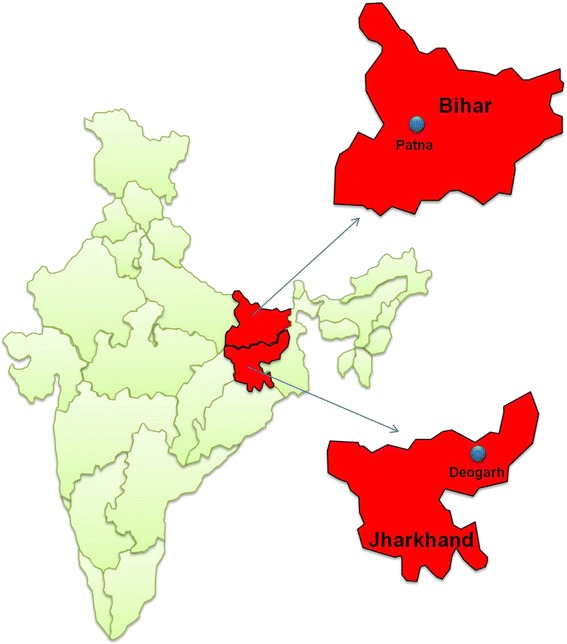
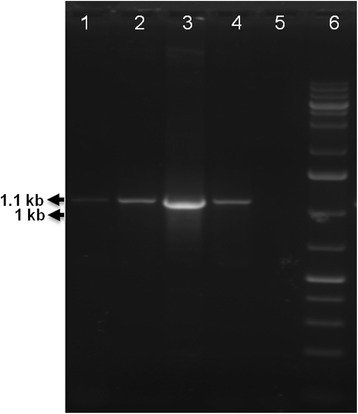
Two patients with VL were referred to us with suspected VL. The first patient was a native of the VL endemic state of Bihar, but residing in Delhi, a VL non-endemic area. He was treated with broad-spectrum antibiotics and antipyretics but was unresponsive to treatment. The second patient was from Jharkhand state in eastern India (adjoining Bihar), another endemic state for VL. He was refractory to anti-leishmanial treatment, which included administration of miltefosine. Following investigation, both patients were serologically positive for VL, and blood buffy coat from both patients grew Leishmania donovani. The isolates derived from both cases were characterized for their drug susceptibility, genetically characterised, and SNPs typed for LdMT and LdROS gene expression. Both patients were successfully treated with amphotericin B.
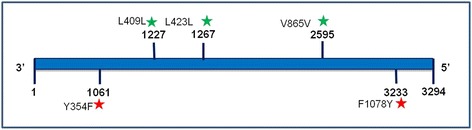
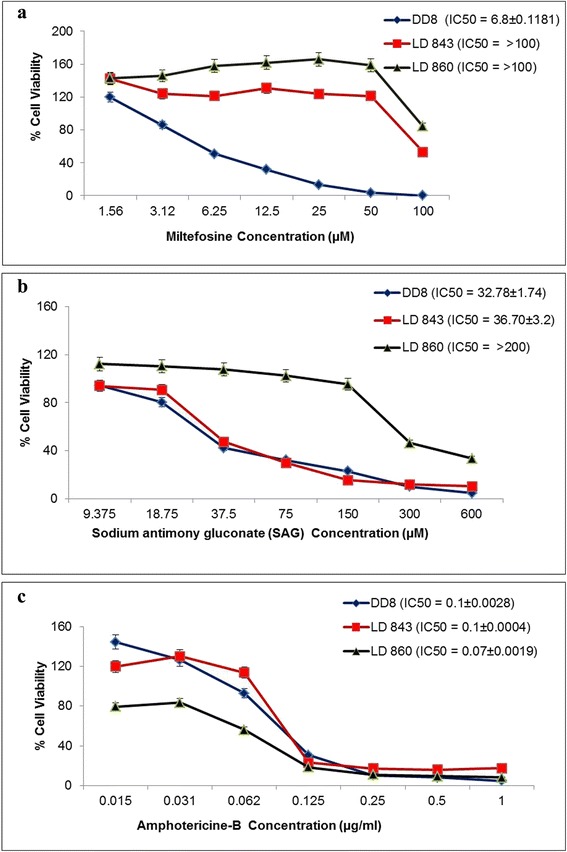
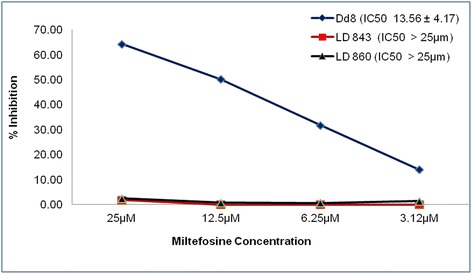
The in vitro drug susceptibility assays carried out on both isolates showed good IC values to amphotericin B (0.1 ± 0.0004 μg/ml and 0.07 ± 0.0019 μg/ml). One isolate was refractory to Sb with an IC of > 200 μM while the second isolate was sensitive to Sb with an IC of 36.70 ± 3.2 μM. However, in both the isolates, IC against miltefosine was more than 10-fold higher (> 100 μM) than the standard strain DD8 (6.8 ± 0.1181 μM). Furthermore, genetic analyses demonstrated single nucleotide polymorphisms (SNPs) (Tyr↔Phe and Phe↔Tyr) in the LdMT gene of the parasites.
Here, we document two laboratory confirmed cases of miltefosine resistant VL from India. Our finding highlights the urgent need to establish control measures to prevent the spread of these strains. We also propose that LdMT gene mutation analysis could be used as a molecular marker of miltefosine resistance in L. donovani.
内脏利什曼病(VL)对米替福新无反应及复发的病例报告日益增多。然而,尚无实验室确诊的VL对米替福新耐药的报告。在此,我们报告两例来自印度的实验室确诊的VL病例。
两名疑似VL的患者被转诊至我们处。首例患者是比哈尔邦VL流行区的本地人,但居住在德里,一个非VL流行区。他接受了广谱抗生素和退烧药治疗,但治疗无效。第二例患者来自印度东部的贾坎德邦(毗邻比哈尔邦),也是另一个VL流行区。他对抗利什曼原虫治疗无效,其中包括米替福新的给药。经过调查,两名患者VL血清学检测均呈阳性,且两名患者的血液血沉棕黄层均培养出杜氏利什曼原虫。对两例病例分离出的菌株进行药敏特性鉴定、基因特征分析以及针对LdMT和LdROS基因表达的单核苷酸多态性(SNP)分型。两名患者均成功接受了两性霉素B治疗。
对两株分离菌株进行的体外药敏试验显示,它们对两性霉素B具有良好的半数抑制浓度(IC)值(分别为0.1±0.0004μg/ml和0.07±0.0019μg/ml)。一株分离菌对锑剂耐药,IC>200μM,而另一株分离菌对锑剂敏感,IC为36.70±3.2μM。然而,两株分离菌对米替福新的IC均比标准菌株DD8(6.8±0.1181μM)高出10倍以上(>100μM)。此外,基因分析显示寄生虫的LdMT基因存在单核苷酸多态性(SNP)(酪氨酸↔苯丙氨酸和苯丙氨酸↔酪氨酸)。
在此,我们记录了两例来自印度的实验室确诊的米替福新耐药VL病例。我们的发现凸显了迫切需要建立控制措施以防止这些菌株传播。我们还提议,LdMT基因突变分析可作为杜氏利什曼原虫中米替福新耐药性的分子标记。