Ladrón de Guevara-Miranda David, Millón Carmelo, Rosell-Valle Cristina, Pérez-Fernández Mercedes, Missiroli Michele, Serrano Antonia, Pavón Francisco J, Rodríguez de Fonseca Fernando, Martínez-Losa Magdalena, Álvarez-Dolado Manuel, Santín Luis J, Castilla-Ortega Estela
Departamento de Psicobiología y Metodología de las Ciencias del Comportamiento, Instituto de Investigación Biomédica de Málaga (IBIMA), Facultad de Psicología, Universidad de Málaga, 29071 Málaga, Spain.
Departamento de Fisiología, Instituto de Investigación Biomédica de Málaga (IBIMA), Facultad de Medicina, Universidad de Málaga, 29071 Málaga, Spain.
Dis Model Mech. 2017 Mar 1;10(3):323-336. doi: 10.1242/dmm.026682. Epub 2017 Jan 30.
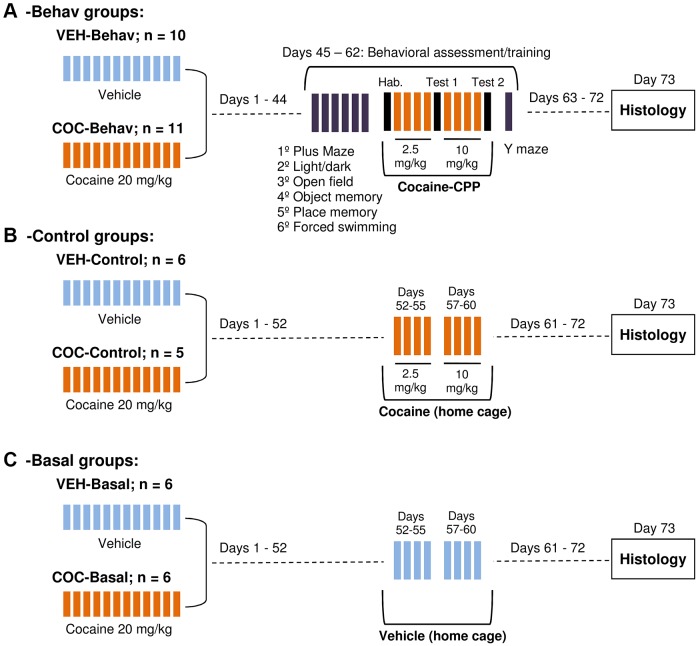
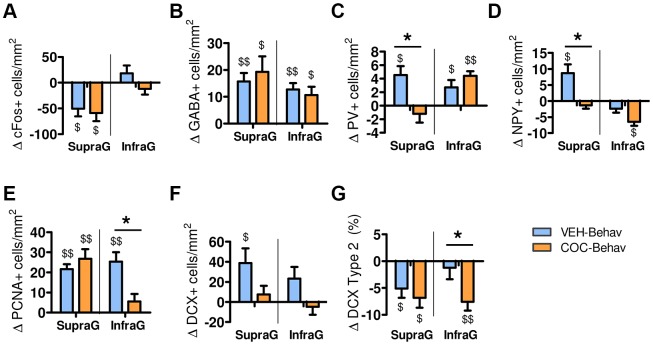
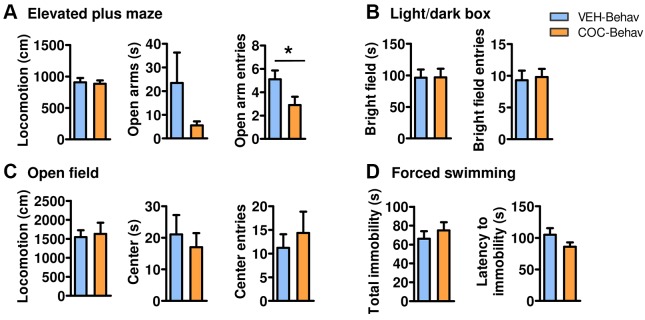
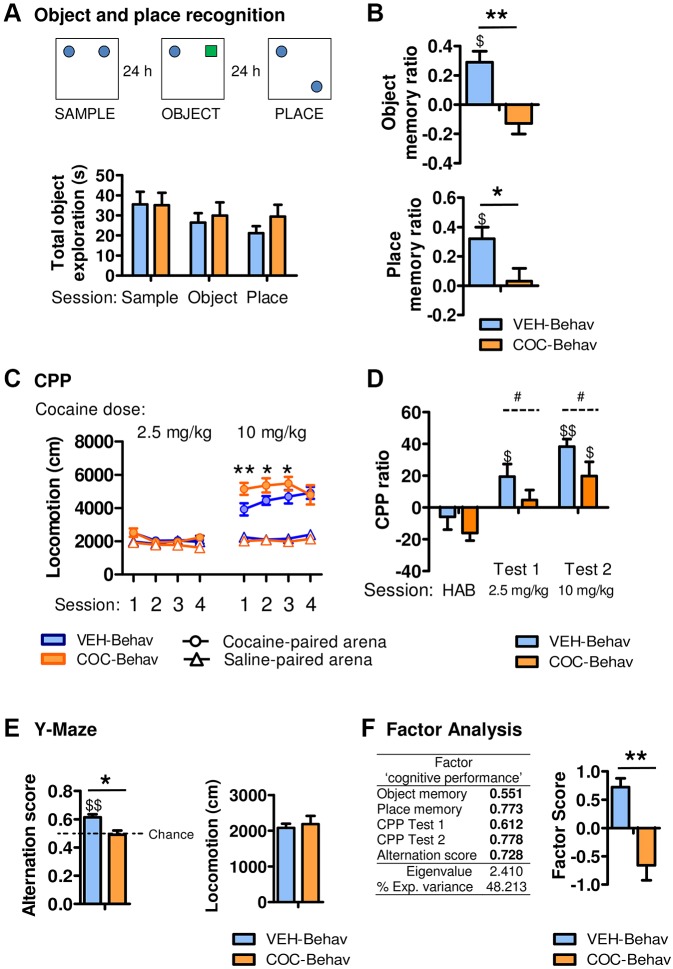
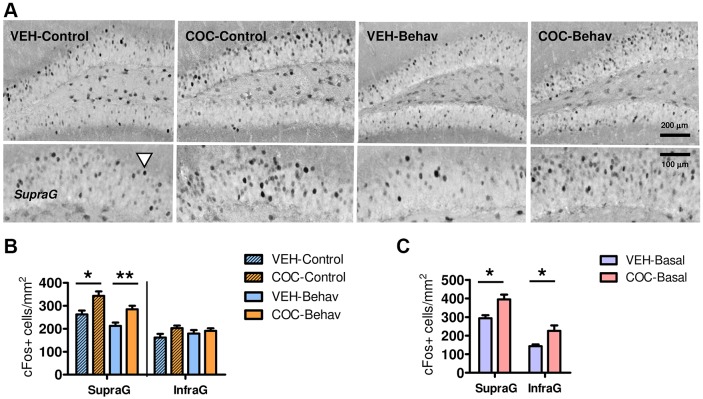
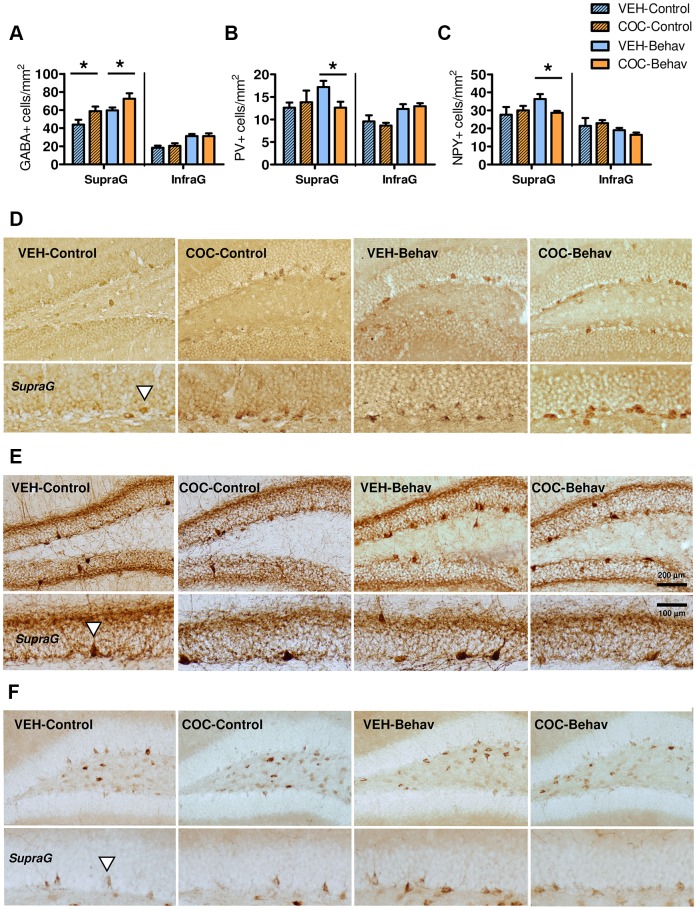
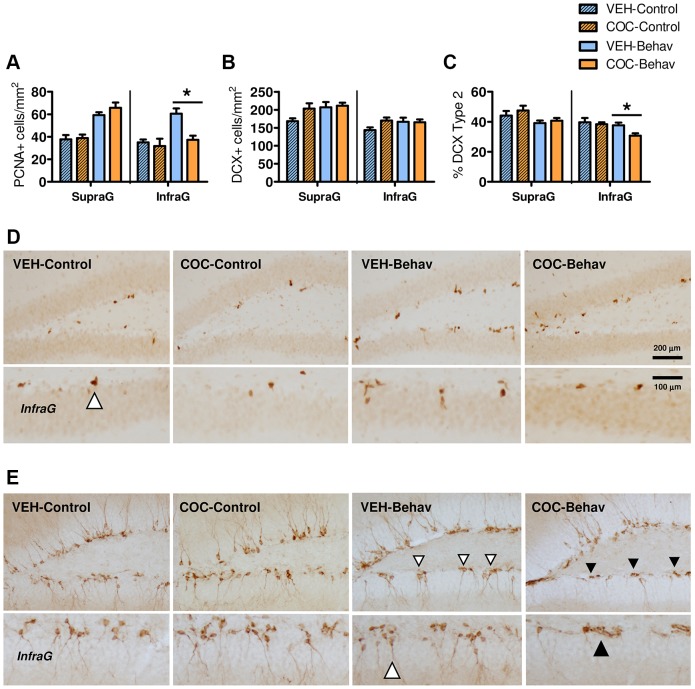
Cocaine addiction disorder is notably aggravated by concomitant cognitive and emotional pathology that impedes recovery. We studied whether a persistent cognitive/emotional dysregulation in mice withdrawn from cocaine holds a neurobiological correlate within the hippocampus, a limbic region with a key role in anxiety and memory but that has been scarcely investigated in cocaine addiction research. Mice were submitted to a chronic cocaine (20 mg/kg/day for 12 days) or vehicle treatment followed by 44 drug-free days. Some mice were then assessed on a battery of emotional (elevated plus-maze, light/dark box, open field, forced swimming) and cognitive (object and place recognition memory, cocaine-induced conditioned place preference, continuous spontaneous alternation) behavioral tests, while other mice remained in their home cage. Relevant hippocampal features [basal c-Fos activity, GABA, parvalbumin (PV) and neuropeptide Y (NPY) interneurons and adult neurogenesis (cell proliferation and immature neurons)] were immunohistochemically assessed 73 days after the chronic cocaine or vehicle protocol. The cocaine-withdrawn mice showed no remarkable exploratory or emotional alterations but were consistently impaired in all the cognitive tasks. All the cocaine-withdrawn groups, independent of whether they were submitted to behavioral assessment or not, showed enhanced basal c-Fos expression and an increased number of GABA cells in the dentate gyrus. Moreover, the cocaine-withdrawn mice previously submitted to behavioral training displayed a blunted experience-dependent regulation of PV and NPY neurons in the dentate gyrus, and neurogenesis in the hippocampus. Results highlight the importance of hippocampal neuroplasticity for the ingrained cognitive deficits present during chronic cocaine withdrawal.
可卡因成瘾障碍会因伴随的认知和情感病理状况而显著加重,这些病理状况会阻碍康复。我们研究了从可卡因戒断的小鼠中持续存在的认知/情感失调是否在海马体中存在神经生物学关联,海马体是一个在焦虑和记忆中起关键作用的边缘区域,但在可卡因成瘾研究中几乎未被研究。将小鼠分为慢性可卡因组(20毫克/千克/天,持续12天)或给予赋形剂处理,随后为44天的无药期。然后,对一些小鼠进行一系列情感(高架十字迷宫、明暗箱、旷场、强迫游泳)和认知(物体和位置识别记忆、可卡因诱导的条件性位置偏爱、连续自发交替)行为测试,而其他小鼠则留在其饲养笼中。在慢性可卡因或赋形剂处理方案73天后,通过免疫组织化学评估相关的海马特征[基础c-Fos活性、GABA、小白蛋白(PV)和神经肽Y(NPY)中间神经元以及成年神经发生(细胞增殖和未成熟神经元)]。戒断可卡因的小鼠没有表现出明显的探索或情感改变,但在所有认知任务中均持续受损。所有戒断可卡因的组,无论是否接受行为评估,均显示齿状回中基础c-Fos表达增强且GABA细胞数量增加。此外,先前接受行为训练的戒断可卡因的小鼠在齿状回中PV和NPY神经元以及海马体中的神经发生方面表现出经验依赖性调节减弱。结果突出了海马体神经可塑性对于慢性可卡因戒断期间存在的根深蒂固的认知缺陷的重要性。