Yang Jianhua, Xu Huanhuan, Wu Shanshan, Ju Bowei, Zhu Dandan, Yan Yao, Wang Mei, Hu Junping
Department of Pharmacy, The First Affiliated Hospital, Xinjiang Medical University, Urumqi, Xinjiang 830011, P.R. China.
Department of Natural Medicines, College of Pharmacy, Xinjiang Medical University, Urumqi, Xinjiang 830011, P.R. China.
Mol Med Rep. 2017 Mar;15(3):1109-1116. doi: 10.3892/mmr.2017.6147. Epub 2017 Jan 25.
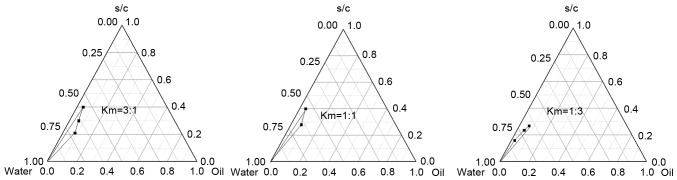
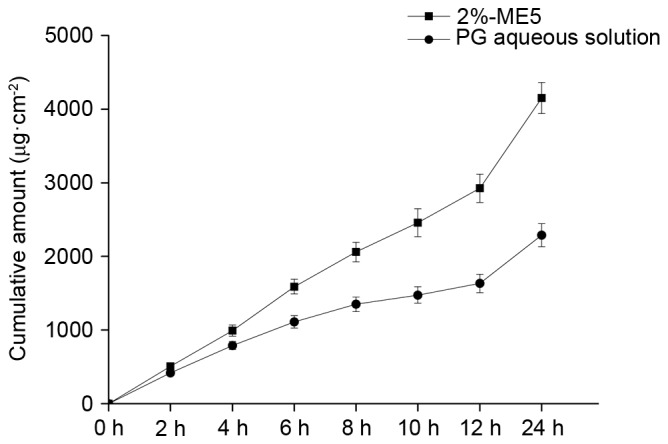
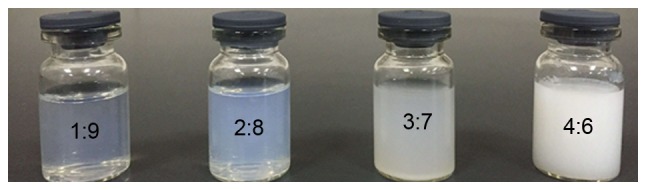
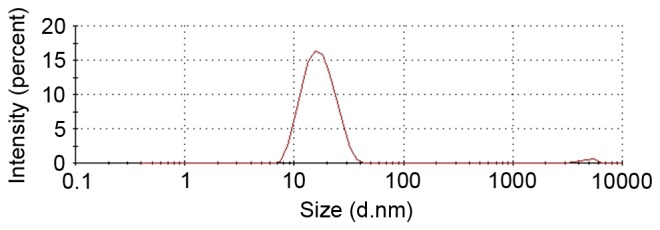
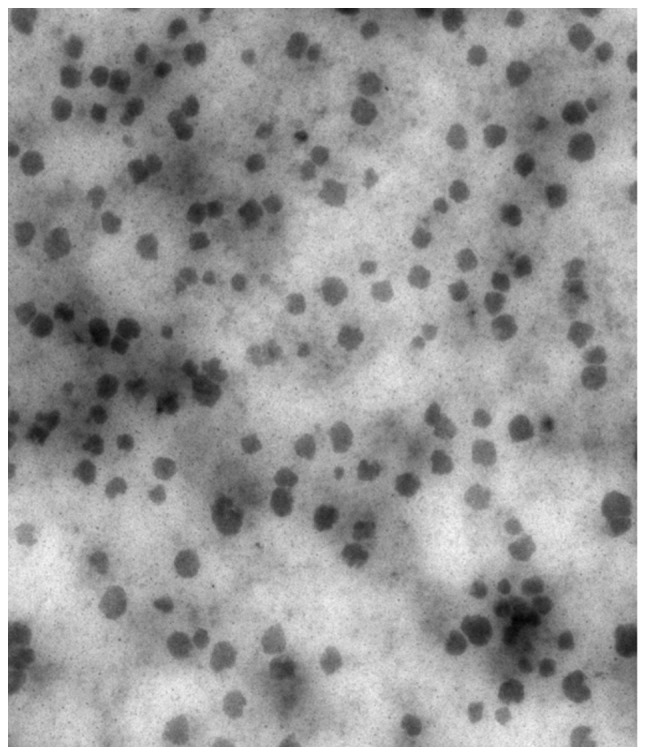
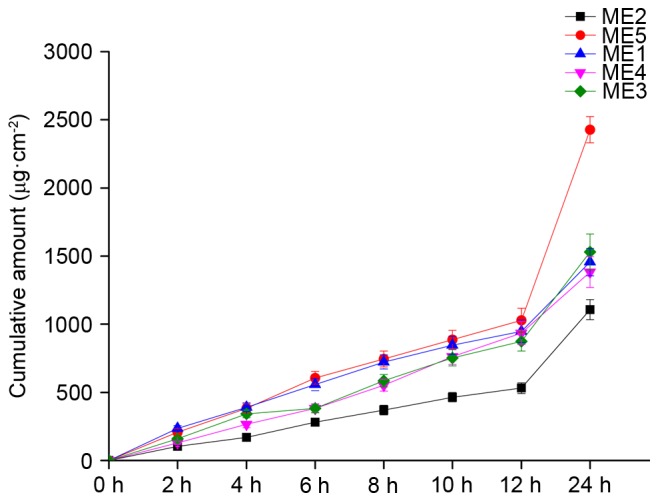
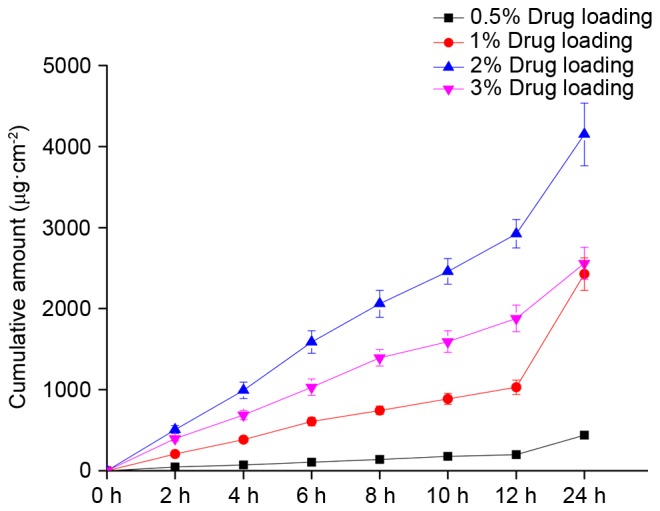
The primary aim of the present study was to develop a novel microemulsion (ME) formulation to deliver phenylethanoid glycoside (PG) for use in skin lighteners and sunscreens. The oil phase was selected on the basis of drug solubility, while the surfactant and cosurfactant were screened and selected on the basis of their solubilizing capacity and the efficiency with which they formed MEs. Pseudoternary phase diagrams were constructed to evaluate ME regions and five formulations of oil‑in‑water MEs were selected as vehicles. In vitro skin permeation experiments were performed to optimize the ME formulation and to evaluate its permeability in comparison to that of saline solution. The physicochemical properties of the optimized ME and the permeating ability of PG delivered by this ME were also investigated. The optimized ME formulation was composed of isopropyl myristate (7%, w/w), Cremorphor EL (21%, w/w), propylene glycol (7%, w/w) and water (65%, w/w). The cumulative amount of PG that permeated through excised mouse skin when carried by ME was ~1.68 times that when PG was carried by saline solution only. The cumulative amount of PG in the microemulsion (4149.650±37.3 µg·cm‑2) was significantly greater than that of PG in the saline solution (2288.63±20.9 µg·cm‑2). Furthermore, the permeability coefficient indicated that optimized microemulsion was a more efficient carrier for transdermal delivery of PG than the control solution (8.87±0.49 cm/hx10‑3 vs. 5.41±0.12 cm/hx10‑3). Taken together, the permeating ability of ME‑carried PG was significantly increased compared with saline solution.
本研究的主要目的是开发一种新型微乳(ME)制剂,用于递送苯乙醇苷(PG),以用于皮肤美白剂和防晒霜中。油相根据药物溶解度进行选择,而表面活性剂和助表面活性剂则根据它们的增溶能力以及形成微乳的效率进行筛选和选择。构建伪三元相图以评估微乳区域,并选择五种水包油型微乳制剂作为载体。进行体外皮肤渗透实验以优化微乳制剂,并与盐溶液相比评估其渗透性。还研究了优化后的微乳的物理化学性质以及该微乳递送的PG的渗透能力。优化后的微乳制剂由肉豆蔻酸异丙酯(7%,w/w)、聚氧乙烯蓖麻油(21%,w/w)、丙二醇(7%,w/w)和水(65%,w/w)组成。微乳携带的PG透过离体小鼠皮肤的累积量约为仅用盐溶液携带PG时的1.68倍。微乳中PG的累积量(4149.650±37.3μg·cm-2)显著高于盐溶液中PG的累积量(2288.63±20.9μg·cm-2)。此外,渗透系数表明,优化后的微乳是比对照溶液更有效的PG透皮递送载体(8.87±0.49cm/h×10-3对5.41±0.12cm/h×10-3)。综上所述,与盐溶液相比,微乳携带的PG的渗透能力显著提高。