Laboratory of Psychiatric Neuroscience, Australian Institute of Tropical Health and Medicine, 1 James Cook Drive, Townsville, 4811 QLD, Australia.
College of Public Health, Medical and Veterinary Sciences, 1 James Cook Drive, Townsville, 4811 QLD, Australia.
Sci Rep. 2017 Jan 31;7:41760. doi: 10.1038/srep41760.
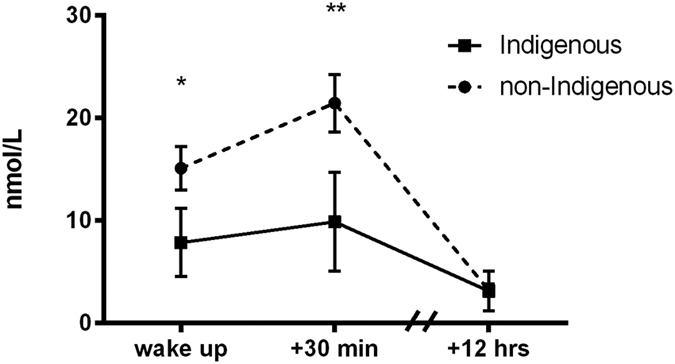
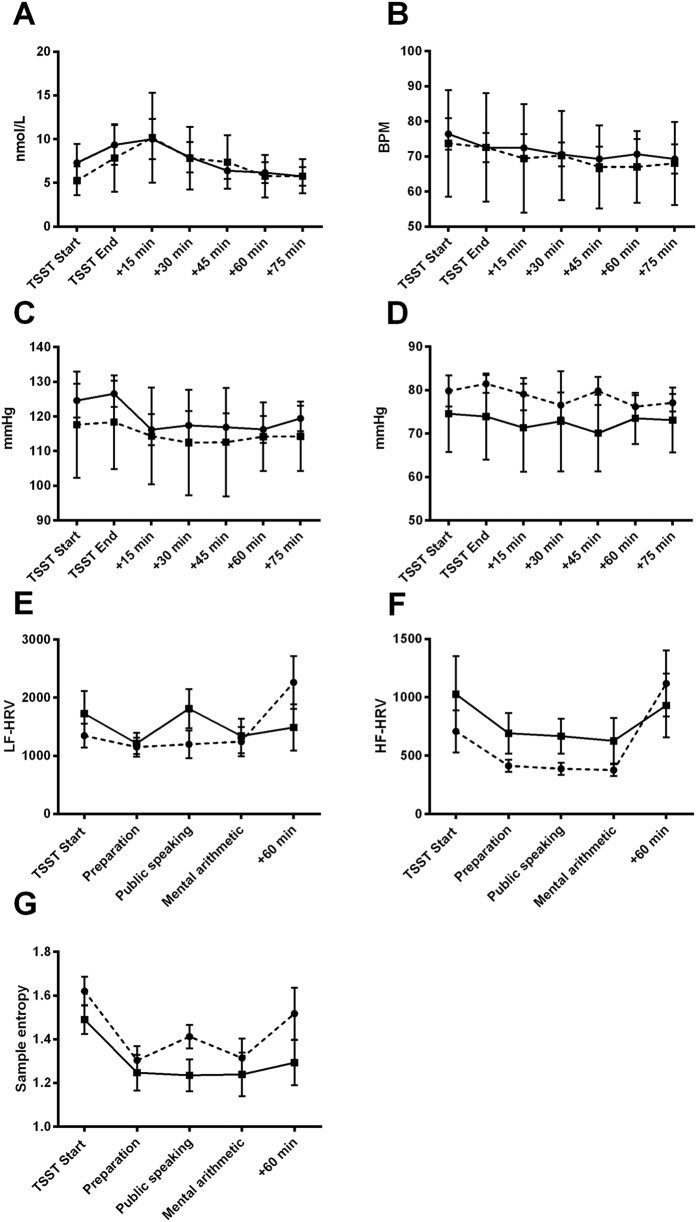
First Nations people globally have a higher incidence of mental disorders and non-communicable diseases. These health inequalities are partially attributed to a complex network of social and environmental factors which likely converge on chronic psychosocial stress. We hypothesized that alterations in stress processing and the regulation of the hypothalamic-pituitary-adrenal axis might underlie health disparities in First Nations people. We assessed the cortisol awakening response and the dynamic response to a laboratory induced psychosocial stress of young Indigenous tertiary students (n = 11, mean age 23.82 years) and non-Indigenous students (n = 11) matched for age and gender. Indigenous participants had a blunted cortisol awakening response (27.40 (SD 35.00) vs. 95.24 (SD 55.23), p = 0.002), which was differentially associated with chronic experience of stress in Indigenous (r = -0.641, p = 0.046) and non-Indigenous (r = 0.652, p = 0.03) participants. The cortisol response to the laboratory induced psychosocial stress did not differ between groups. Self-reported racial discrimination was strongly associated with flattened cortisol response to stress (r = -0676, p = 0.022) and with heart rate variability (r = 0.654, p = 0.040). Our findings provide insight into potential biological factors underlying health discrepancies in ethnic minority groups.
全球原住民人群的精神障碍和非传染性疾病发病率较高。这些健康不平等现象部分归因于社会和环境因素的复杂网络,这些因素可能集中在慢性心理社会压力上。我们假设,压力处理和下丘脑-垂体-肾上腺轴的调节变化可能是原住民人群健康差异的基础。我们评估了年轻原住民大学生(n=11,平均年龄 23.82 岁)和非原住民学生(n=11)的皮质醇觉醒反应和对实验室诱发的心理社会应激的动态反应,这些学生按年龄和性别匹配。原住民参与者的皮质醇觉醒反应减弱(27.40(SD 35.00)与 95.24(SD 55.23),p=0.002),这与原住民(r=-0.641,p=0.046)和非原住民(r=-0.652,p=0.03)参与者的慢性应激经历存在差异。两组间对实验室诱发的心理社会应激的皮质醇反应没有差异。自我报告的种族歧视与应激时皮质醇反应减弱(r=-0.676,p=0.022)和心率变异性(r=0.654,p=0.040)强烈相关。我们的研究结果提供了对少数民族群体健康差异潜在生物学因素的深入了解。