Leppanen J, Cardi V, Ng K W, Paloyelis Y, Stein D, Tchanturia K, Treasure J
Department of Psychological Medicine, Institute of Psychiatry, Psychology, and Neuroscience, King's College London, London, UK.
Singapore General Hospital, Singapore, Singapore.
J Neuroendocrinol. 2017 Mar;29(3):n/a. doi: 10.1111/jne.12458.
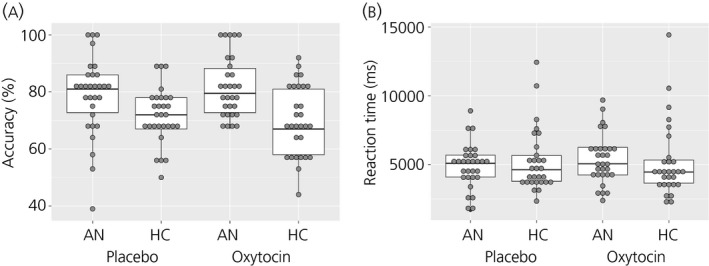
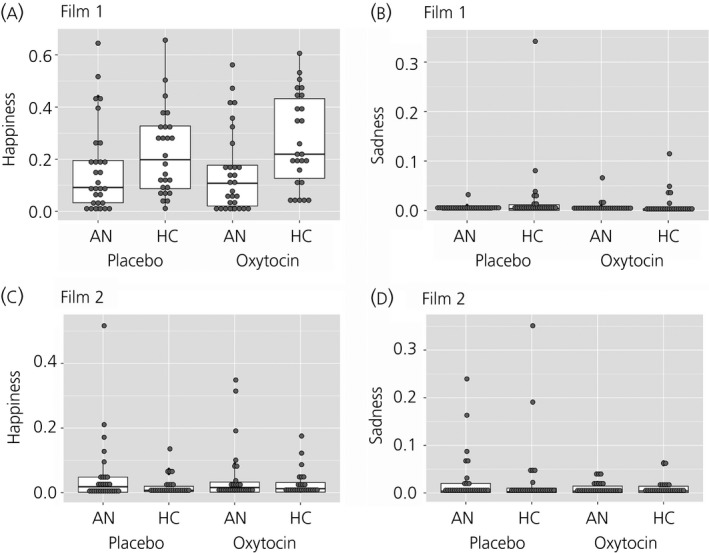
Altered social-emotional functioning is considered to play an important role in the development and maintenance of anorexia nervosa (AN). Recently, there has been increasing interest in investigating the role of intranasal oxytocin in social-emotional processing. The present study aimed to investigate the effects of intranasal oxytocin on the interpretation and expression of emotions among people with AN. Thirty women with AN and 29 age-matched healthy women took part in the present study, which used a double-blind, placebo-controlled, cross-over design. The participants received a single dose of 40 IU of intranasal oxytocin in one session and a placebo spray in the other. Fifteen minutes after administration, the participants completed the Reading the Mind in the Eyes Test to assess the interpretation of complex emotions and mental states followed by a video task, which assessed expressions of facial affect when they were viewing humorous and sad film clips. The intranasal oxytocin did not significantly influence the expression or interpretation of emotions in the AN or healthy comparison groups. The AN group expressed significantly less positive emotion, spent more time looking away and reported experiencing a significantly more negative affect in response to the film clips. The finding that intranasal oxytocin had little to no effect on the interpretation or expression of emotions in either group supports the notion that the effects of oxytocin on social-emotional processing are not straightforward and may depend on individual and environmental differences, as well as the emotion being processed. Replication of these findings is necessary to explore the effect of timing on the effects of oxytocin before firm conclusions can be drawn. Nonetheless, these findings add to the steady accumulation of evidence that people with AN have reduced emotional expression and avoidance of emotionally provoking stimuli.
社交情感功能的改变被认为在神经性厌食症(AN)的发展和维持中起重要作用。最近,人们对研究鼻内催产素在社交情感处理中的作用越来越感兴趣。本研究旨在调查鼻内催产素对AN患者情绪解读和表达的影响。30名患有AN的女性和29名年龄匹配的健康女性参与了本研究,该研究采用双盲、安慰剂对照、交叉设计。参与者在一个阶段接受单剂量40国际单位的鼻内催产素,在另一个阶段接受安慰剂喷雾。给药15分钟后,参与者完成了“眼神读心测试”以评估复杂情绪和心理状态的解读,随后进行了一项视频任务,该任务评估了她们观看幽默和悲伤电影片段时的面部情感表达。鼻内催产素对AN组或健康对照组的情绪表达或解读没有显著影响。AN组表达的积极情绪明显较少,更多时间看向别处,并报告对电影片段的负面情绪明显更多。鼻内催产素对两组的情绪解读或表达几乎没有影响这一发现支持了这样一种观点,即催产素对社交情感处理的影响并非直接的,可能取决于个体和环境差异以及所处理的情绪。在得出确凿结论之前,有必要重复这些发现以探索时间对催产素效果的影响。尽管如此,这些发现进一步证明了AN患者情绪表达减少且回避情绪激发性刺激这一证据的不断积累。