Department of Medicine, Addenbrooke's Hospital, University of Cambridge, Cambridge CB20QQ, UK.
Laboratory for Molecular Pharmacology, Department of Neuroscience and Pharmacology, Faculty of Health and Medical Sciences, University of Copenhagen, Copenhagen DK-2200, Denmark.
Nat Commun. 2017 Feb 2;8:14321. doi: 10.1038/ncomms14321.
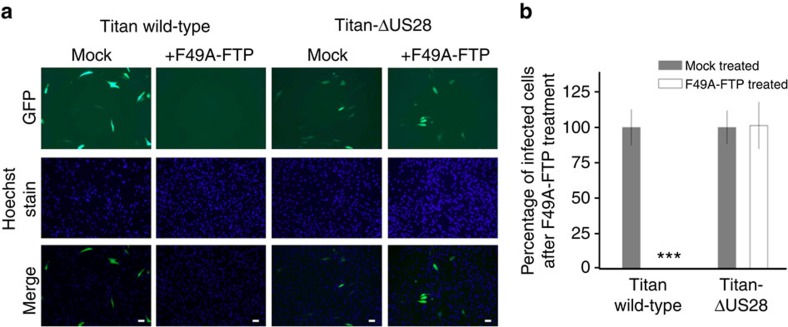
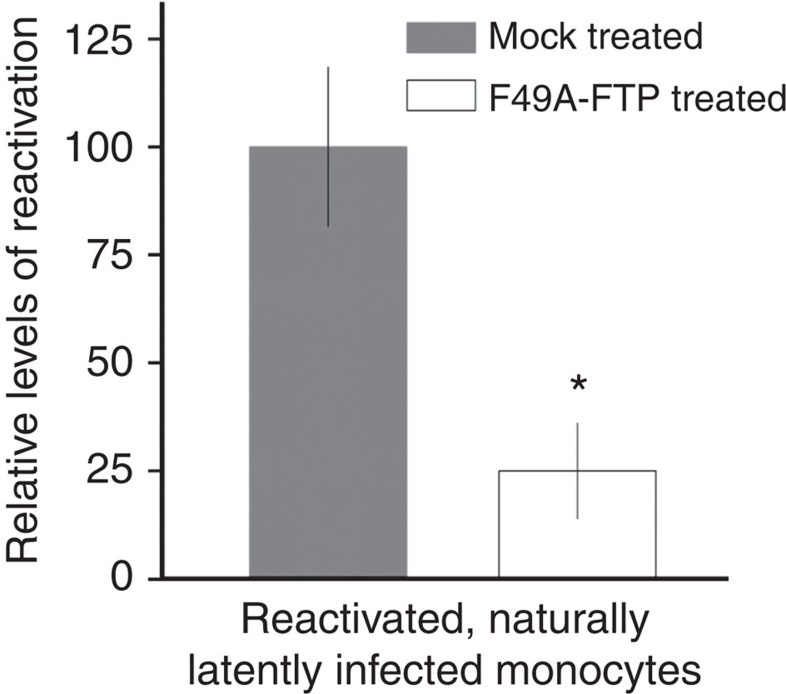
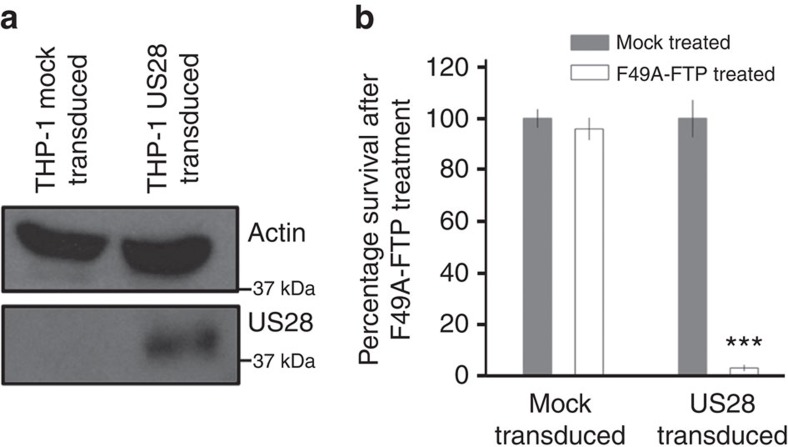
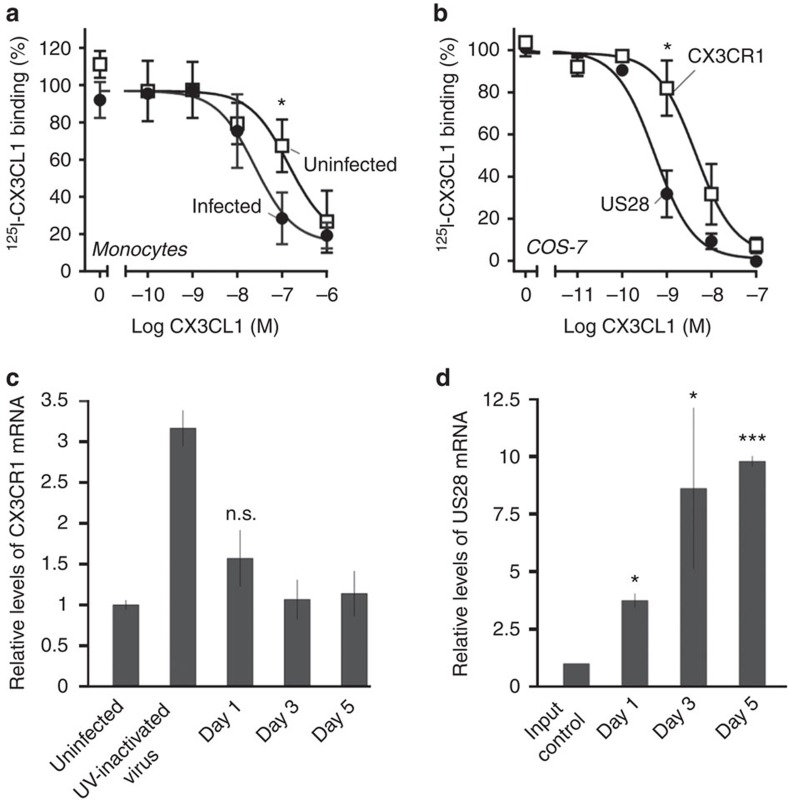
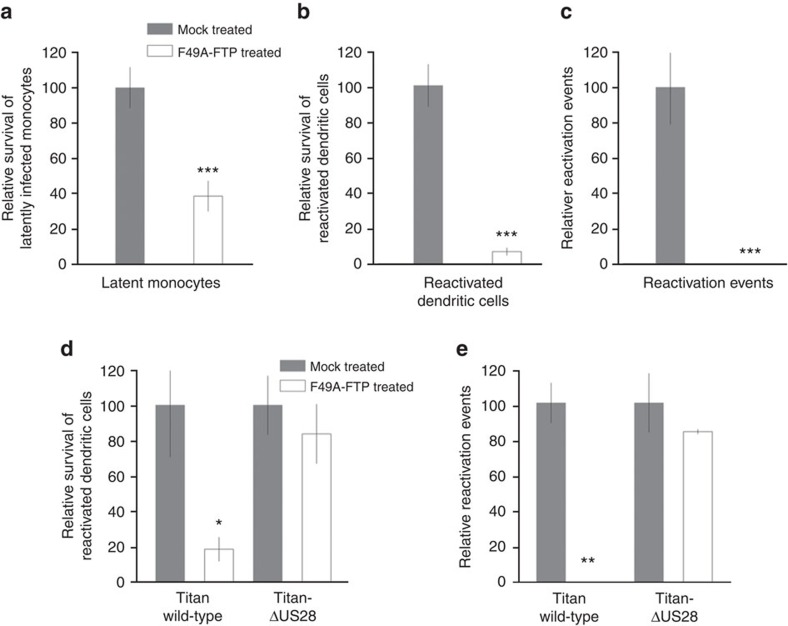
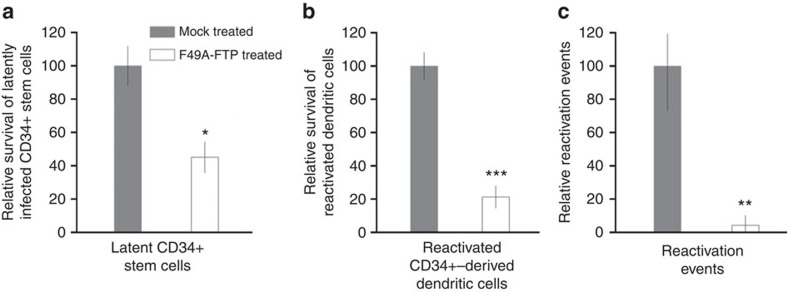
Reactivation of human cytomegalovirus (HCMV) in transplant recipients can cause life-threatening disease. Consequently, for transplant recipients, killing latently infected cells could have far-reaching clinical benefits. In vivo, myeloid cells and their progenitors are an important site of HCMV latency, and one viral gene expressed by latently infected myeloid cells is US28. This viral gene encodes a cell surface G protein-coupled receptor (GPCR) that binds chemokines, triggering its endocytosis. We show that the expression of US28 on the surface of latently infected cells allows monocytes and their progenitor CD34+ cells to be targeted and killed by F49A-FTP, a highly specific fusion toxin protein that binds this viral GPCR. As expected, this specific targeting of latently infected cells by F49A-FTP also robustly reduces virus reactivation in vitro. Consequently, such specific fusion toxin proteins could form the basis of a therapeutic strategy for eliminating latently infected cells before haematopoietic stem cell transplantation.
人巨细胞病毒(HCMV)在移植受者中的再激活可导致危及生命的疾病。因此,对于移植受者来说,杀死潜伏感染的细胞可能具有深远的临床获益。在体内,髓样细胞及其前体细胞是 HCMV 潜伏的重要部位,潜伏感染的髓样细胞表达的一种病毒基因是 US28。该病毒基因编码一种细胞表面 G 蛋白偶联受体(GPCR),可结合趋化因子,触发其内化。我们表明,潜伏感染细胞表面 US28 的表达可使单核细胞及其祖细胞 CD34+细胞被 F49A-FTP 靶向和杀死,F49A-FTP 是一种高度特异性的融合毒素蛋白,可结合该病毒 GPCR。正如预期的那样,F49A-FTP 对潜伏感染细胞的这种特异性靶向也可在体外强烈抑制病毒再激活。因此,这种特异性融合毒素蛋白可作为在造血干细胞移植前消除潜伏感染细胞的治疗策略的基础。