Amsterdam Institute for Molecular and Life Sciences (AIMMS), Division of Medicinal Chemistry, Faculty of Science, VU University, De Boelelaan 1108, Amsterdam, The Netherlands.
Department of Medical Imaging, In Vivo Cellular and Molecular Imaging Laboratory (ICMI), Vrije Universiteit Brussel (VUB), Laarbeeklaan 103, Brussels, Belgium.
Nat Commun. 2021 Jul 21;12(1):4436. doi: 10.1038/s41467-021-24608-5.
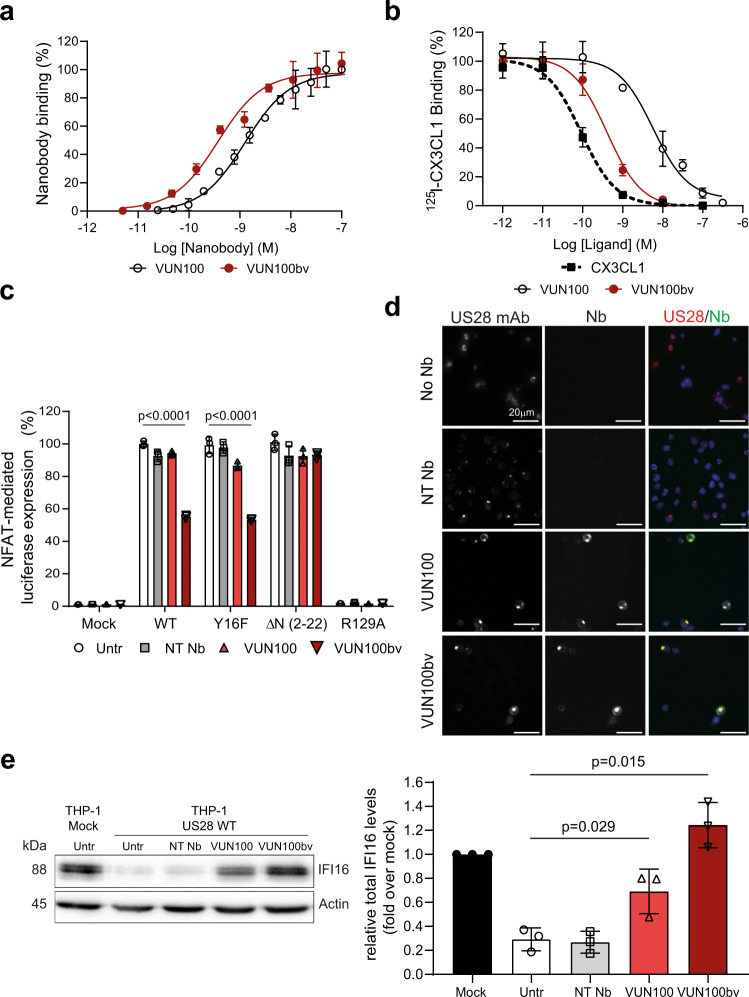
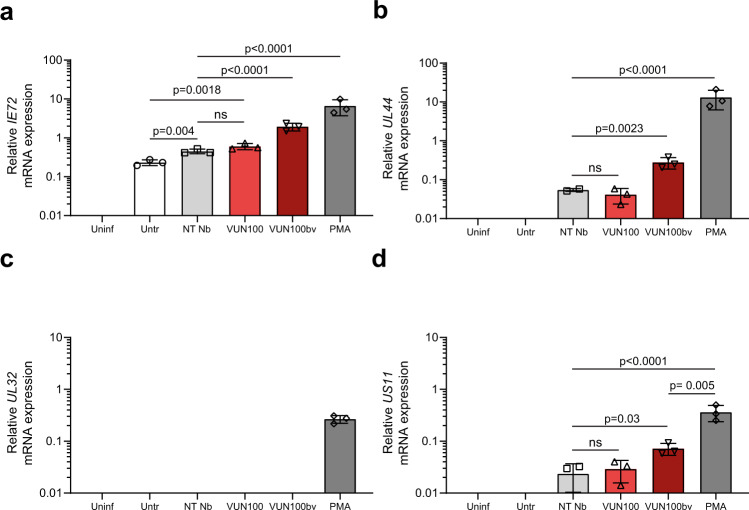
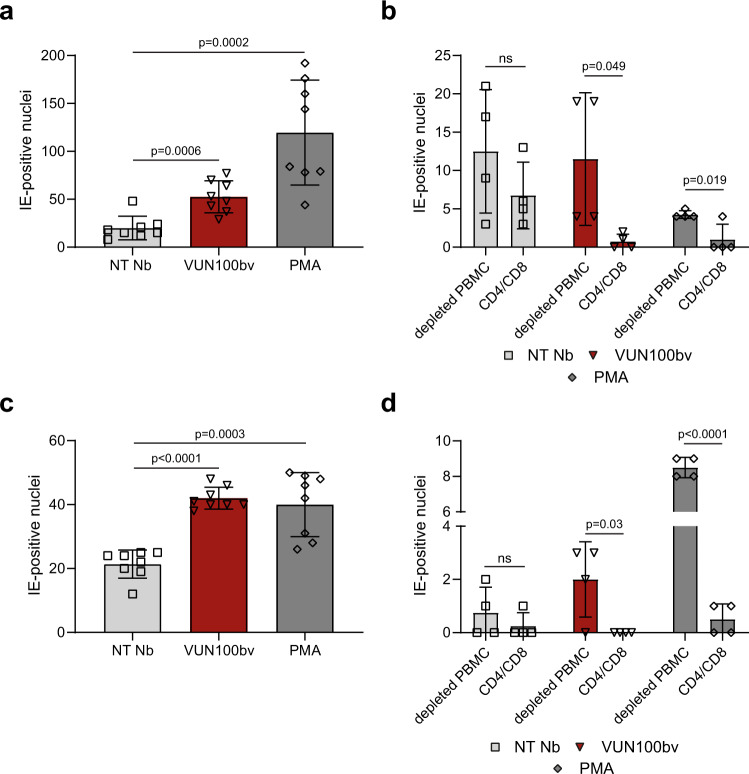
Latent human cytomegalovirus (HCMV) infection is characterized by limited gene expression, making latent HCMV infections refractory to current treatments targeting viral replication. However, reactivation of latent HCMV in immunosuppressed solid organ and stem cell transplant patients often results in morbidity. Here, we report the killing of latently infected cells via a virus-specific nanobody (VUN100bv) that partially inhibits signaling of the viral receptor US28. VUN100bv reactivates immediate early gene expression in latently infected cells without inducing virus production. This allows recognition and killing of latently infected monocytes by autologous cytotoxic T lymphocytes from HCMV-seropositive individuals, which could serve as a therapy to reduce the HCMV latent reservoir of transplant patients.
潜伏的人类巨细胞病毒(HCMV)感染的特征是有限的基因表达,这使得潜伏的 HCMV 感染对目前针对病毒复制的治疗方法具有抗性。然而,潜伏的 HCMV 在免疫抑制的实体器官和干细胞移植患者中的重新激活通常会导致发病。在这里,我们报告了通过一种病毒特异性纳米体(VUN100bv)杀死潜伏感染细胞,该纳米体部分抑制了病毒受体 US28 的信号传导。VUN100bv 在不诱导病毒产生的情况下重新激活潜伏感染细胞中的早期基因表达。这使得潜伏感染的单核细胞能够被来自 HCMV 血清阳性个体的自体细胞毒性 T 淋巴细胞识别和杀死,这可以作为一种减少移植患者 HCMV 潜伏库的治疗方法。