Bhargav Hemant, Srinivasan T M, Bista Suman, Mooventhan A, Suresh Vandana, Hankey Alex, Nagendra H R
Division of Yoga and Life Sciences, S-VYASA Yoga University, Bengaluru, Karnataka, India.
Division of Yoga and Physical Sciences, S-VYASA Yoga University, Bengaluru, Karnataka, India.
Int J Yoga. 2017 Jan-Apr;10(1):16-23. doi: 10.4103/0973-6131.186163.
Mobile phones induce radio frequency electromagnetic field (RF-EMF) which has been found to affect subtle energy levels of adults through Electrophotonic Imaging (EPI) technique in a previous pilot study.
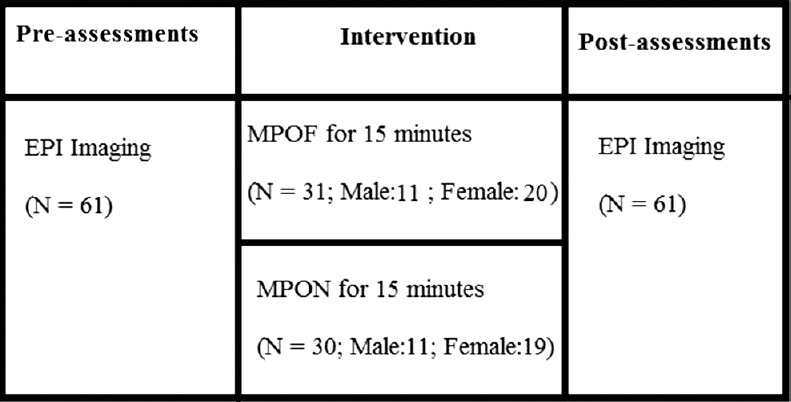
We enrolled 61 healthy right-handed healthy teenagers (22 males and 39 females) in the age range of 17.40 ± 0.24 years from educational institutes in Bengaluru. Subjects were randomly divided into two groups: (1) (mobile phone in ON mode [MPON] at right ear) and (2) mobile phone in OFF mode (MPOF). Subtle energy levels of various organs of the subjects were measured using gas discharge visualization Camera Pro device, in double-blind conditions, at two points of time: (1) baseline and (2) after 15 min of MPON/MPOF exposure. As the data were found normally distributed, paired and independent samples -test were applied to perform within and between group comparisons, respectively.
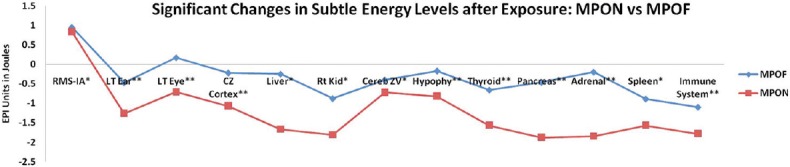
The subtle energy levels were significantly reduced after RF-EMF exposure in MPON group as compared to MPOF group for following areas: (a) Pancreas ( = 0.001), (b) thyroid gland ( = 0.002), (c) cerebral cortex ( < 0.01), (d) cerebral vessels ( < 0.05), (e) hypophysis ( = 0.013), (f) left ear and left eye ( < 0.01), (g) liver ( < 0.05), (h) right kidney ( < 0.05), (i) spleen ( < 0.04), and (j) immune system ( < 0.02).
Fifteen minutes of RF-EMF exposure exerted quantifiable effects on subtle energy levels of endocrine glands, nervous system, liver, kidney, spleen, and immune system of healthy teenagers. Future studies should try to correlate these findings with respective biochemical markers and standard radio-imaging techniques.
手机会产生射频电磁场(RF-EMF),在之前的一项初步研究中发现,通过电子光子成像(EPI)技术,射频电磁场会影响成年人的微妙能量水平。
我们从班加罗尔的教育机构招募了61名年龄在17.40±0.24岁之间的健康右利手青少年(22名男性和39名女性)。受试者被随机分为两组:(1)(手机处于开机模式[MPON],置于右耳)和(2)手机处于关机模式(MPOF)。在双盲条件下,使用气体放电可视化相机专业设备,在两个时间点测量受试者各器官的微妙能量水平:(1)基线时,(2)MPON/MPOF暴露15分钟后。由于数据呈正态分布,分别应用配对样本和独立样本t检验进行组内和组间比较。
与MPOF组相比,MPON组在射频电磁场暴露后,以下区域的微妙能量水平显著降低:(a)胰腺(P = 0.001),(b)甲状腺(P = 0.002),(c)大脑皮层(P < 0.01),(d)脑血管(P < 0.05),(e)垂体(P = 0.013),(f)左耳和左眼(P < 0.01),(g)肝脏(P < 0.05),(h)右肾(P < 0.05),(i)脾脏(P < 0.04),以及(j)免疫系统(P < 0.02)。
15分钟的射频电磁场暴露对健康青少年的内分泌腺、神经系统、肝脏、肾脏、脾脏和免疫系统的微妙能量水平产生了可量化的影响。未来的研究应尝试将这些发现与各自的生化标志物和标准放射成像技术相关联。