Sanchez Hugo Machado, Sanchez Eliane Gouveia DE Morais, Tavares Larissa Ingreddy
. Universidade de Rio Verde (UniRV), Rio Verde, GO, Brazil.
Acta Ortop Bras. 2016 Sep-Oct;24(5):243-248. doi: 10.1590/1413-785220162405142225.
To analyze the position of the scapula and its influence on shoulder pain.
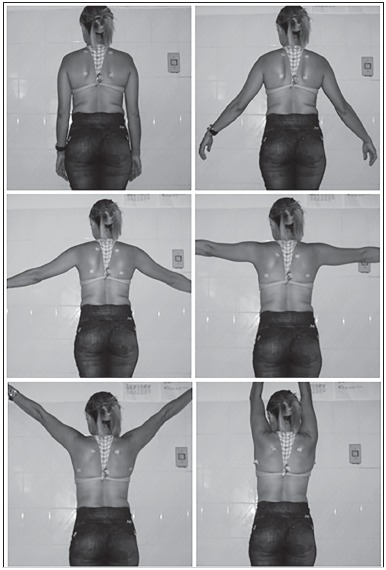
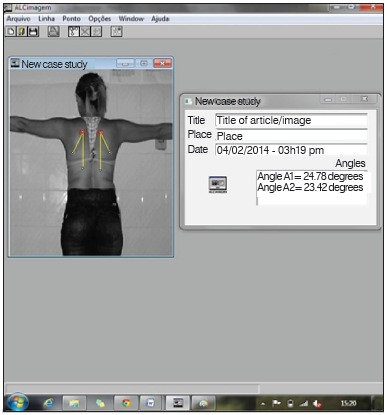
In this study, 30 sedentary young adults of both genders, aged 20-35 years were evaluated. The sample was divided into two groups with the same number of subjects, one group with shoulder pain and the other pain free. The analysis of the positioning of the scapula in six angles of shoulder abduction was taken 0º, 30º, 60º, 90º, 120º and 180º.
Comparison the left and right scapular movements in males of the pain group, there was a significant difference at 30º (p = 0.018) and 120º (p = 0.04). Comparing the right and left shoulders in the pain group, there was a significant difference at 0º (p = 0.03).
This study concludes that changing the positioning of the scapula affects shoulder pain in sedentary young adult males at certain specific positions. Level of Evidence III, Study of non consecutive patients; without consistently applied reference ''gold'' standard.
分析肩胛骨的位置及其对肩部疼痛的影响。
本研究对30名年龄在20 - 35岁的久坐不动的青年男女进行了评估。样本被分为两组,每组人数相同,一组有肩部疼痛,另一组无疼痛。在肩部外展的六个角度(0°、30°、60°、90°、120°和180°)对肩胛骨的位置进行分析。
比较疼痛组男性左右肩胛骨的运动,在30°(p = 0.018)和120°(p = 0.04)时有显著差异。比较疼痛组的左右肩,在0°(p = 0.03)时有显著差异。
本研究得出结论,改变肩胛骨的位置会在某些特定位置影响久坐不动的青年男性的肩部疼痛。证据等级III,非连续患者研究;未始终应用参考“金”标准。