Jonasson Lars S, Nyberg Lars, Kramer Arthur F, Lundquist Anders, Riklund Katrine, Boraxbekk Carl-Johan
Department of Radiation Sciences, Diagnostic Radiology, Umeå UniversityUmeå, Sweden; Umeå Center for Functional Brain Imaging, Umeå UniversityUmeå, Sweden; Center for Demographic and Aging Research, Umeå UniversityUmeå, Sweden.
Department of Radiation Sciences, Diagnostic Radiology, Umeå UniversityUmeå, Sweden; Umeå Center for Functional Brain Imaging, Umeå UniversityUmeå, Sweden; Department of Integrative Medical Biology, Physiology, Umeå UniversityUmeå, Sweden.
Front Aging Neurosci. 2017 Jan 18;8:336. doi: 10.3389/fnagi.2016.00336. eCollection 2016.
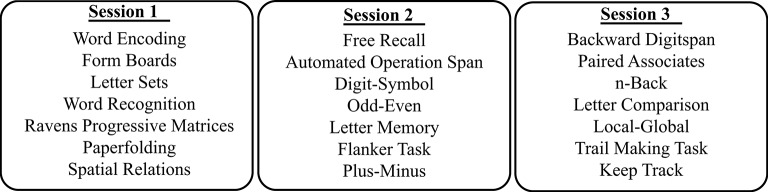
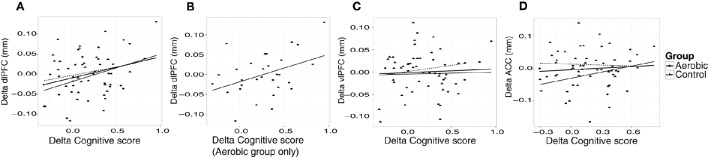
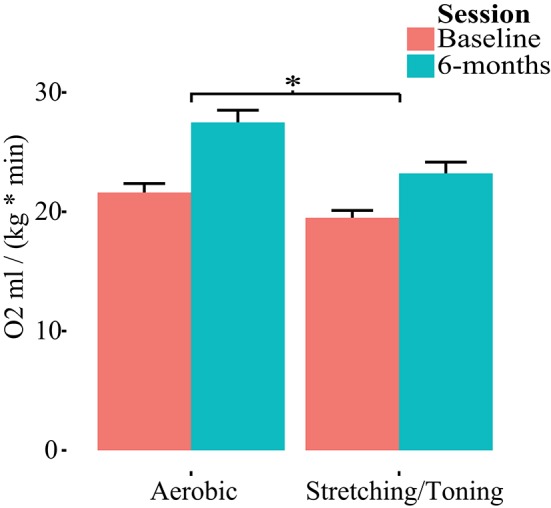
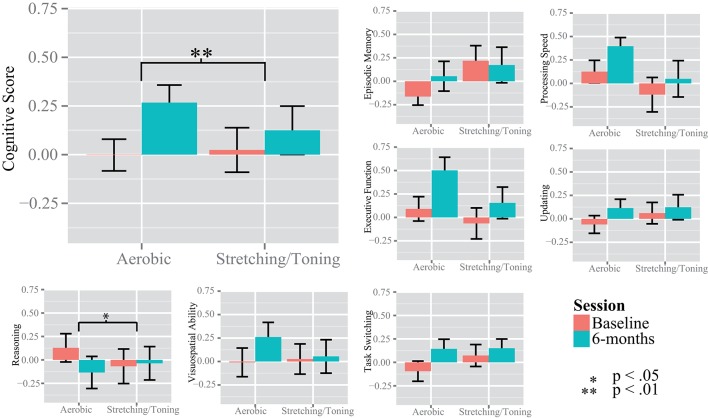
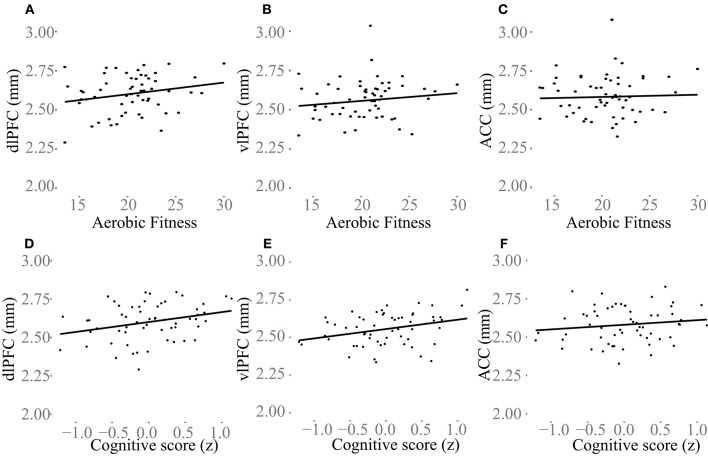
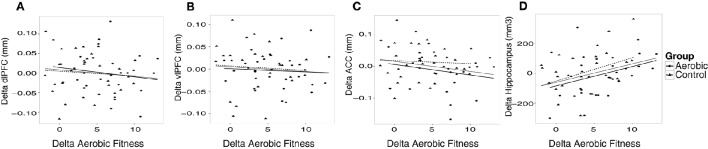
Studies have shown that aerobic exercise has the potential to improve cognition and reduce brain atrophy in older adults. However, the literature is equivocal with regards to the specificity or generality of these effects. To this end, we report results on cognitive function and brain structure from a 6-month training intervention with 60 sedentary adults (64-78 years) randomized to either aerobic training or stretching and toning control training. Cognitive functions were assessed with a neuropsychological test battery in which cognitive constructs were measured using several different tests. Freesurfer was used to estimate cortical thickness in frontal regions and hippocampus volume. Results showed that aerobic exercisers, compared to controls, exhibited a broad, rather than specific, improvement in cognition as indexed by a higher "Cognitive score," a composite including episodic memory, processing speed, updating, and executive function tasks ( = 0.01). There were no group differences in cortical thickness, but additional analyses revealed that aerobic fitness at baseline was specifically related to larger thickness in dorsolateral prefrontal cortex (dlPFC), and hippocampus volume was positively associated with increased aerobic fitness over time. Moreover, "Cognitive score" was related to dlPFC thickness at baseline, but changes in "Cognitive score" and dlPFC thickness were associated over time in the aerobic group only. However, aerobic fitness did not predict dlPFC change, despite the improvement in "Cognitive score" in aerobic exercisers. Our interpretation of these observations is that potential exercise-induced changes in thickness are slow, and may be undetectable within 6-months, in contrast to change in hippocampus volume which in fact was predicted by the change in aerobic fitness. To conclude, our results add to a growing literature suggesting that aerobic exercise has a broad influence on cognitive functioning, which may aid in explaining why studies focusing on a narrower range of functions have sometimes reported mixed results.
研究表明,有氧运动有改善老年人认知能力和减少脑萎缩的潜力。然而,关于这些影响的特异性或普遍性,文献尚无定论。为此,我们报告了一项针对60名久坐不动的成年人(64 - 78岁)的6个月训练干预的认知功能和脑结构结果,这些成年人被随机分为有氧训练组或伸展和塑形对照组。使用一套神经心理测试评估认知功能,其中认知结构通过几种不同测试进行测量。利用Freesurfer软件估计额叶区域的皮质厚度和海马体体积。结果显示,与对照组相比,有氧锻炼者在认知方面有广泛而非特定的改善,以较高的“认知分数”为指标,该分数是一个综合指标,包括情景记忆、处理速度、更新和执行功能任务( = 0.01)。两组在皮质厚度上没有差异,但进一步分析表明,基线时的有氧适能与背外侧前额叶皮质(dlPFC)更厚的厚度特别相关,并且海马体体积与随时间增加的有氧适能呈正相关。此外,“认知分数”与基线时的dlPFC厚度相关,但仅在有氧训练组中,“认知分数”的变化和dlPFC厚度的变化随时间相关。然而,尽管有氧锻炼者的“认知分数”有所改善,但有氧适能并不能预测dlPFC的变化。我们对这些观察结果的解释是,与海马体体积的变化不同,潜在的运动引起的厚度变化很缓慢,可能在6个月内无法检测到,而海马体体积的变化实际上是由有氧适能的变化预测的。总之,我们的结果为越来越多的文献增添了内容,表明有氧运动对认知功能有广泛影响,这可能有助于解释为什么专注于较窄功能范围的研究有时会报告不一致的结果。