Loveridge Andrew J, Kuiper Timothy, Parry Roger H, Sibanda Lovemore, Hunt Jane Hunt, Stapelkamp Brent, Sebele Lovelater, Macdonald David W
WildCRU, Zoology Department, University of Oxford , Oxford , United Kingdom.
Victoria Falls Wildlife Trust , Victoria Falls , Zimbabwe.
PeerJ. 2017 Jan 24;5:e2898. doi: 10.7717/peerj.2898. eCollection 2017.
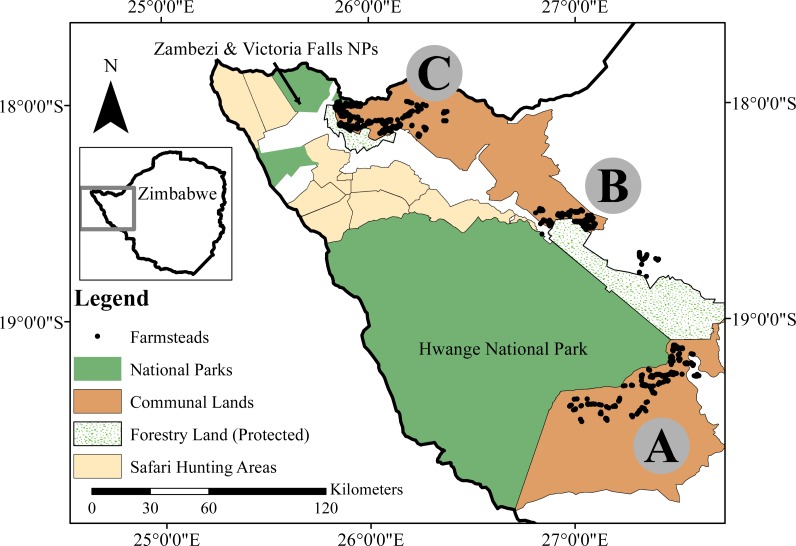
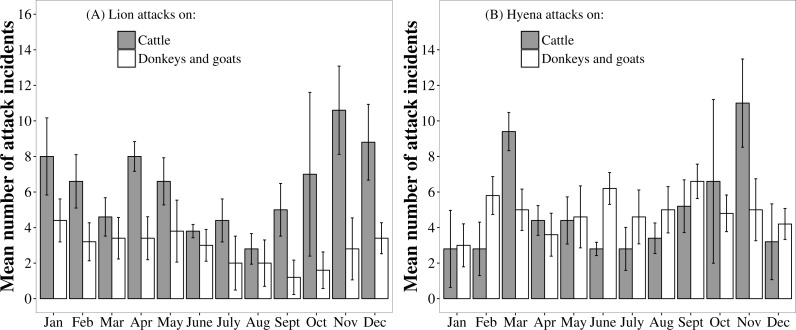
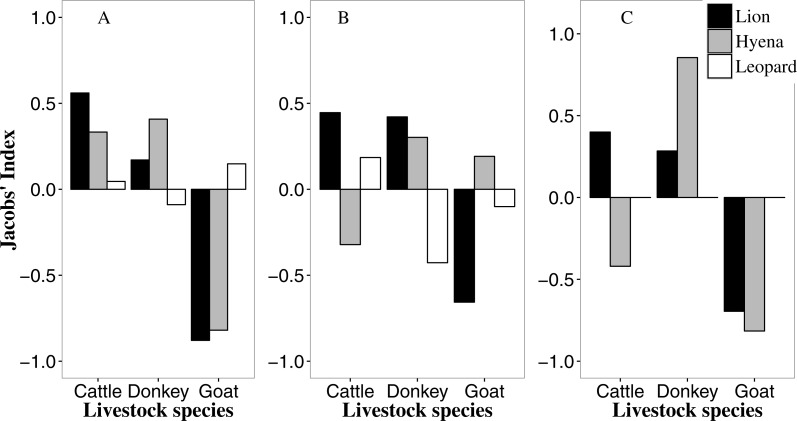
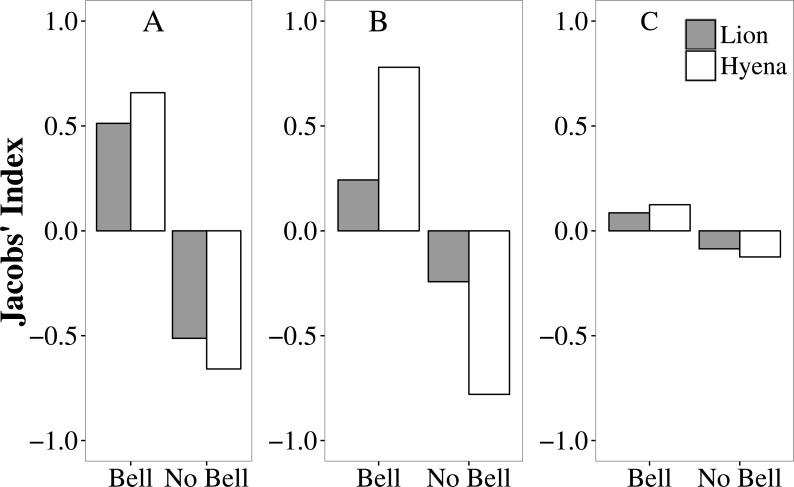
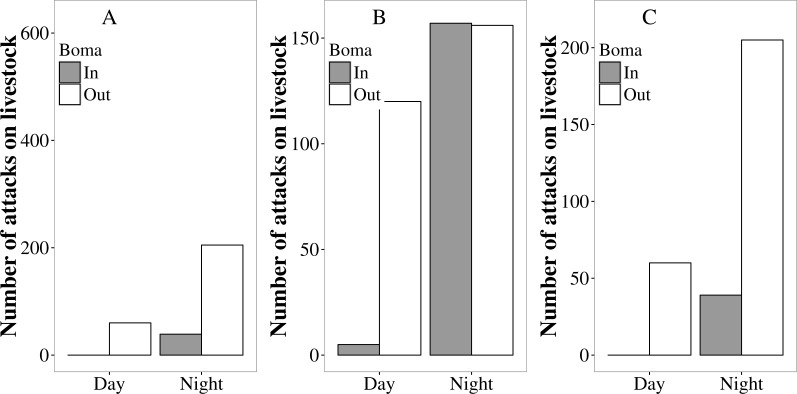
Reports of livestock depredation by large predators were systematically collected at three study sites in northwestern Zimbabwe from 2008-2013. We recorded 1,527 incidents (2,039 animals killed and 306 injured). Lions () and spotted hyaenas () were mostly responsible, and cattle and donkeys most frequently attacked. Patterns of predation were variable among study sites. Nevertheless, some overall patterns were apparent. Predators selected livestock close to the size of their preferred wild prey, suggesting behaviours evolved to optimise foraging success may determine the domestic species primarily preyed upon. Most attacks occurred when livestock were roaming outside and away from their 'home' protective enclosures at night. Hyaena attacks were largely nocturnal; lions and leopards () were more flexible, with attacks occurring by day and at night. Livestock fitted with bells suffered a disproportionate number of attacks; the sound of bells appears to have conditioned predators to associate the sound with foraging opportunities. Lion and hyaena attacks on cattle were more frequent in the wet season suggesting that seasonal herding practices may result in cattle vulnerability. Only a small proportion of conflict incidents were reported to wildlife management officials with a bias towards lion predation events, potentially prejudicing conflict management policies. Predation on domestic stock involves an intricate interplay between predator behaviour and ecology on the one hand and human behaviour and husbandry practices on the other. Our data suggest that improved livestock husbandry (supervision of grazing animals, protection at night in strong enclosures) would greatly reduce livestock depredation.
2008年至2013年期间,在津巴布韦西北部的三个研究地点,系统收集了大型食肉动物捕食牲畜的报告。我们记录了1527起事件(2039只动物被杀死,306只受伤)。狮子()和斑鬣狗()是主要肇事者,牛和驴是最常被攻击的对象。不同研究地点的捕食模式各不相同。然而,一些总体模式还是很明显的。食肉动物选择与它们偏好的野生猎物大小相近的牲畜,这表明为优化觅食成功率而进化出的行为可能决定了主要被捕食的家畜种类。大多数攻击发生在夜间牲畜在“家”的防护围栏外游荡时。鬣狗的攻击主要在夜间进行;狮子和豹()则更为灵活,白天和夜间都会发动攻击。佩戴铃铛的牲畜遭受的攻击数量过多;铃铛的声音似乎使食肉动物习惯于将这种声音与觅食机会联系起来。狮子和鬣狗在雨季对牛的攻击更为频繁,这表明季节性放牧方式可能导致牛更容易受到攻击。只有一小部分冲突事件报告给了野生动物管理官员,而且偏向于狮子捕食事件,这可能会对冲突管理政策产生不利影响。家畜被捕食涉及到一方面食肉动物行为与生态,另一方面人类行为与饲养方式之间的复杂相互作用。我们的数据表明,改进家畜饲养方式(对放牧动物的监督、夜间在坚固围栏中保护)将大大减少家畜被捕食的情况。