Chelminski Yan, Magnan Christophe, Luquet Serge H, Everard Amandine, Meunier Nicolas, Gurden Hirac, Martin Claire
UMR 8165 Centre National de la Recherche Scientifique, IMNC, Paris Sud University, Paris Diderot University Orsay, France.
UMR 8251 Centre National de la Recherche Scientifique, BFA, Paris Diderot University, Sorbonne Paris Cité University Paris, France.
Front Physiol. 2017 Jan 19;8:2. doi: 10.3389/fphys.2017.00002. eCollection 2017.
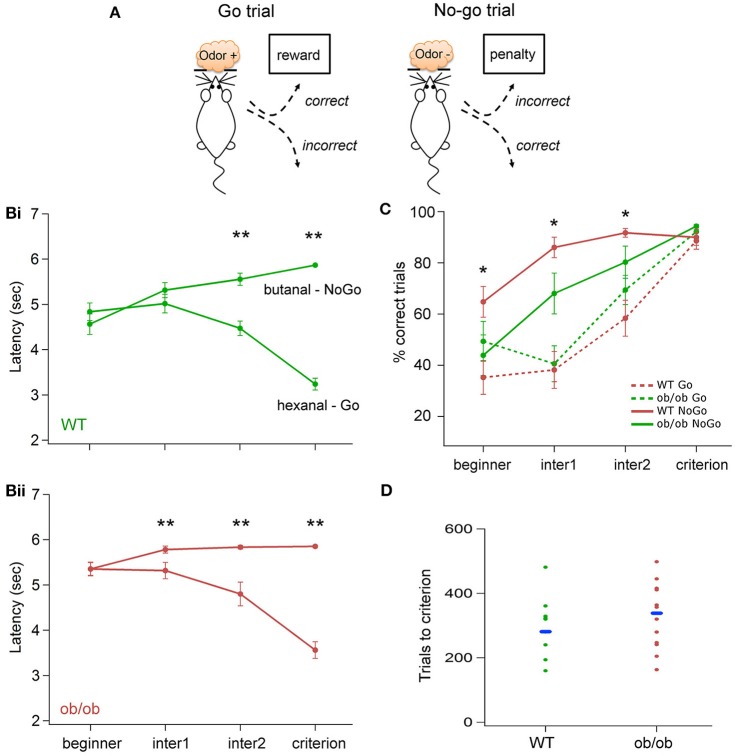
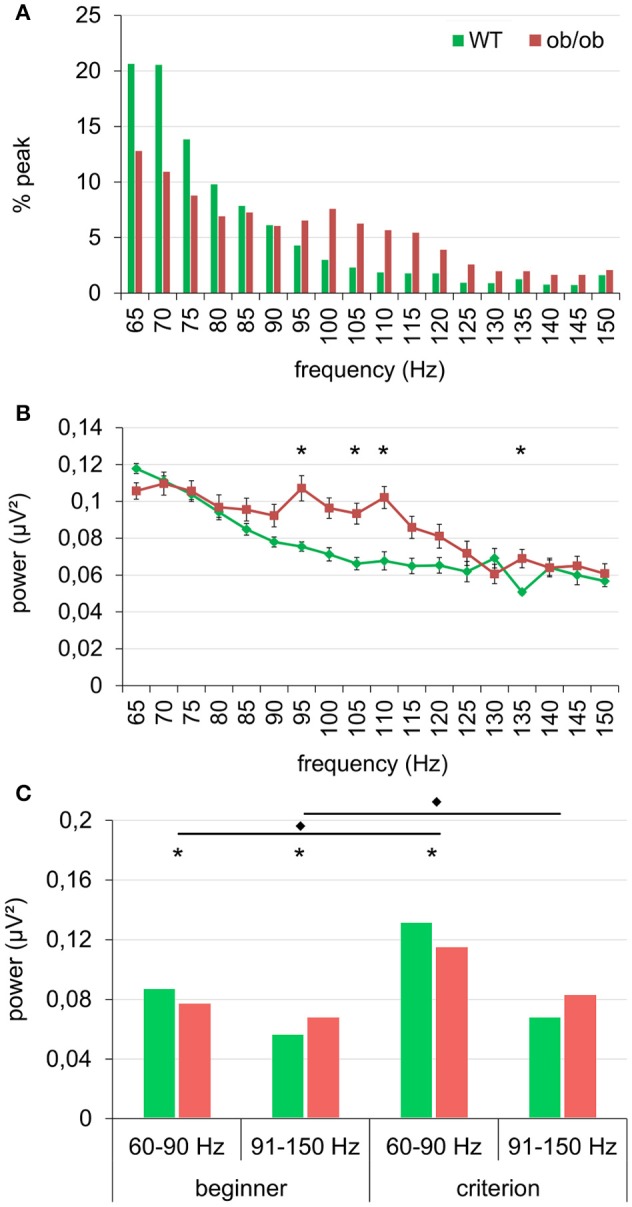
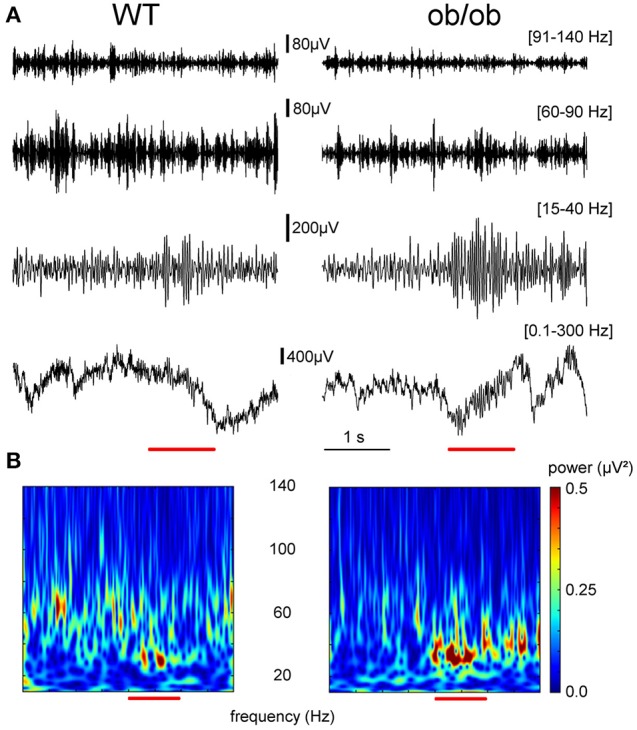
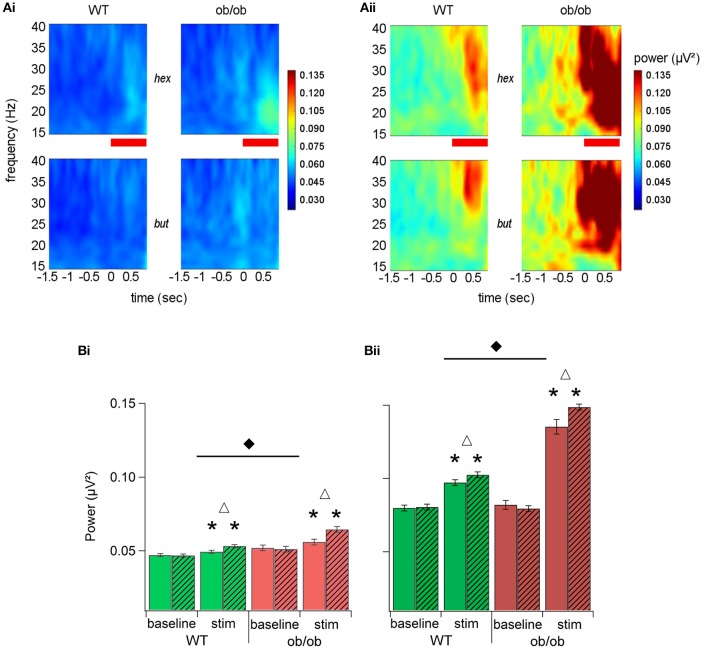
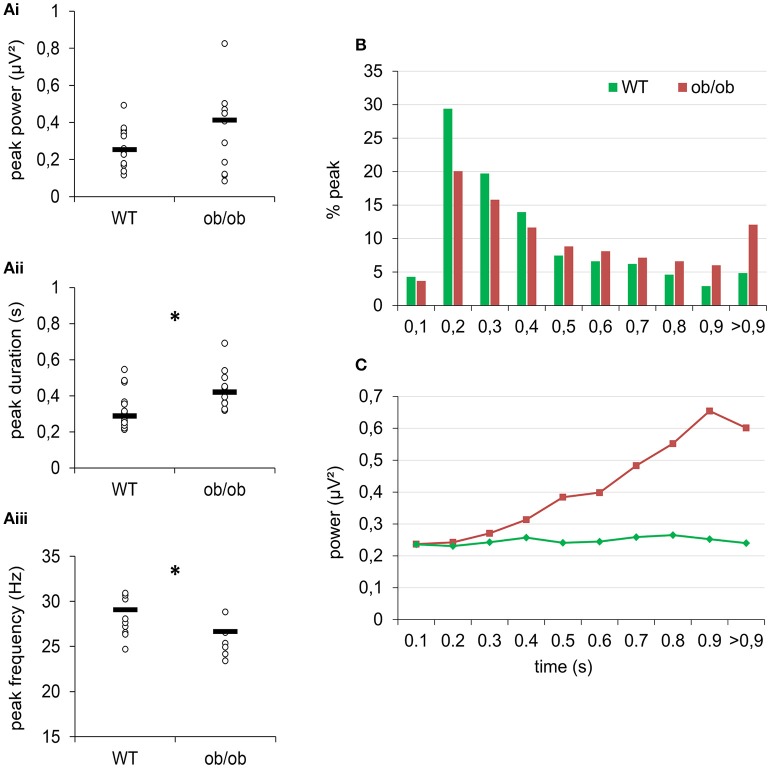
Leptin, the product of the Ob(Lep) gene, is a peptide hormone that plays a major role in maintaining the balance between food intake and energy expenditure. In the brain, leptin receptors are expressed by hypothalamic cells but also in the olfactory bulb, the first central structure coding for odors, suggesting a precise function of this hormone in odor-evoked activities. Although olfaction plays a key role in feeding behavior, the ability of the olfactory bulb to integrate the energy-related signal leptin is still missing. Therefore, we studied the fate of odor-induced activity in the olfactory bulb in the genetic context of leptin deficiency using the obese ob/ob mice. By means of an odor discrimination task with concomitant local field potential recordings, we showed that ob/ob mice perform better than wild-type (WT) mice in the early stage of the task. This behavioral gain of function was associated in parallel with profound changes in neuronal oscillations in the olfactory bulb. The distribution of the peaks in the gamma frequency range was shifted toward higher frequencies in ob/ob mice compared to WT mice before learning. More notably, beta oscillatory activity, which has been shown previously to be correlated with olfactory discrimination learning, was longer and stronger in expert ob/ob mice after learning. Since oscillations in the olfactory bulb emerge from mitral to granule cell interactions, our results suggest that cellular dynamics in the olfactory bulb are deeply modified in ob/ob mice in the context of olfactory learning.
瘦素是肥胖(Ob)基因(Lep)的产物,是一种肽类激素,在维持食物摄入与能量消耗之间的平衡中起主要作用。在大脑中,下丘脑细胞表达瘦素受体,嗅球中也有表达,嗅球是编码气味的第一个中枢结构,这表明该激素在气味诱发活动中具有精确功能。尽管嗅觉在进食行为中起关键作用,但嗅球整合与能量相关信号瘦素的能力仍不明确。因此,我们利用肥胖的ob/ob小鼠,在瘦素缺乏的基因背景下研究了嗅球中气味诱发活动的情况。通过伴随局部场电位记录的气味辨别任务,我们发现ob/ob小鼠在任务早期的表现优于野生型(WT)小鼠。这种行为功能的增强与嗅球神经元振荡的深刻变化同时出现。与学习前的WT小鼠相比,ob/ob小鼠在γ频率范围内峰值的分布向更高频率偏移。更值得注意的是,先前已证明与嗅觉辨别学习相关的β振荡活动,在学习后的熟练ob/ob小鼠中持续时间更长且更强。由于嗅球中的振荡源于二尖瓣细胞与颗粒细胞的相互作用,我们的结果表明,在嗅觉学习的背景下,ob/ob小鼠嗅球中的细胞动力学发生了深刻改变。