Department of Chemosensation, AG Neuromodulation, Institute for Biology II, RWTH Aachen University, 52074, Aachen, Germany.
Cell Tissue Res. 2021 Jan;383(1):507-524. doi: 10.1007/s00441-020-03365-9. Epub 2020 Dec 23.
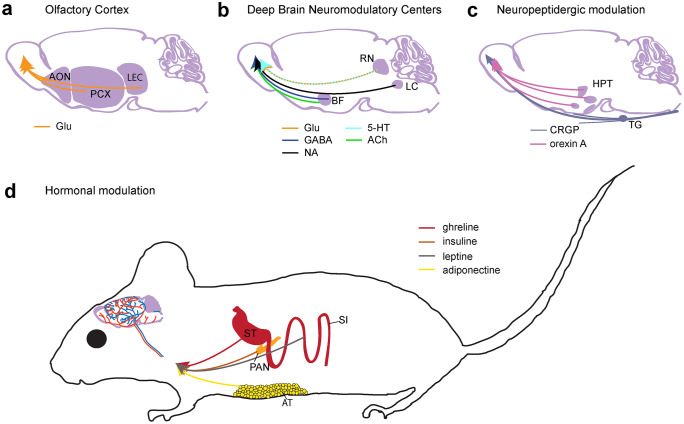
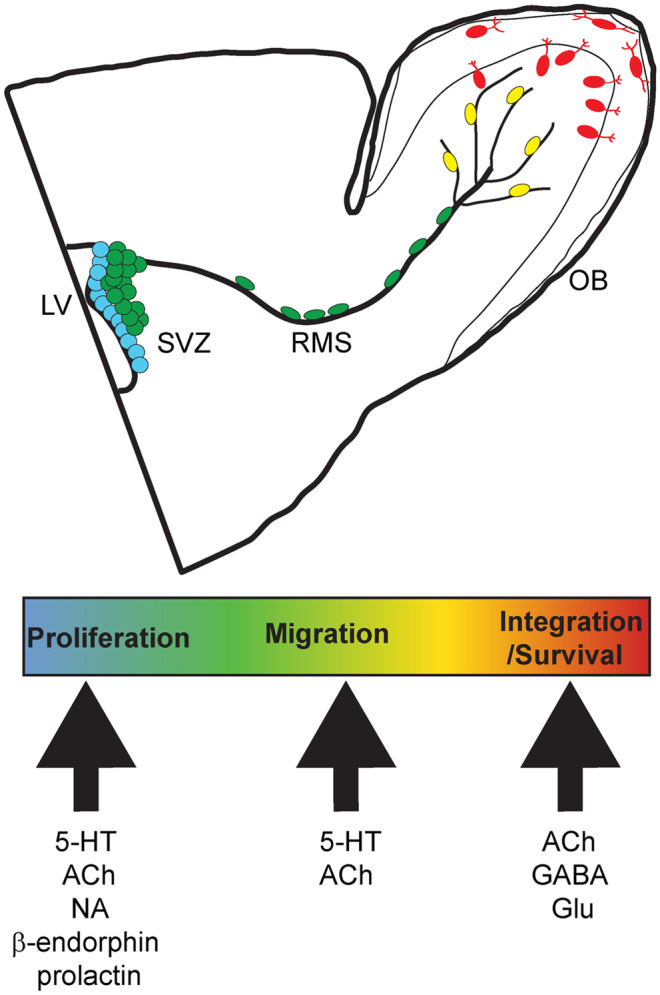
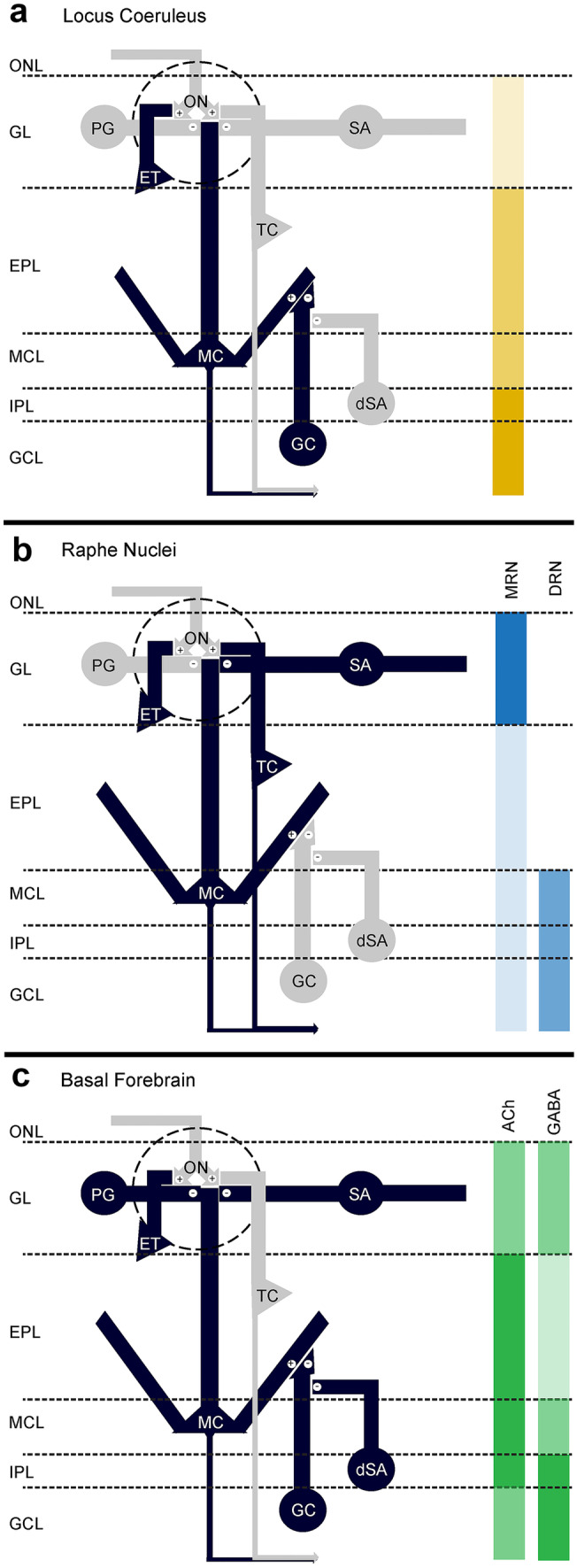
Evolutionarily, olfaction is one of the oldest senses and pivotal for an individual's health and survival. The olfactory bulb (OB), as the first olfactory relay station in the brain, is known to heavily process sensory information. To adapt to an animal's needs, OB activity can be influenced by many factors either from within (intrinsic neuromodulation) or outside (extrinsic neuromodulation) the OB which include neurotransmitters, neuromodulators, hormones, and neuropeptides. Extrinsic sources seem to be of special importance as the OB receives massive efferent input from numerous brain centers even outweighing the sensory input from the nose. Here, we review neuromodulatory processes in the rodent OB from such extrinsic sources. We will discuss extrinsic neuromodulation according to points of origin, receptors involved, affected circuits, and changes in behavior. In the end, we give a brief outlook on potential future directions in research on neuromodulation in the OB.
从进化的角度来看,嗅觉是最古老的感觉之一,对个体的健康和生存至关重要。嗅球(OB)作为大脑中的第一个嗅觉中继站,已知可以对感觉信息进行大量处理。为了适应动物的需要,OB 中的活动可以受到来自内部(内在神经调制)或外部(外在神经调制)的许多因素的影响,这些因素包括神经递质、神经调质、激素和神经肽。外在来源似乎尤为重要,因为 OB 从众多大脑中枢接收大量传出输入,甚至超过了来自鼻子的感觉输入。在这里,我们从这些外在来源综述了啮齿动物 OB 中的神经调制过程。我们将根据起源、涉及的受体、受影响的回路以及行为变化来讨论外在神经调制。最后,我们简要展望了 OB 中神经调制研究的潜在未来方向。