Youn Jong-Chan, Han Seongwoo, Ryu Kyu-Hyung
Division of Cardiology, Dongtan Sacred Heart Hospital, Hallym University College of Medicine, Hwaseong, Korea.
Korean Circ J. 2017 Jan;47(1):16-24. doi: 10.4070/kcj.2016.0429. Epub 2016 Dec 29.
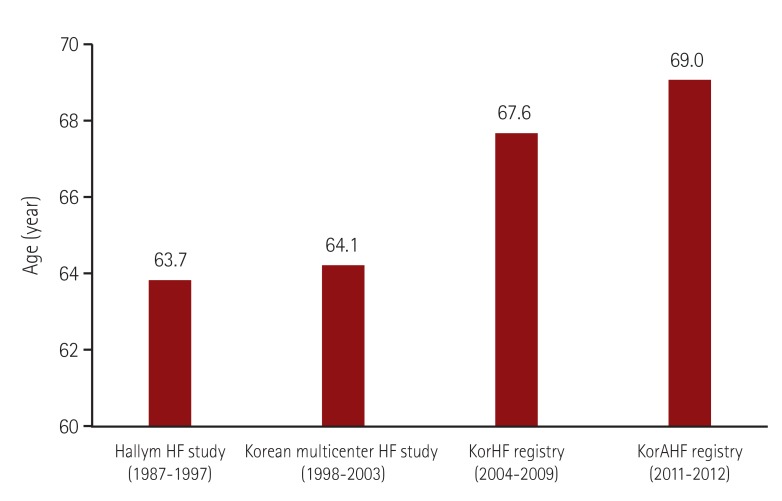
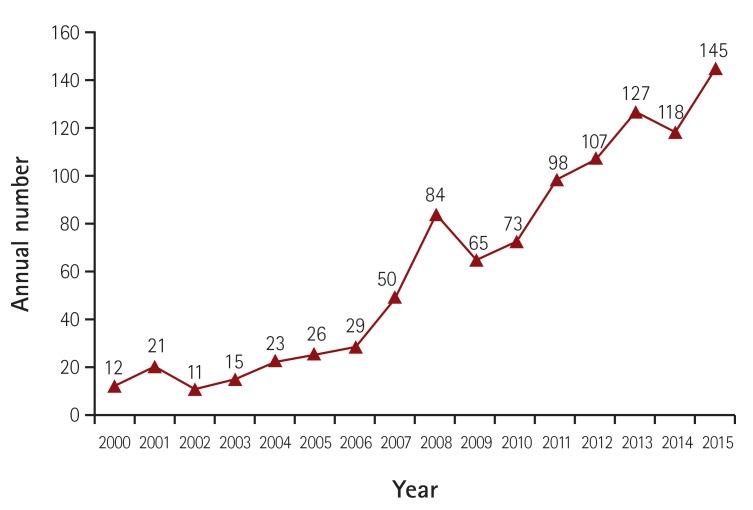
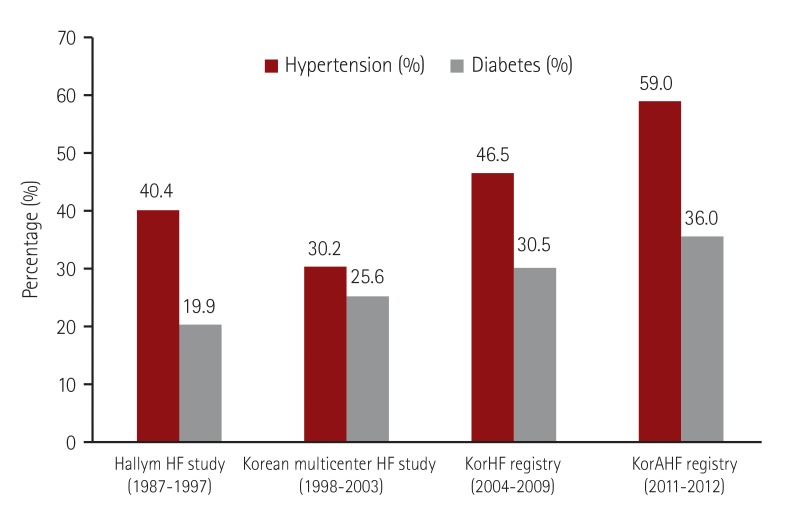
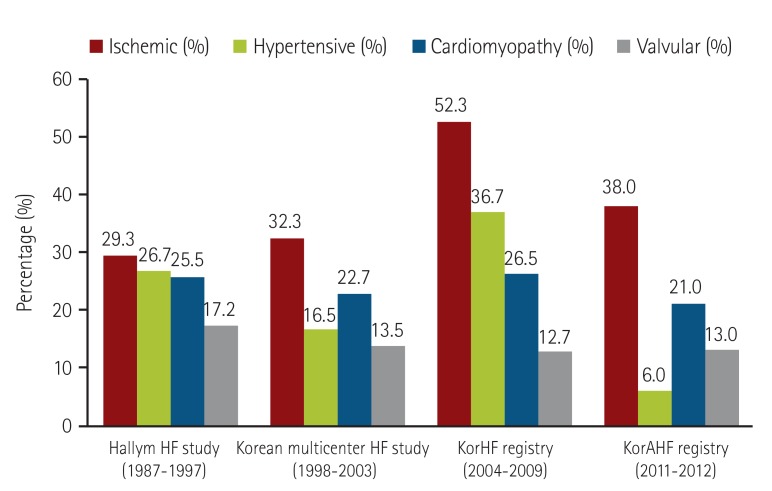
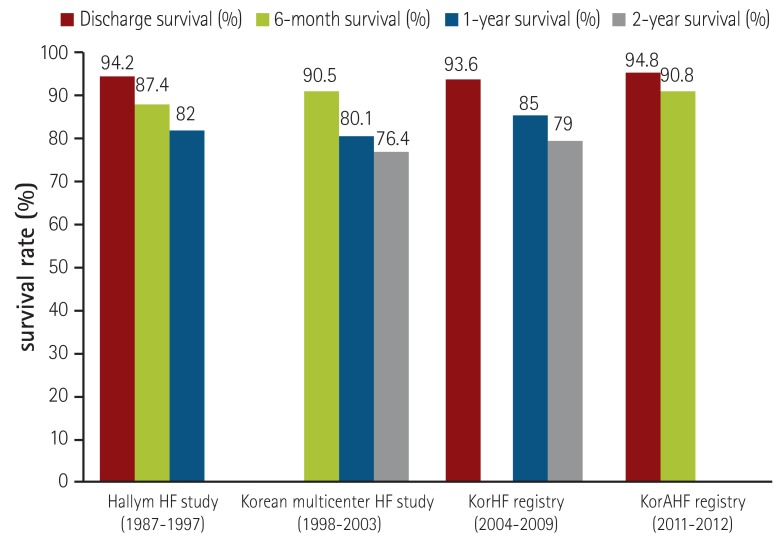
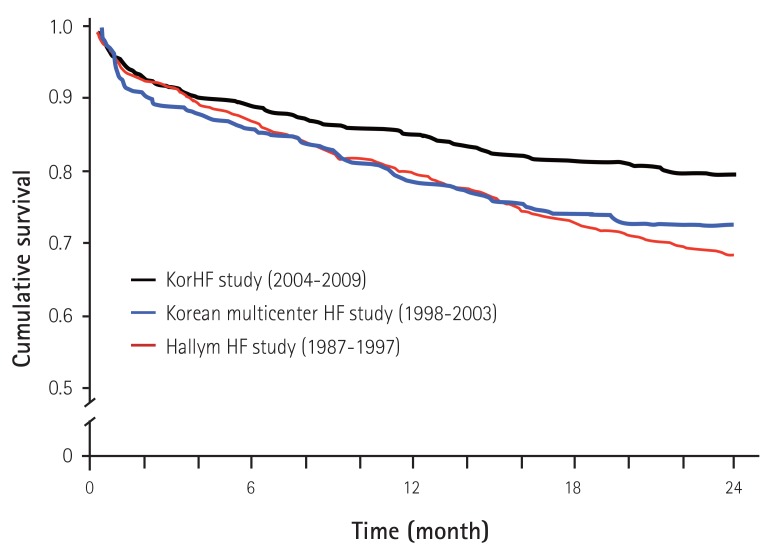
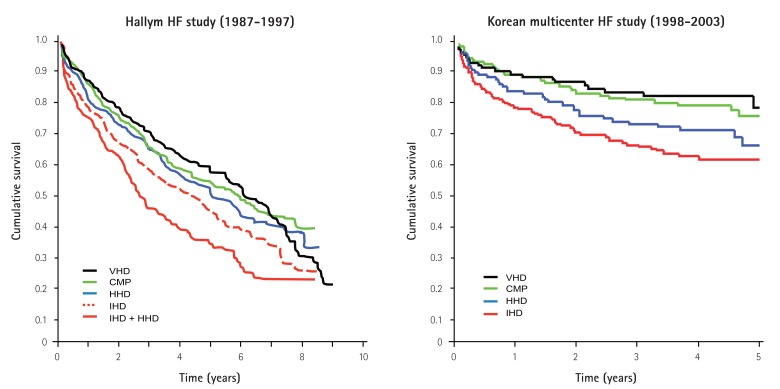
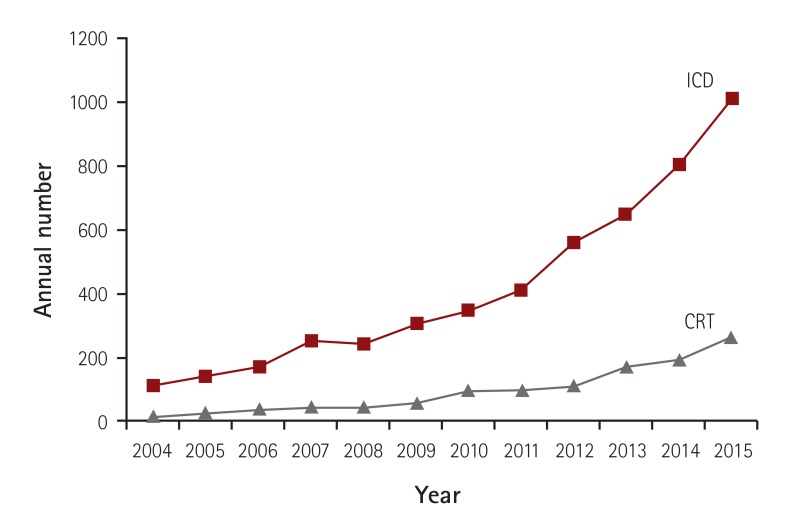
Heart failure (HF) is an important cardiovascular disease because of its increasing prevalence, significant morbidity, high mortality and rapidly expanding health care costs. The number of HF patients is increasing worldwide and Korea is no exception. Temporal trends of four representative Korean hospitalized HF registries-the Hallym HF study, the Korean Multicenter HF study, the Korean Heart Failure (KorHF) registry and the Korean Acute Heart Failure (KorAHF) registry showed mild survival improvement reflecting overall HF patient care development in Korea despite the increased severity of enrolled patients with higher incidence of multiple comorbidities. Moreover, device therapies such as implantable cardioverter defibrillator and cardiac resynchronization therapy and definitive treatment such as heart transplantation have been increasing in Korea as well. To prevent HF burden increase, it is essential to set up long term effective prevention strategies for better control of ischemic heart disease, hypertension and diabetes, which might be risk factors for HF development. Moreover, proper HF guidelines, performance measures, and performance improvement programs might be necessary to limit HF burden as well.
心力衰竭(HF)是一种重要的心血管疾病,因其患病率不断上升、发病率高、死亡率高且医疗费用迅速增加。全球范围内HF患者数量在不断增加,韩国也不例外。韩国四个具有代表性的住院HF登记处——翰林HF研究、韩国多中心HF研究、韩国心力衰竭(KorHF)登记处和韩国急性心力衰竭(KorAHF)登记处的时间趋势显示,尽管入组患者病情加重,多种合并症发生率更高,但生存率仍有轻度改善,这反映了韩国整体HF患者护理的发展。此外,在韩国,诸如植入式心脏复律除颤器和心脏再同步治疗等器械治疗以及诸如心脏移植等确定性治疗也在增加。为防止HF负担增加,必须制定长期有效的预防策略,以更好地控制缺血性心脏病、高血压和糖尿病,这些可能是HF发展的危险因素。此外,可能还需要适当的HF指南、绩效指标和绩效改进计划来限制HF负担。