Haldorsen Tor, Martinsen Jan Ivar, Kjærheim Kristina, Grimsrud Tom K
Department of Research, Cancer Registry of Norway, Pb 5313, Majorstuen, 0304, Oslo, Norway.
Cancer Causes Control. 2017 Feb;28(2):155-165. doi: 10.1007/s10552-016-0847-x. Epub 2017 Feb 2.
Tobacco smoking and alcohol consumption are risk factors for several types of cancer and may act as confounders in aetiological studies. Large register-based cohorts often lack data on tobacco and alcohol. We present a method for computing estimates of cancer risk adjusted for tobacco and alcohol without exposure information.
We propose the use of confirmatory factor analysis models for simultaneous analysis of several cancer sites related to tobacco and alcohol. In the analyses, the unobserved pattern of smoking habits and alcohol drinking is considered latent common factors. The models allow for different effects on each cancer site, and also for appropriate latent site-specific factors for subgroup variation. Results may be used to compute expected numbers of cancer from reference rates, adjusted for tobacco smoking and alcohol consumption. This method was applied to results from a large, published study of work-related cancer based on census data (1970) and 21 years of cancer incidence data from the national cancer registry.
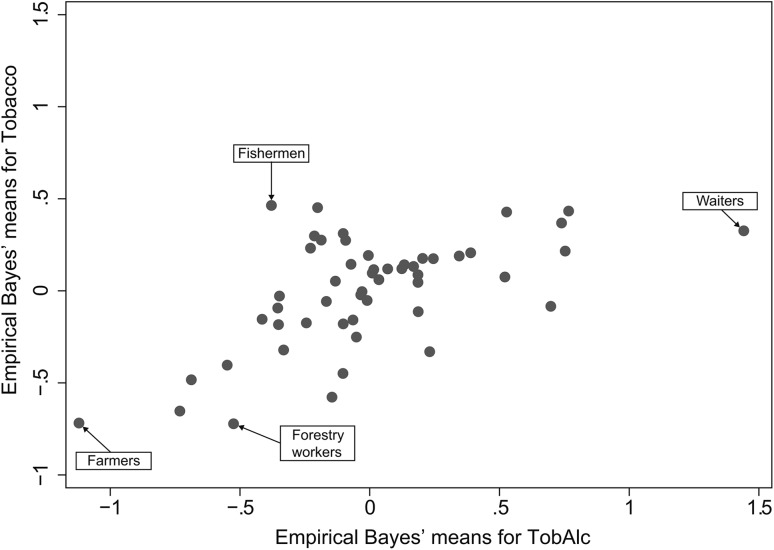
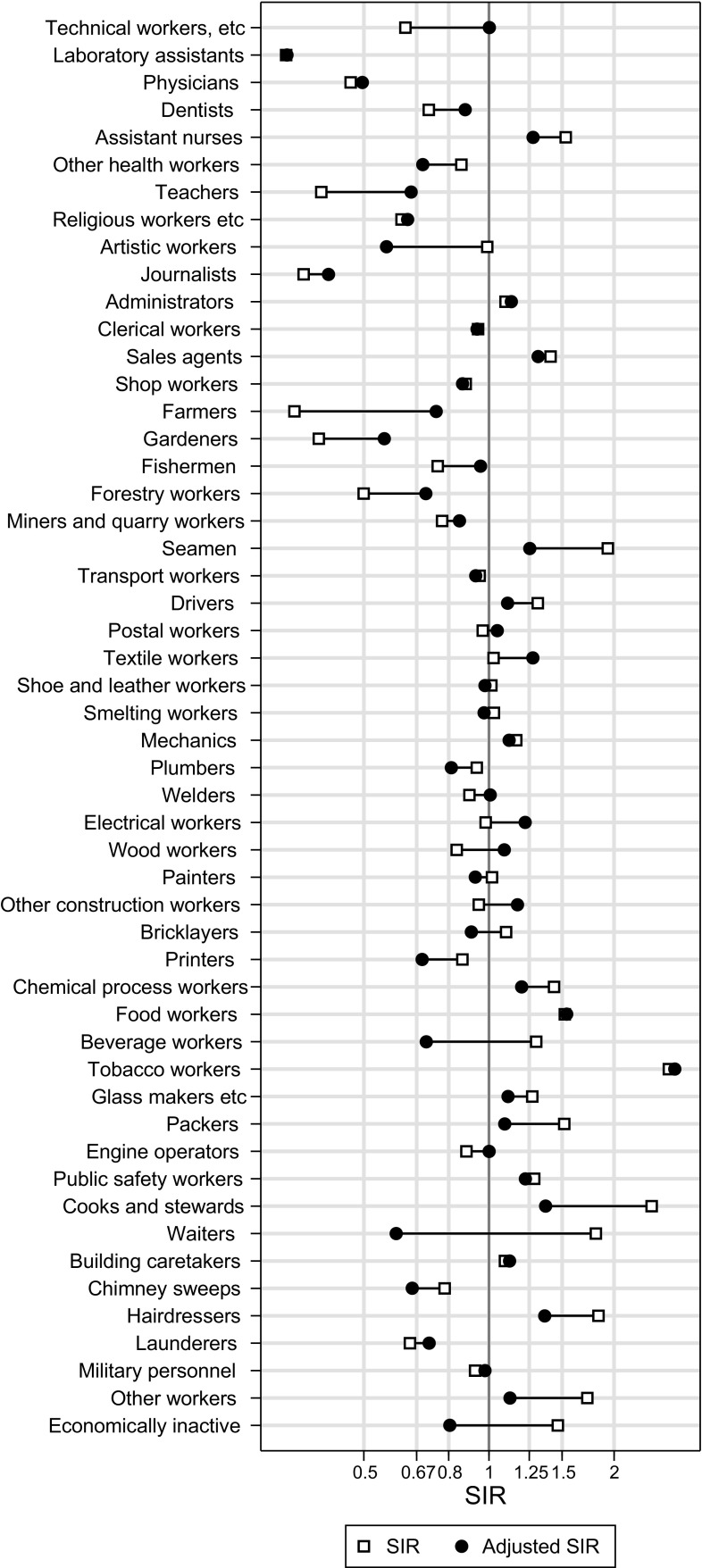
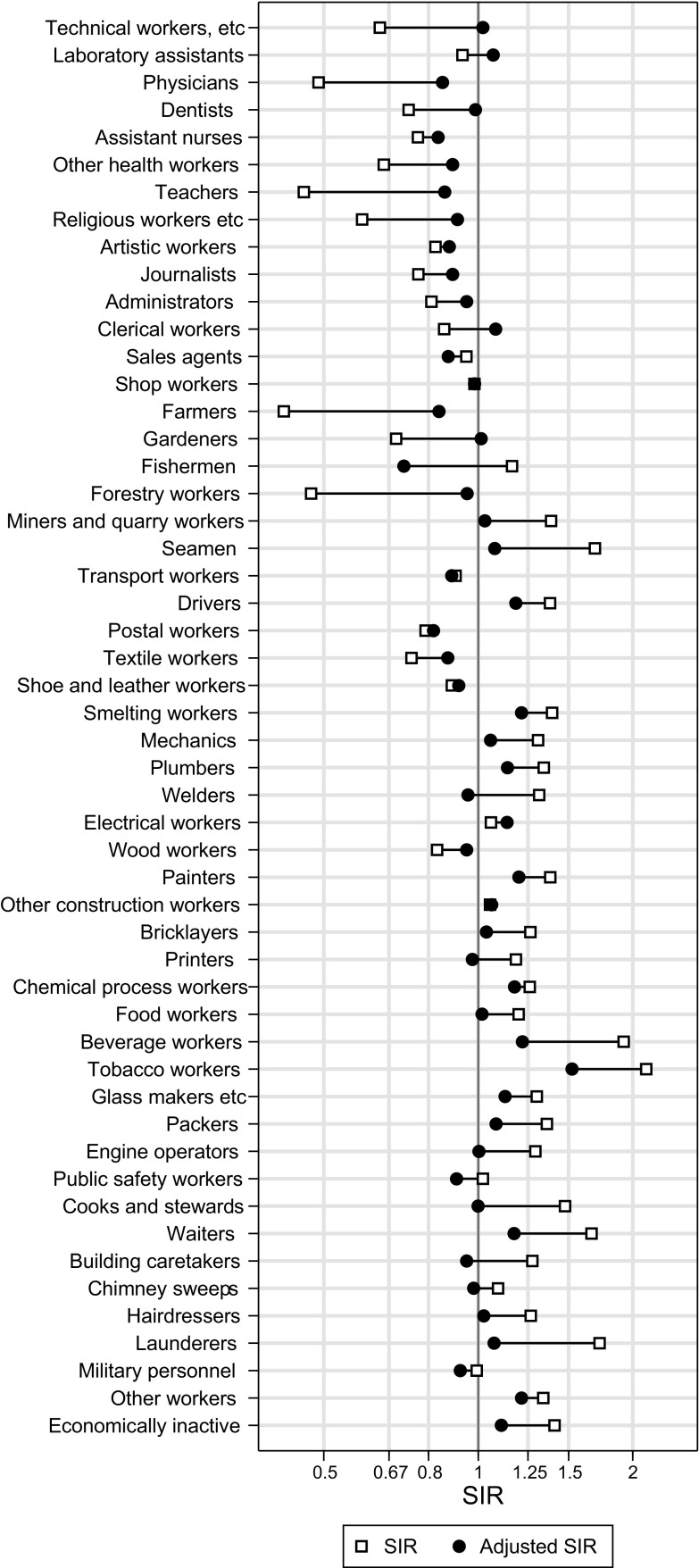
The results from our analysis were in accordance with recognised risks in selected occupational groups. The estimated relative effects from tobacco and alcohol on cancer risk were largely in line with results from Nordic reports. For lung cancer, adjustment for tobacco implied relative changes in SIR between a decrease from 1.16 to 0.72 (Fishermen), and an increase from 0.47 to 0.95 (Forestry workers).
We consider the method useful for achieving less confounded estimates of cancer risk in large cohort studies with no available information on smoking and alcohol consumption.
吸烟和饮酒是多种癌症的危险因素,在病因学研究中可能充当混杂因素。基于大型登记处的队列研究往往缺乏关于烟草和酒精的数据。我们提出了一种在没有暴露信息的情况下计算经烟草和酒精调整后的癌症风险估计值的方法。
我们建议使用验证性因子分析模型来同时分析与烟草和酒精相关的多个癌症部位。在分析中,未观察到的吸烟习惯和饮酒模式被视为潜在的共同因素。这些模型考虑了对每个癌症部位的不同影响,也考虑了针对亚组差异的适当的潜在部位特异性因素。结果可用于根据参考率计算经吸烟和饮酒调整后的癌症预期数量。该方法应用于一项基于人口普查数据(1970年)和国家癌症登记处21年癌症发病率数据的已发表的大型职业性癌症研究结果。
我们的分析结果与选定职业群体中公认的风险一致。烟草和酒精对癌症风险的估计相对影响在很大程度上与北欧报告的结果一致。对于肺癌,经烟草调整后,标准化发病比(SIR)的相对变化范围为从1.16降至0.72(渔民),到从0.47升至0.95(林业工人)。
我们认为该方法对于在没有吸烟和饮酒消费信息的大型队列研究中获得较少混杂的癌症风险估计值很有用。