Wang Wenjia, Qian Xiuqing, Song Hongfang, Zhang Mindi, Liu Zhicheng
School of Biomedical Engineering, Capital Medical University, Beijing, China.
Beijing Key Laboratory of Fundamental Research on Biomechanics in Clinical Application, Capital Medical University, Beijing, China.
Biomed Eng Online. 2016 Dec 28;15(Suppl 2):133. doi: 10.1186/s12938-016-0261-3.
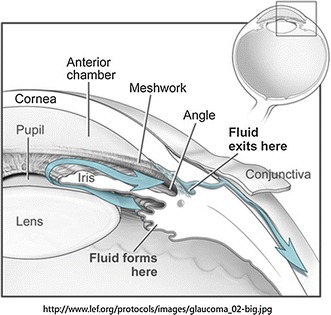
Glaucoma is the primary cause of irreversible blindness worldwide associated with high intraocular pressure (IOP). Elevated intraocular pressure will affect the normal aqueous humor outflow, resulting in deformation of iris. However, the deformation ability of iris is closely related to its material properties. Meanwhile, the passive deformation of the iris aggravates the pupillary block and angle closure. The nature of the interaction mechanism of iris deformation and aqueous humor fluid flow has not been fully understood and has been somewhat a controversial issue. The purpose here was to study the effect of IOP, localization, and temperature on the flow of the aqueous humor and the deformation of iris interacted by aqueous humor fluid flow.
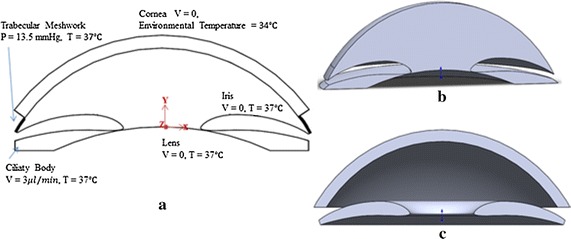
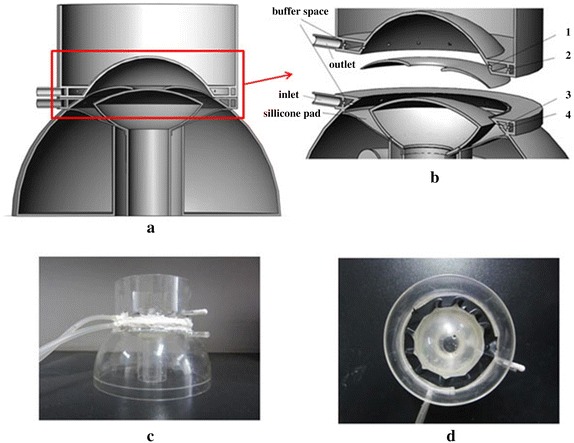
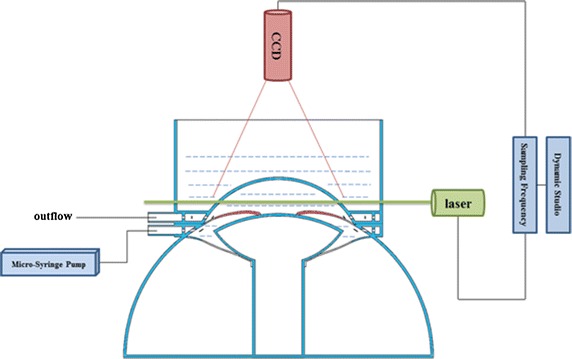
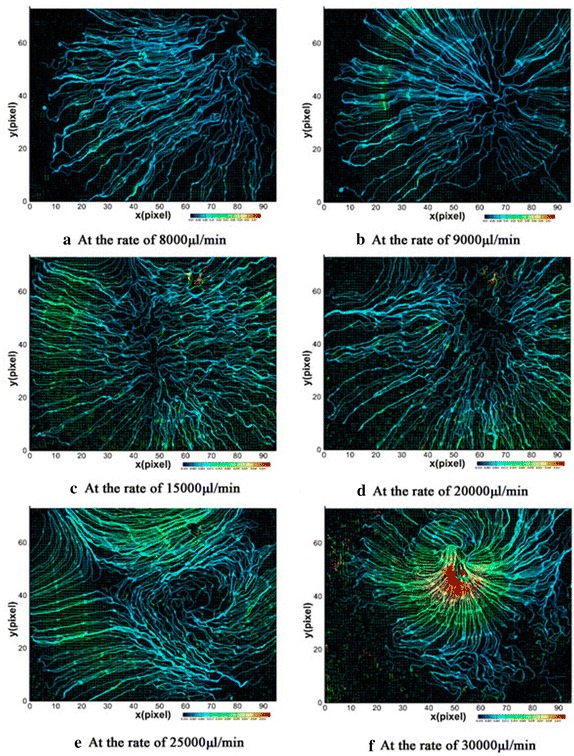
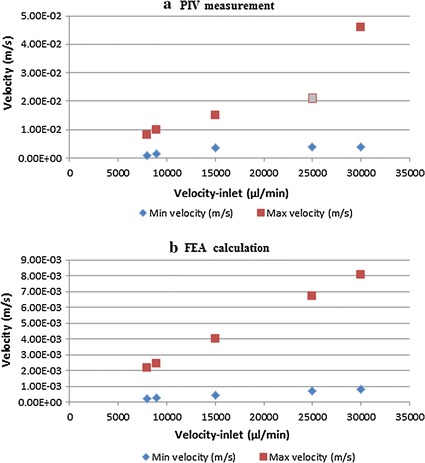
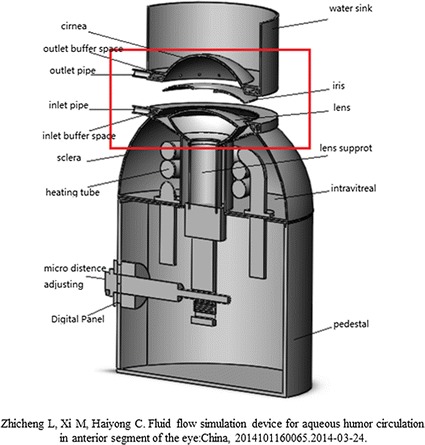
Based on mechanisms of aqueous physiology and fluid dynamics, 3D model of anterior chamber (AC) was constructed with the human anatomical parameters as a reference. A 3D idealized standard geometry of anterior segment of human eye was performed. Enlarge the size of the idealization geometry model 5 times to create a simulation device by using 3D printing technology. In this paper, particle image velocimetry technology is applied to measure the characteristic of fluid outflow in different inlet velocity based on the device. Numerically calculations were made by using ANSYS 14.0 Finite Element Analysis. Compare of the velocity distributions to confirm the validity of the model. The fluid structure interaction (FSI) analysis was carried out in the valid geometry model to study the aqueous flow and iris change.
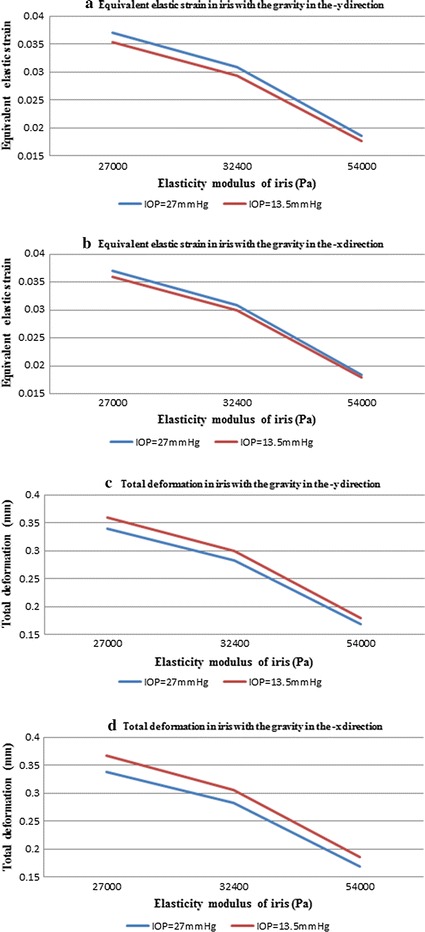
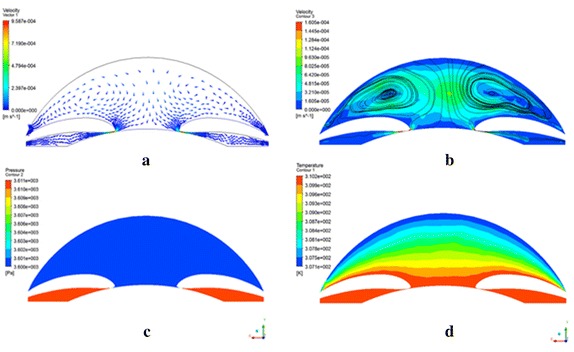
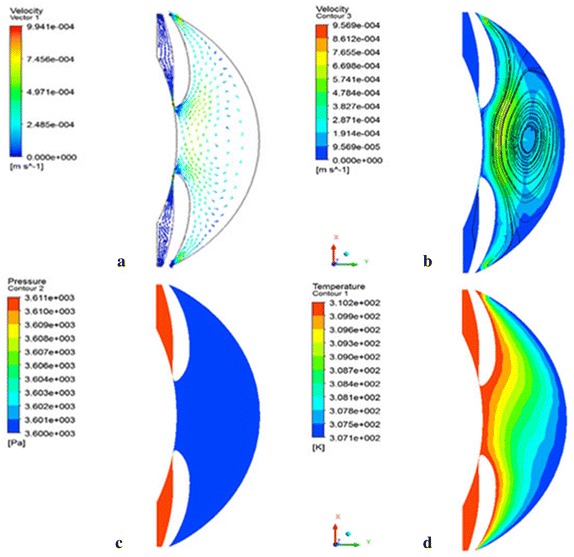
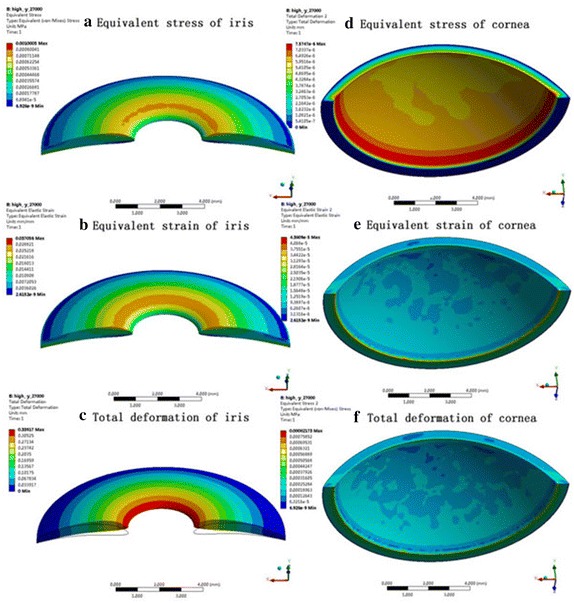
In this paper, the validity of the model is verified through computation and comparison. The results indicated that changes of gravity direction of model significantly affected the fluid dynamics parameters and the temperature distribution in anterior chamber. Increased pressure and the vertical position increase the velocity of the aqueous humor fluid flow, with the value increased of 0.015 and 0.035 mm/s. The results act on the iris showed that, gravity direction from horizontal to vertical decrease the equivalent stress in the normal IOP model, while almost invariably in the high IOP model. With the increased of the iris elasticity modulus, the equivalent strain and the total deformation of iris is decreased. The maximal value of equivalent strain of iris in high IOP model is higher than that of in normal IOP model. The maximum deformation of iris is lower in the high IOP model than in the normal IOP model.
The valid model of idealization geometry of human eye could be helpful to study the relationship between localization, iris deformation and IOP. So far the FSI analysis was carried out in that idealization geometry model of anterior segment to study aqueous flow and iris change.
青光眼是全球不可逆性失明的主要原因,与高眼压(IOP)相关。眼压升高会影响房水的正常流出,导致虹膜变形。然而,虹膜的变形能力与其材料特性密切相关。同时,虹膜的被动变形会加剧瞳孔阻滞和房角关闭。虹膜变形与房水液流相互作用机制的本质尚未完全明了,在一定程度上一直是个有争议的问题。本文的目的是研究眼压、位置和温度对房水流动以及房水液流相互作用下虹膜变形的影响。
基于房水生理学和流体动力学机制,以人体解剖学参数为参考构建前房(AC)的三维模型。对人眼前节进行三维理想化标准几何建模。利用3D打印技术将理想化几何模型尺寸放大5倍制作模拟装置。本文基于该装置应用粒子图像测速技术测量不同入口速度下的流体流出特性。使用ANSYS 14.0有限元分析进行数值计算。比较速度分布以确认模型的有效性。在有效几何模型中进行流固耦合(FSI)分析以研究房水流动和虹膜变化。
本文通过计算和比较验证了模型的有效性。结果表明,模型重力方向的变化显著影响前房内的流体动力学参数和温度分布。压力增加和垂直位置升高会使房水液流速度增加,增加值分别为0.015和0.035毫米/秒。作用于虹膜的结果表明,重力方向从水平变为垂直会使正常眼压模型中的等效应力降低,而在高眼压模型中几乎不变。随着虹膜弹性模量的增加,虹膜的等效应变和总变形减小。高眼压模型中虹膜等效应变的最大值高于正常眼压模型。高眼压模型中虹膜的最大变形低于正常眼压模型。
人眼理想化几何有效模型有助于研究位置、虹膜变形与眼压之间的关系。迄今为止,在该前节理想化几何模型中进行了流固耦合分析以研究房水流动和虹膜变化。