Conner Tamlin S, Brookie Kate L, Carr Anitra C, Mainvil Louise A, Vissers Margreet C M
Department of Psychology, University of Otago, Dunedin, Otago, New Zealand.
Centre for Free Radical Research, Department of Pathology, University of Otago, Christchurch, New Zealand.
PLoS One. 2017 Feb 3;12(2):e0171206. doi: 10.1371/journal.pone.0171206. eCollection 2017.
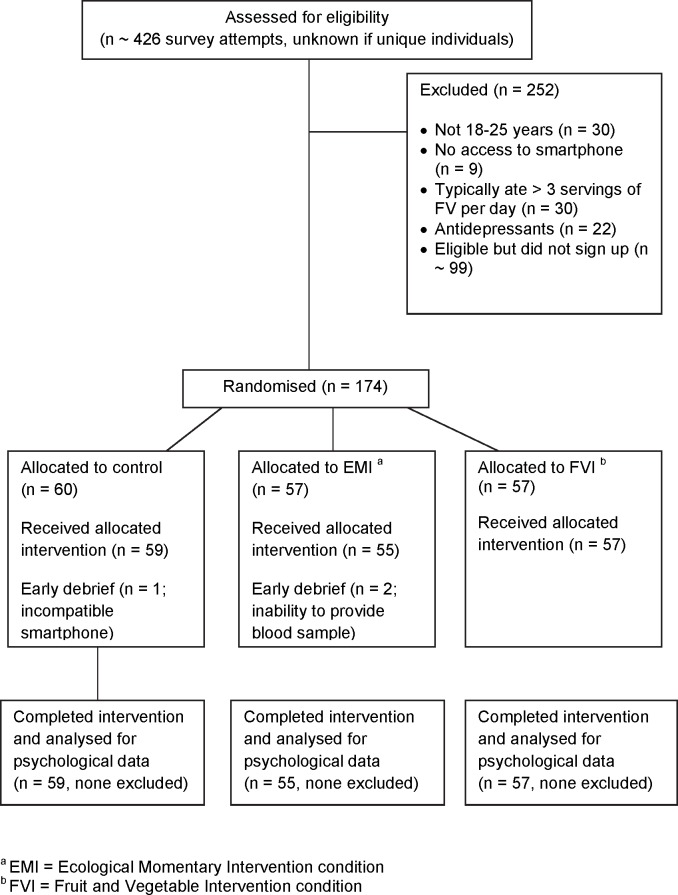
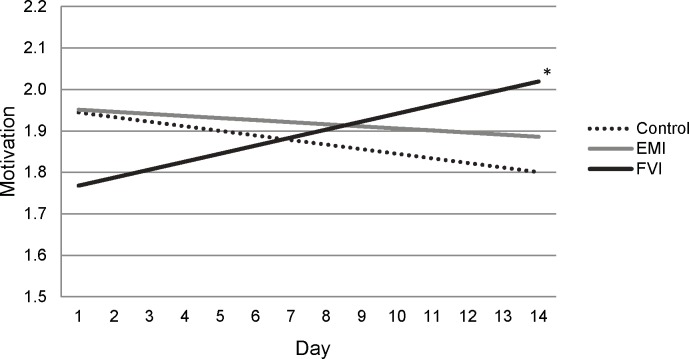
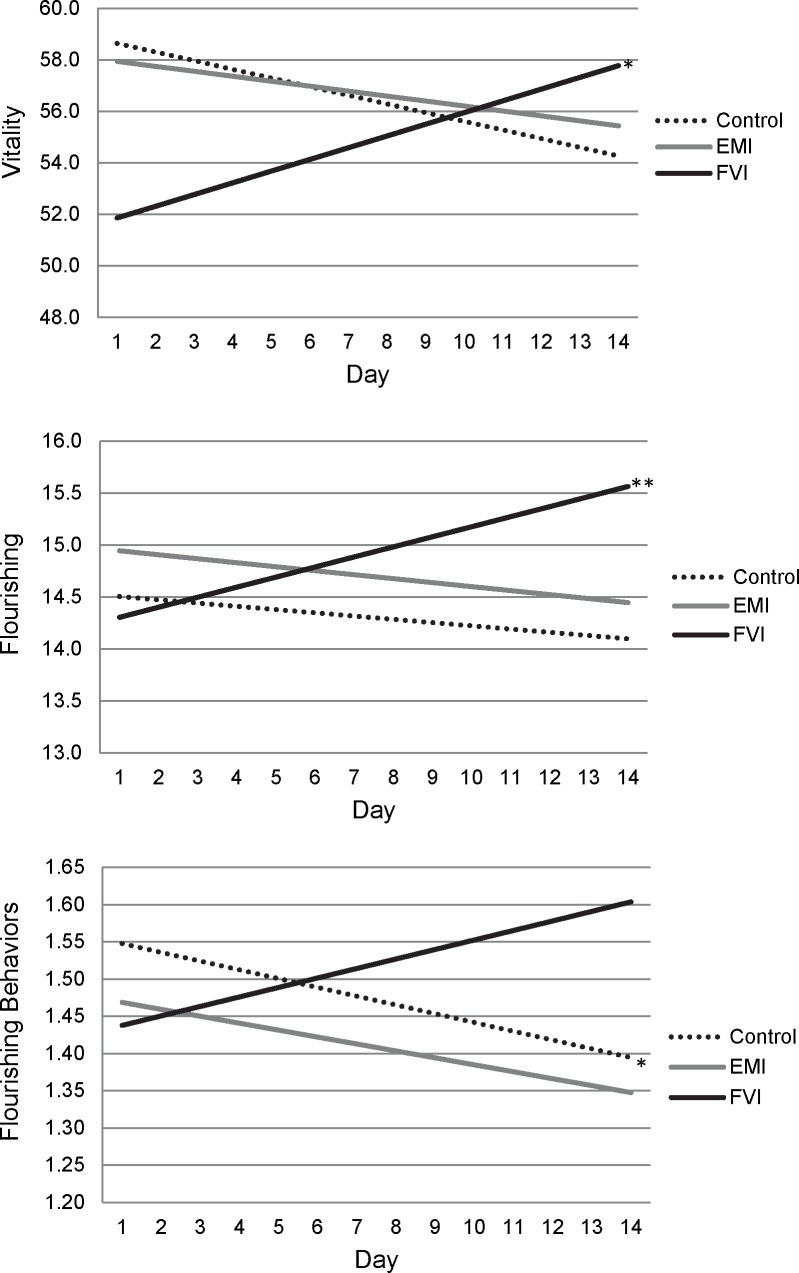
This study tested the psychological benefits of a 14-day preregistered clinical intervention to increase fruit and vegetable (FV) consumption in 171 low-FV-consuming young adults (67% female, aged 18-25). Participants were randomly assigned into a diet-as-usual control condition, an ecological momentary intervention (EMI) condition involving text message reminders to increase their FV consumption plus a voucher to purchase FV, or a fruit and vegetable intervention (FVI) condition in which participants were given two additional daily servings of fresh FV to consume on top of their normal diet. Self-report outcome measures were depressive symptoms and anxiety measured pre- and post-intervention, and daily negative and positive mood, vitality, flourishing, and flourishing behaviors (curiosity, creativity, motivation) assessed nightly using a smartphone survey. Vitamin C and carotenoids were measured from blood samples pre- and post-intervention, and psychological expectancies about the benefits of FV were measured post-intervention to test as mediators of psychological change. Only participants in the FVI condition showed improvements to their psychological well-being with increases in vitality, flourishing, and motivation across the 14-days relative to the other groups. No changes were found for depressive symptoms, anxiety, or mood. Intervention benefits were not mediated by vitamin C, carotenoids, or psychological expectancies. We conclude that providing young adults with high-quality FV, rather than reminding them to eat more FV (with a voucher to purchase FV), resulted in significant short-term improvements to their psychological well-being. These results provide initial proof-of-concept that giving young adults fresh fruit and vegetables to eat can have psychological benefits even over a brief period of time.
Australian New Zealand Clinical Trials Registry ACTRN12615000183583.
本研究测试了一项为期14天的预先注册的临床干预措施对171名低果蔬摄入量的年轻人(67%为女性,年龄在18 - 25岁之间)增加果蔬(FV)摄入量的心理益处。参与者被随机分配到常规饮食控制组、生态瞬时干预(EMI)组(包括通过短信提醒增加果蔬摄入量以及一张购买果蔬的代金券)或果蔬干预(FVI)组(参与者在正常饮食基础上每天额外获得两份新鲜果蔬食用)。自我报告的结果测量指标包括干预前后测量的抑郁症状和焦虑,以及每晚通过智能手机调查评估的每日消极和积极情绪、活力、蓬勃发展和蓬勃发展行为(好奇心、创造力、动机)。干预前后采集血样测量维生素C和类胡萝卜素,并在干预后测量对果蔬益处的心理预期,以测试其作为心理变化的中介因素。只有FVI组的参与者在14天内相对于其他组在活力、蓬勃发展和动机方面有所改善,其心理健康状况得到提升。在抑郁症状、焦虑或情绪方面未发现变化。干预益处并非由维生素C、类胡萝卜素或心理预期介导。我们得出结论,为年轻人提供高质量的果蔬,而非提醒他们多吃果蔬(并提供购买果蔬的代金券),会使其心理健康在短期内得到显著改善。这些结果提供了初步的概念验证,即给年轻人提供新鲜水果和蔬菜食用即使在短时间内也能带来心理益处。
澳大利亚新西兰临床试验注册中心ACTRN12615000183583。