Krilis Matthew, Qi Miao, Madigan Michele C, Wong Jason W H, Abdelatti Mahmoud, Guymer Robyn H, Whitelock John, McCluskey Peter, Zhang Peng, Qi Jian, Hunyor Alex P, Krilis Steven A, Giannakopoulos Bill
Save Sight Institute, University of Sydney and Sydney Eye Hospital, Sydney, NSW, Australia.
Department of Infectious Diseases, Immunology and Sexual Health and Department of Medicine, St George Hospital, University of New South Wales, Sydney, NSW, Australia.
Oncotarget. 2017 Jul 25;8(30):49016-49032. doi: 10.18632/oncotarget.14940.
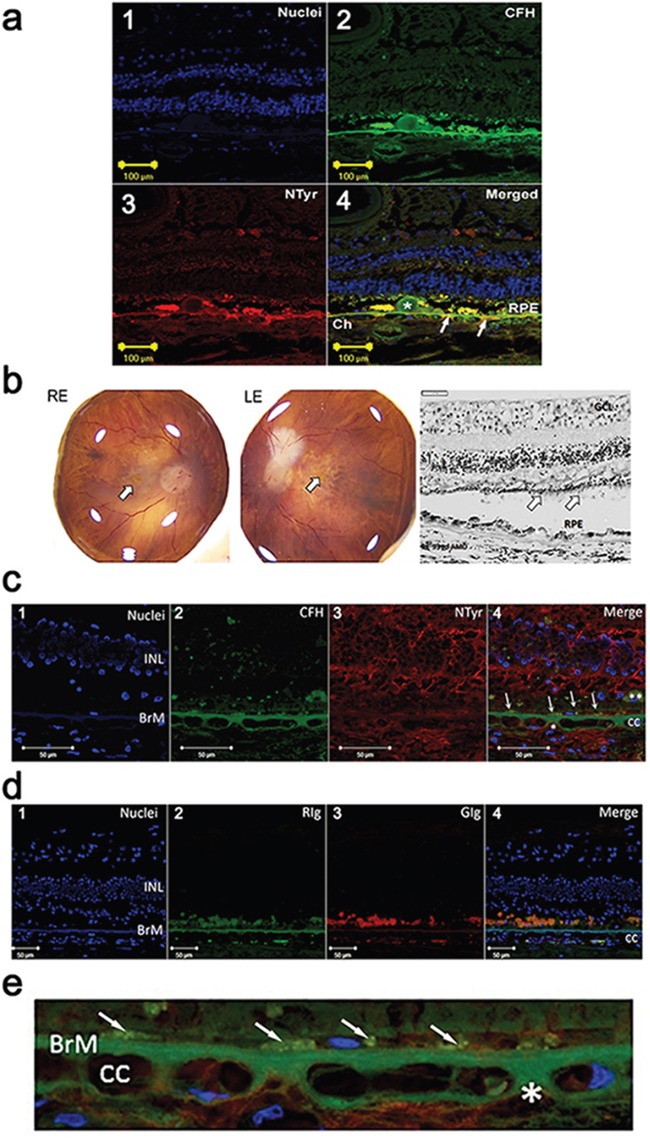
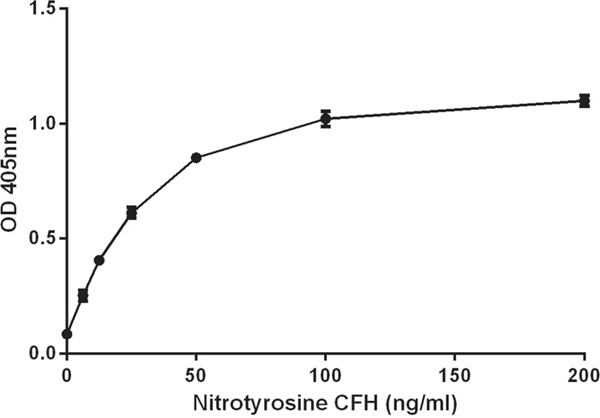
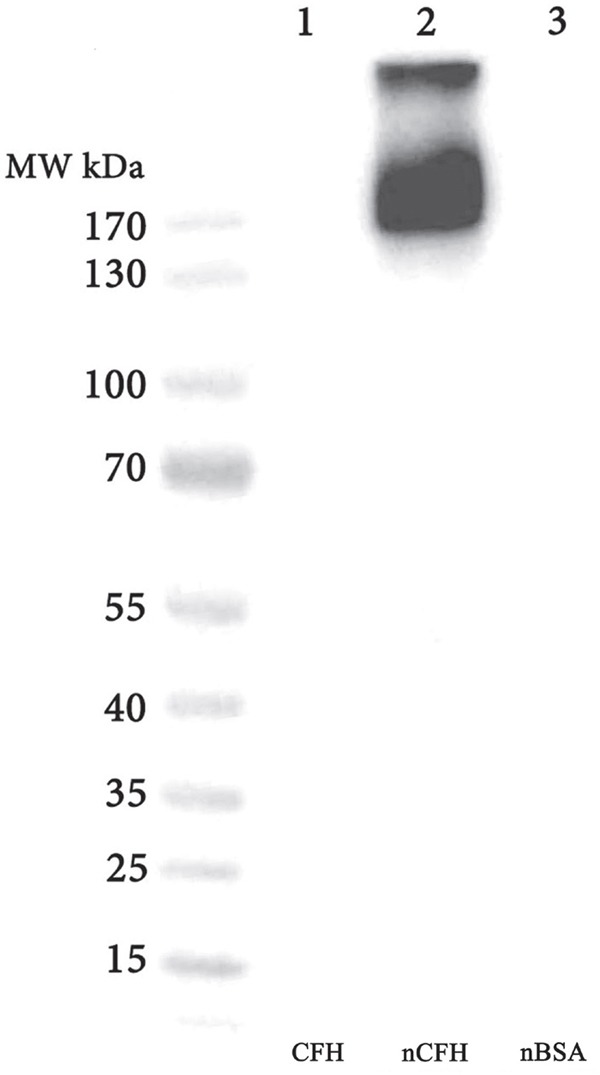
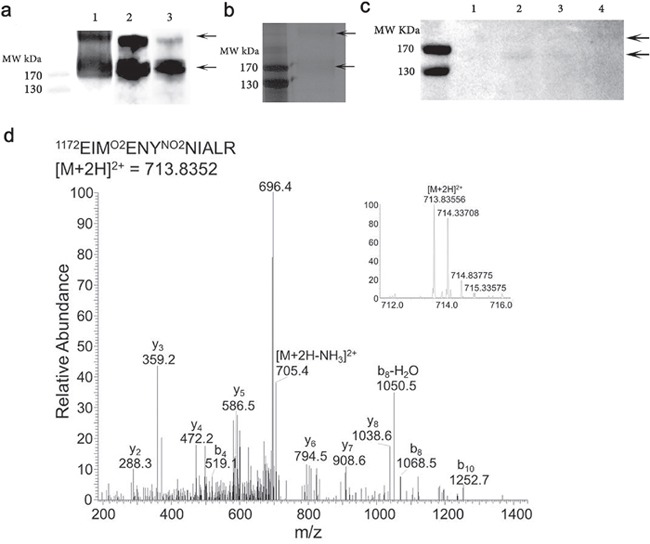
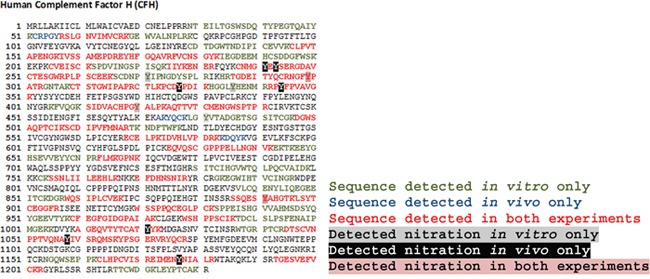
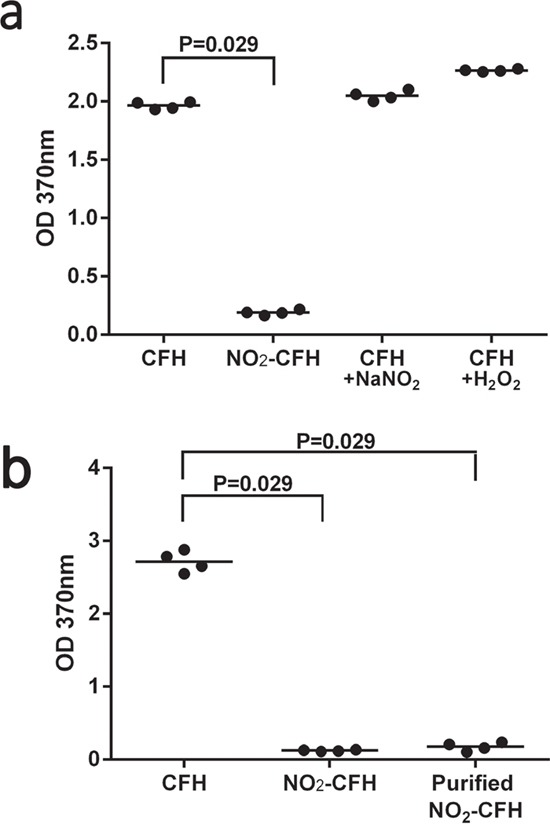
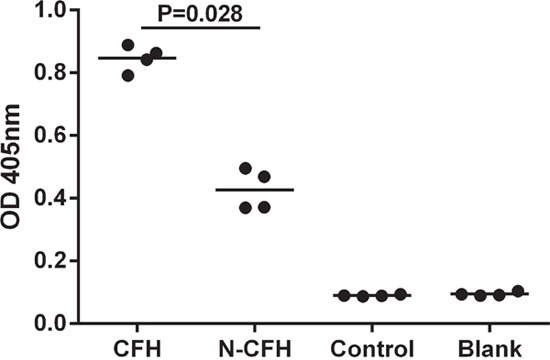
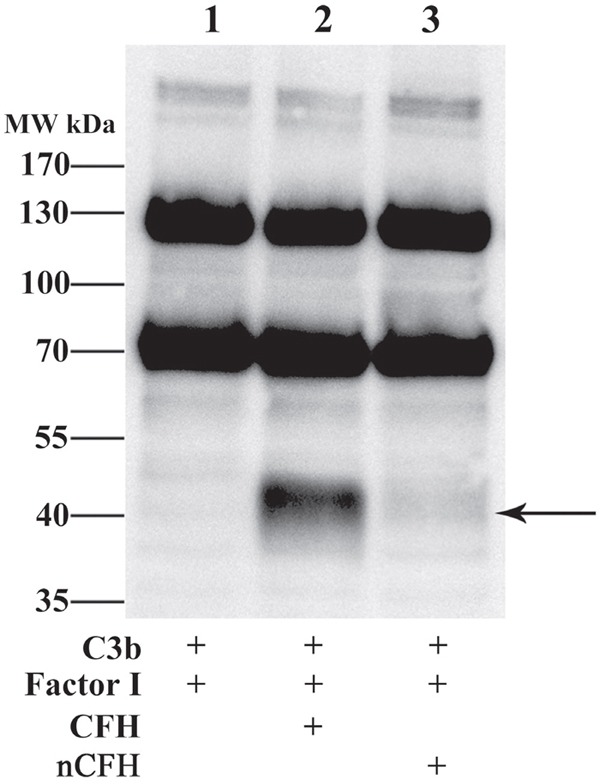
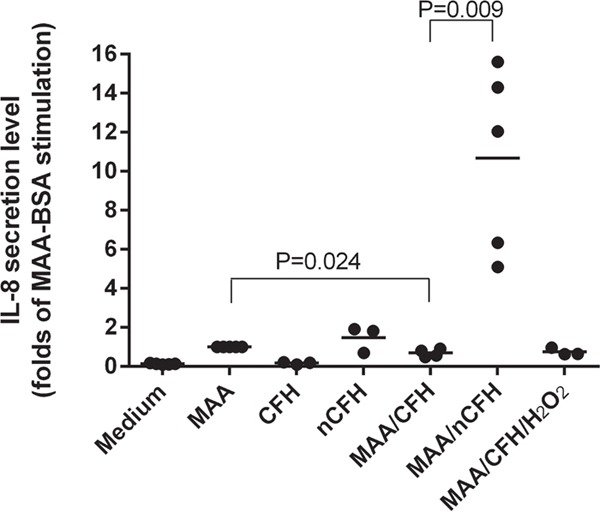
Nitrosative stress has been implicated in the pathogenesis of age related macular degeneration (AMD). Tyrosine nitration is a unique type of post translational modification that occurs in the setting of inflammation and nitrosative stress. To date, the significance and functional implications of tyrosine nitration of complement factor H (CFH), a key complement regulator in the eye has not been explored, and is examined in this study in the context of AMD pathogenesis.Sections of eyes from deceased individuals with AMD (n = 5) demonstrated the presence of immunoreactive nitrotyrosine CFH. We purified nitrated CFH from retinae from 2 AMD patients. Mass spectrometry of CFH isolated from AMD eyes revealed nitrated residues in domains critical for binding to heparan sulphate glycosaminoglycans (GAGs), lipid peroxidation by-products and complement (C) 3b.Functional studies revealed that nitrated CFH did not bind to lipid peroxidation products, nor to the GAG of perlecan nor to C3b. There was loss of cofactor activity for Factor I mediated cleavage of C3b with nitrated CFH compared to non-nitrated CFH. CFH inhibits, but nitrated CFH significantly potentiates, the secretion of the pro-inflammatory and angiogenic cytokine IL-8 from monocytes that have been stimulated with lipid peroxidation by-products. AMD patients (n = 30) and controls (n = 30) were used to measure plasma nitrated CFH using a novel ELISA. AMD patients had significantly elevated nitrated CFH levels compared to controls (p = 0.0117). These findings strongly suggest that nitrated CFH contributes to AMD progression, and is a target for therapeutic intervention.
亚硝化应激与年龄相关性黄斑变性(AMD)的发病机制有关。酪氨酸硝化是一种独特的翻译后修饰类型,发生在炎症和亚硝化应激环境中。迄今为止,尚未探索眼部关键补体调节因子补体因子H(CFH)酪氨酸硝化的意义和功能影响,本研究在AMD发病机制的背景下对其进行了研究。来自已故AMD患者(n = 5)的眼部切片显示存在免疫反应性硝基酪氨酸CFH。我们从2例AMD患者的视网膜中纯化了硝化的CFH。对从AMD眼中分离的CFH进行质谱分析,发现在与硫酸乙酰肝素糖胺聚糖(GAGs)、脂质过氧化副产物和补体(C)3b结合至关重要的结构域中存在硝化残基。功能研究表明,硝化的CFH不与脂质过氧化产物、也不与基底膜聚糖的GAG或C3b结合。与未硝化的CFH相比,硝化的CFH对I因子介导的C3b裂解的辅因子活性丧失。CFH具有抑制作用,但硝化的CFH显著增强了受脂质过氧化副产物刺激的单核细胞促炎和促血管生成细胞因子IL-8的分泌。使用新型ELISA检测30例AMD患者(n = 30)和30例对照者的血浆硝化CFH。与对照组相比,AMD患者的硝化CFH水平显著升高(p = 0.0117)。这些发现强烈表明,硝化的CFH促进AMD进展,是治疗干预的靶点。