Renal Division, Department of Medicine, Peking University First Hospital, Institute of Nephrology, Peking University, Beijing, China.
Key Laboratory of Renal Disease, Ministry of Health of China, Beijing, China.
Front Immunol. 2018 Mar 19;9:559. doi: 10.3389/fimmu.2018.00559. eCollection 2018.
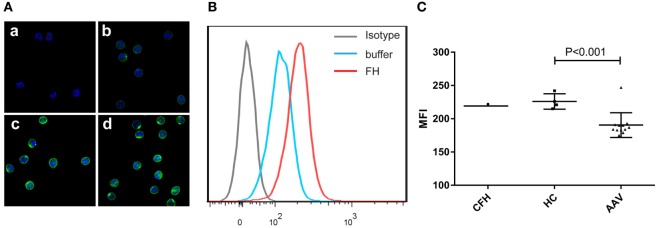
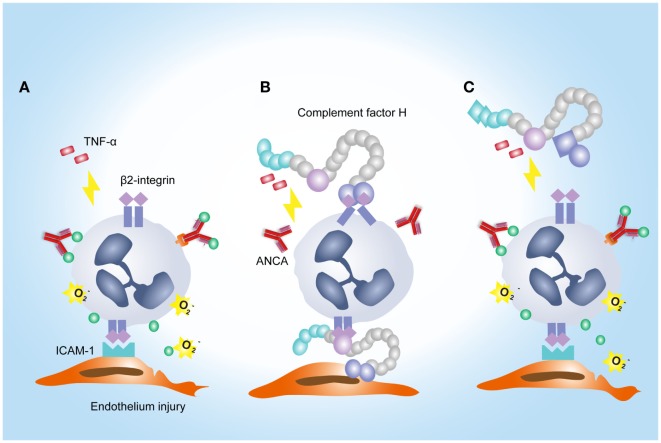
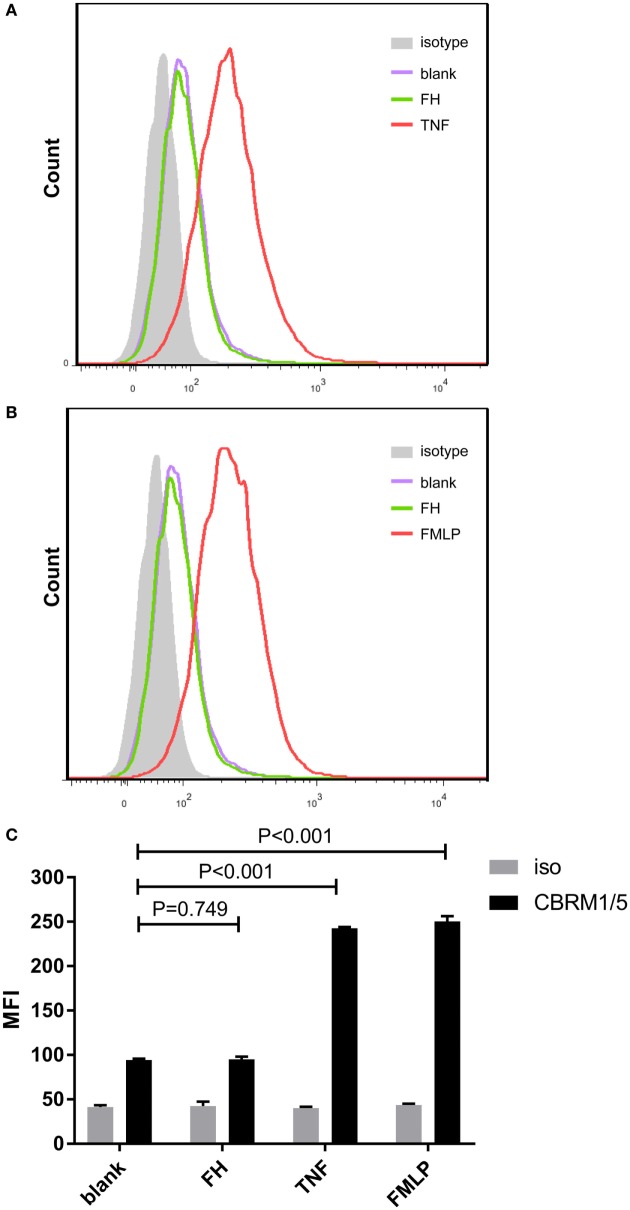
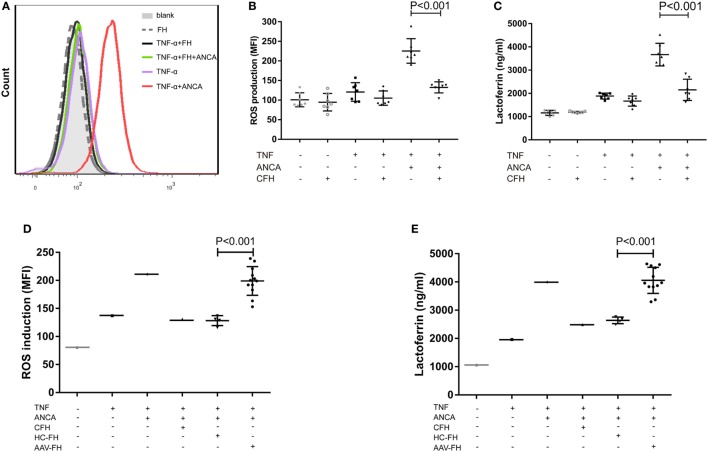
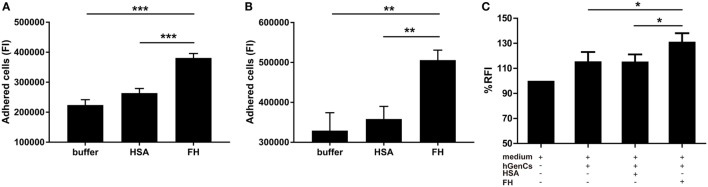
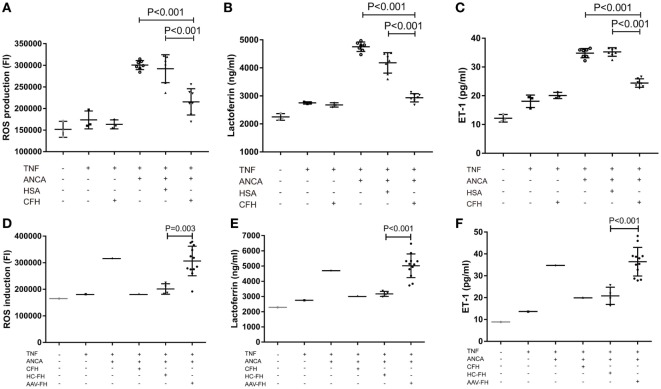
Our previous study demonstrated that plasma levels of complement factor H (FH) were inversely associated with the disease activity of patients with anti-neutrophil cytoplasmic autoantibody (ANCA)-associated vasculitis (AAV). In addition to serving as an inhibitor of the alternative complement pathway, there is increasing evidence demonstrating direct regulatory roles of FH on several cell types. Here, we investigated the role of FH in the process of ANCA-mediated activation of neutrophils and neutrophil-endothelium interaction. We demonstrated that FH bound to neutrophils by immunostaining and flow cytometry. Interestingly, ANCA-induced activation of neutrophils, including respiratory burst and degranulation, was inhibited by FH. Although FH enhanced neutrophils adhesion and migration toward human glomerular endothelial cells (hGEnCs), it inhibited ANCA-induced activation of neutrophils in the coculture system of hGEnCs and neutrophils. Moreover, the activation and injury of hGEnCs, reflected by the level of endothelin-1 in the supernatant of cocultures, was markedly reduced by FH. However, we found that FH from patients with active AAV exhibited a deficient ability in binding neutrophils and inhibiting ANCA-induced neutrophil activation in fluid phase and on endothelial cells, as compared with that from healthy controls. Therefore, our findings indicate a novel role of FH in inhibiting ANCA-induced neutrophil activation and protecting against glomerular endothelial injury. However, FH from patients with active AAV are deficient in their ability to bind neutrophils and inhibit neutrophil activation by ANCA. It further extends the current understanding of the pathogenesis of AAV, thus providing potential clues for intervention strategies.
我们之前的研究表明,补体因子 H(FH)的血浆水平与抗中性粒细胞胞质抗体(ANCA)相关性血管炎(AAV)患者的疾病活动呈负相关。除了作为替代补体途径的抑制剂外,越来越多的证据表明 FH 对几种细胞类型具有直接调节作用。在这里,我们研究了 FH 在 ANCA 介导的中性粒细胞激活和中性粒细胞-内皮细胞相互作用过程中的作用。我们通过免疫染色和流式细胞术证明 FH 与中性粒细胞结合。有趣的是,FH 抑制了 ANCA 诱导的中性粒细胞的激活,包括呼吸爆发和脱颗粒。尽管 FH 增强了中性粒细胞向人肾小球内皮细胞(hGEnC)的黏附和迁移,但它抑制了 hGEnC 和中性粒细胞共培养系统中 ANCA 诱导的中性粒细胞的激活。此外,FH 还明显降低了共培养物上清液中内皮素-1 的水平,从而反映了 hGEnC 的激活和损伤。然而,我们发现与健康对照组相比,来自活动期 AAV 患者的 FH 在内相和内皮细胞上结合中性粒细胞和抑制 ANCA 诱导的中性粒细胞激活的能力存在缺陷。因此,我们的研究结果表明 FH 在抑制 ANCA 诱导的中性粒细胞激活和保护肾小球内皮免受损伤方面具有新的作用。然而,来自活动期 AAV 患者的 FH 在结合中性粒细胞和抑制 ANCA 诱导的中性粒细胞激活方面存在缺陷。它进一步扩展了对 AAV 发病机制的现有认识,从而为干预策略提供了潜在的线索。