Kim Eun Chul, Toyono Tetsuya, Berlinicke Cynthia A, Zack Donald J, Jurkunas Ula, Usui Tomohiko, Jun Albert S
Wilmer Eye Institute, Johns Hopkins Medical Institutions, Baltimore, Maryland, United States 2Department of Ophthalmology & Visual Science, Catholic University of Korea, Seoul, Korea.
Wilmer Eye Institute, Johns Hopkins Medical Institutions, Baltimore, Maryland, United States 3Department of Ophthalmology, University of Tokyo, Tokyo, Japan.
Invest Ophthalmol Vis Sci. 2017 Feb 1;58(2):892-900. doi: 10.1167/iovs.16-20147.
To screen for and characterize compounds that protect corneal endothelial cells against unfolded protein response (UPR) and oxidative stress.
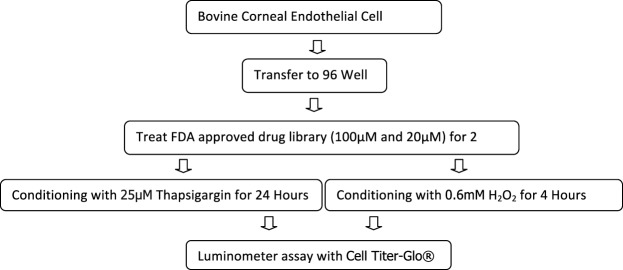
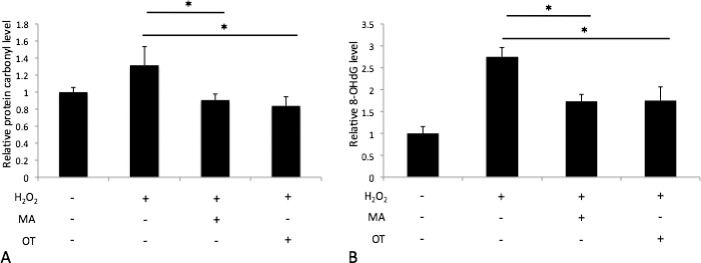
Bovine corneal endothelial cells (BCECs) were treated for 48 hours with 640 compounds from a Food and Drug Administration (FDA)-approved drug library and then challenged with thapsigargin or H2O2 to induce UPR or oxidative stress, respectively. Cell viability was measured using the CellTiter-Glo survival assay. Selected "hits" were subjected to further dose-response testing, and their ability to modulate expression of UPR and oxidative stress markers was assessed by RT-PCR, Western blot, and measurement of protein carbonyl and 8-hydroxydeoxyguanosine (8-OHdG) adducts in immortalized human corneal endothelial cells (iHCECs).
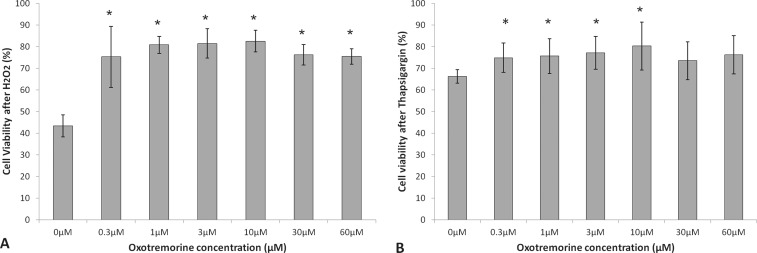
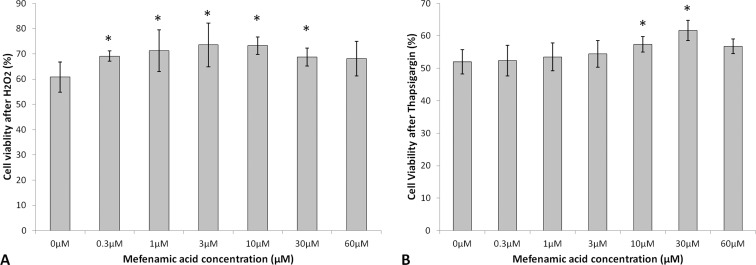
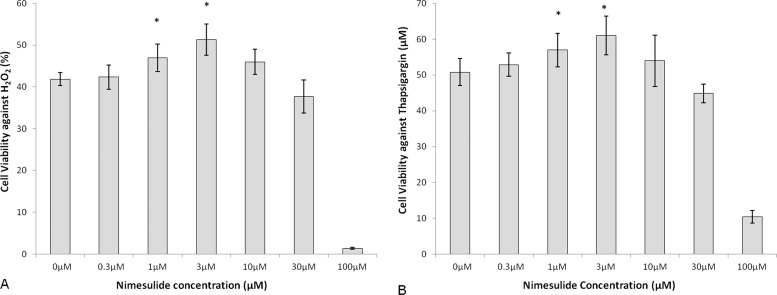
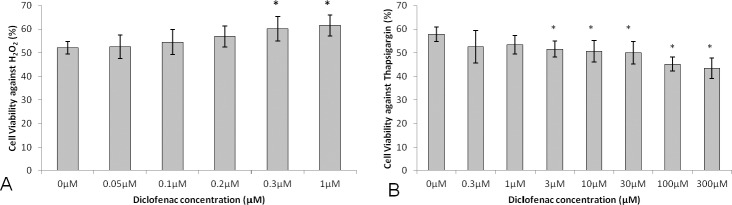
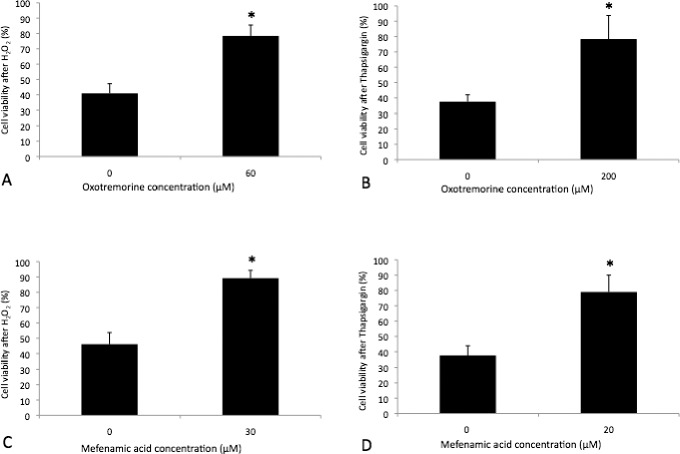
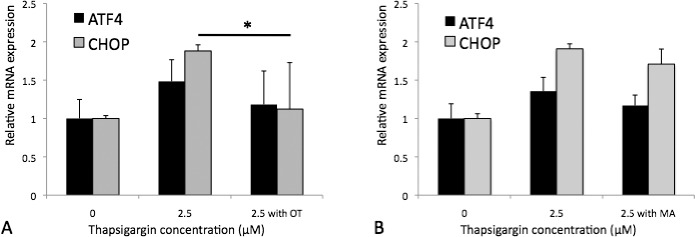
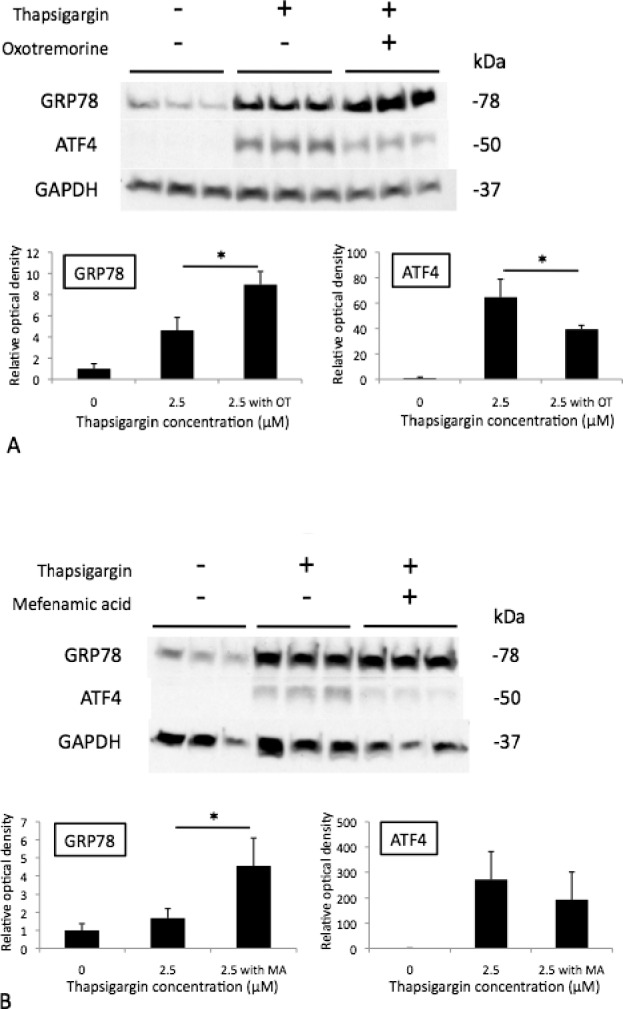
Forty-one drugs at 20 μM and 55 drugs at 100 μM increased survival of H2O2-challenged cells, and 8 drugs at 20 μM and 2 drugs at 100 μM increased survival of thapsigargin-challenged cells, compared with untreated control cells. Nicergoline, ergothioneine, nimesulide, oxotremorine, and mefenamic acid increased survival of both H2O2- and thapsigargin-challenged cells. Oxotremorine altered DNA damage inducible 3 (CHOP) gene expression, glucose-regulated protein 78 kDa (GRP78) and activating transcription factor 4 (ATF4) protein expression, and protein carbonyl and 8-OHdG levels. Mefenamic acid altered GRP78 protein expression and protein carbonyl and 8-OHdG levels.
Oxotremorine and mefenamic acid are potential survival factors for corneal endothelial cells under UPR and oxidative stress. The described assay can be further expanded to screen additional drugs for potential therapeutic effect in corneal endothelial diseases such as Fuchs' endothelial corneal dystrophy.
筛选并鉴定可保护角膜内皮细胞免受未折叠蛋白反应(UPR)和氧化应激影响的化合物。
用来自美国食品药品监督管理局(FDA)批准的药物库中的640种化合物处理牛角膜内皮细胞(BCECs)48小时,然后分别用毒胡萝卜素或过氧化氢进行刺激,以诱导UPR或氧化应激。使用CellTiter-Glo存活检测法测量细胞活力。对选定的“命中”化合物进行进一步的剂量反应测试,并通过RT-PCR、蛋白质印迹以及测量永生化人角膜内皮细胞(iHCECs)中的蛋白质羰基和8-羟基脱氧鸟苷(8-OHdG)加合物来评估它们调节UPR和氧化应激标志物表达的能力。
与未处理的对照细胞相比,20 μM浓度下的41种药物和100 μM浓度下的55种药物可提高过氧化氢刺激细胞的存活率,20 μM浓度下的8种药物和100 μM浓度下的2种药物可提高毒胡萝卜素刺激细胞的存活率。尼麦角林、麦角硫因、尼美舒利、氧化震颤素和甲芬那酸可提高过氧化氢和毒胡萝卜素刺激细胞的存活率。氧化震颤素改变了DNA损伤诱导蛋白3(CHOP)基因表达、葡萄糖调节蛋白78 kDa(GRP78)和激活转录因子4(ATF4)蛋白表达以及蛋白质羰基和8-OHdG水平。甲芬那酸改变了GRP78蛋白表达以及蛋白质羰基和8-OHdG水平。
氧化震颤素和甲芬那酸是角膜内皮细胞在UPR和氧化应激下的潜在存活因子。所描述的检测方法可进一步扩展,以筛选其他药物对诸如富克斯内皮性角膜营养不良等角膜内皮疾病的潜在治疗效果。