Sakurai Toshiharu, Higashitsuji Hiroaki, Kashida Hiroshi, Watanabe Tomohiro, Komeda Yoriaki, Nagai Tomoyuki, Hagiwara Satoru, Kitano Masayuki, Nishida Naoshi, Abe Takaya, Kiyonari Hiroshi, Itoh Katsuhiko, Fujita Jun, Kudo Masatoshi
Department of Gastroenterology and Hepatology, Kindai University Faculty of Medicine, Osaka-Sayama, Osaka, Japan.
Department of Clinical Molecular Biology, Kyoto University, Kyoto, Japan.
Oncotarget. 2017 Apr 11;8(15):24762-24776. doi: 10.18632/oncotarget.14983.
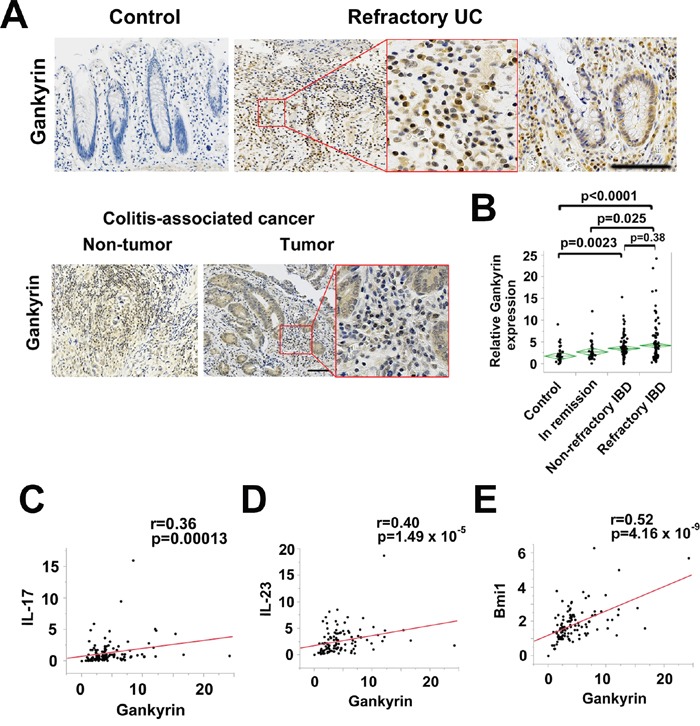
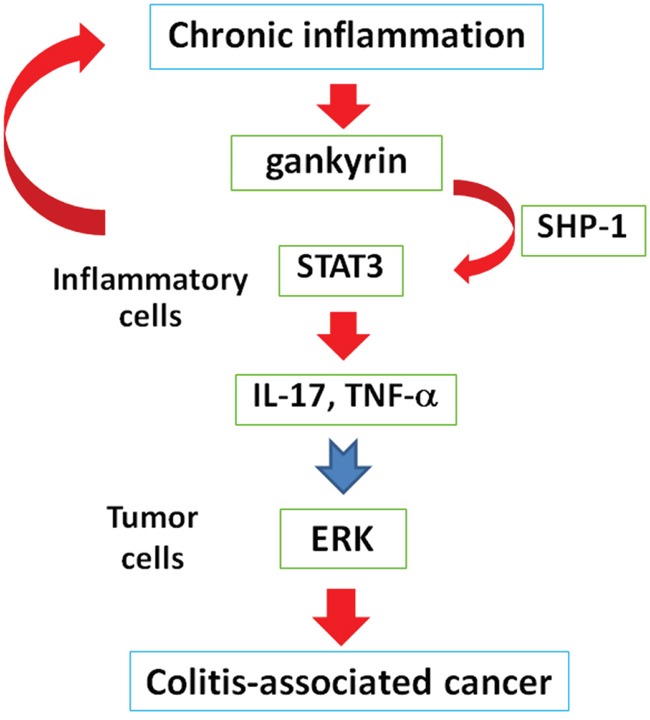
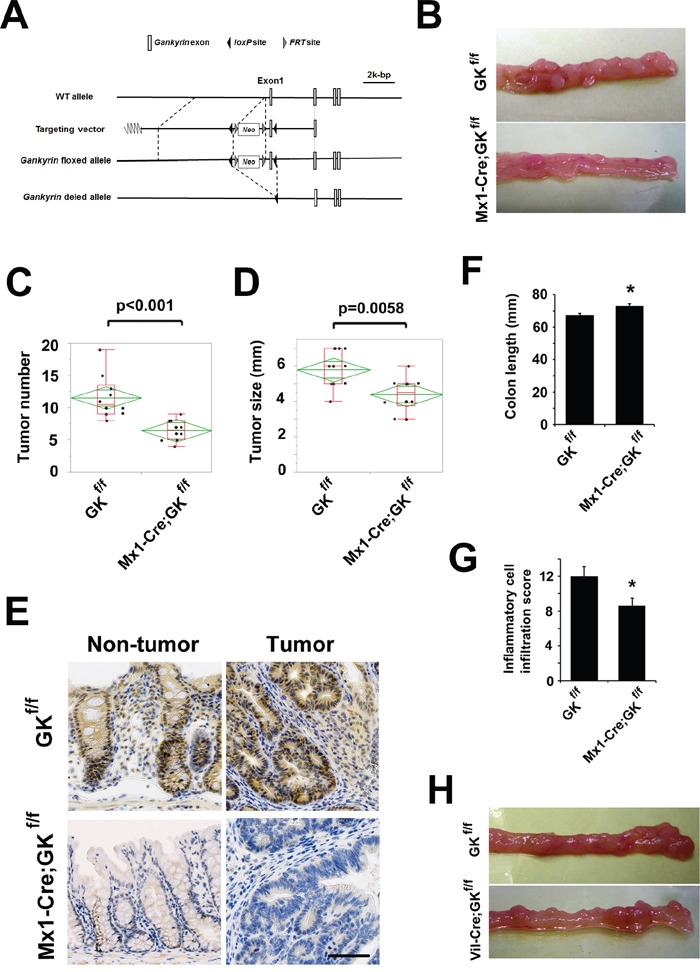
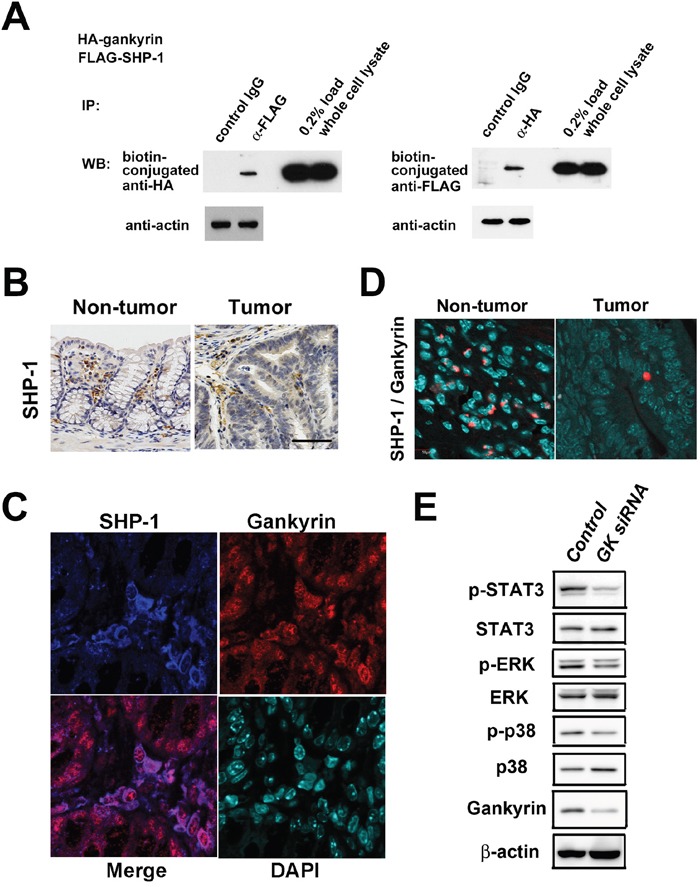
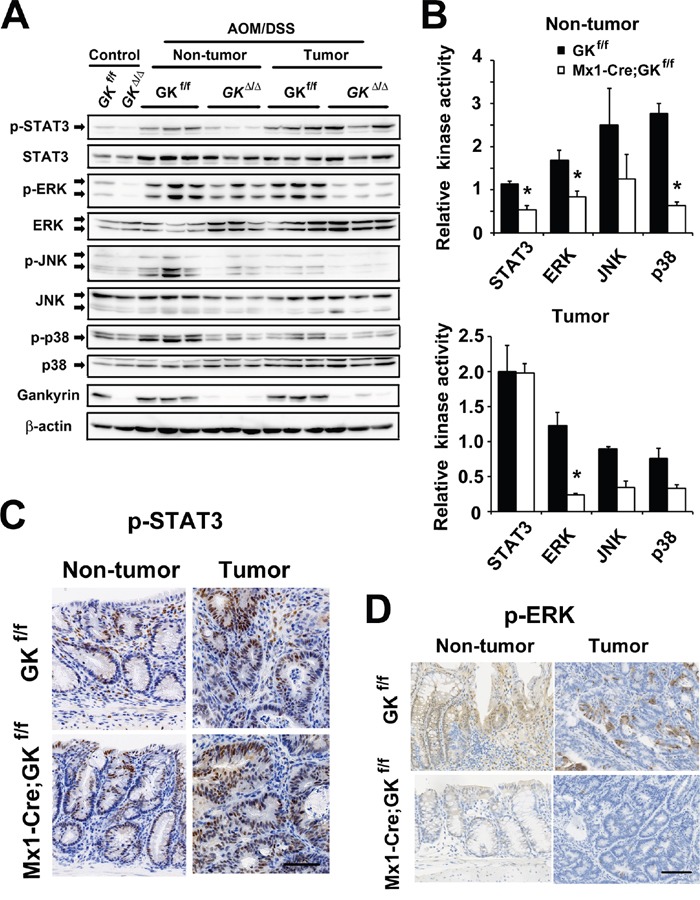
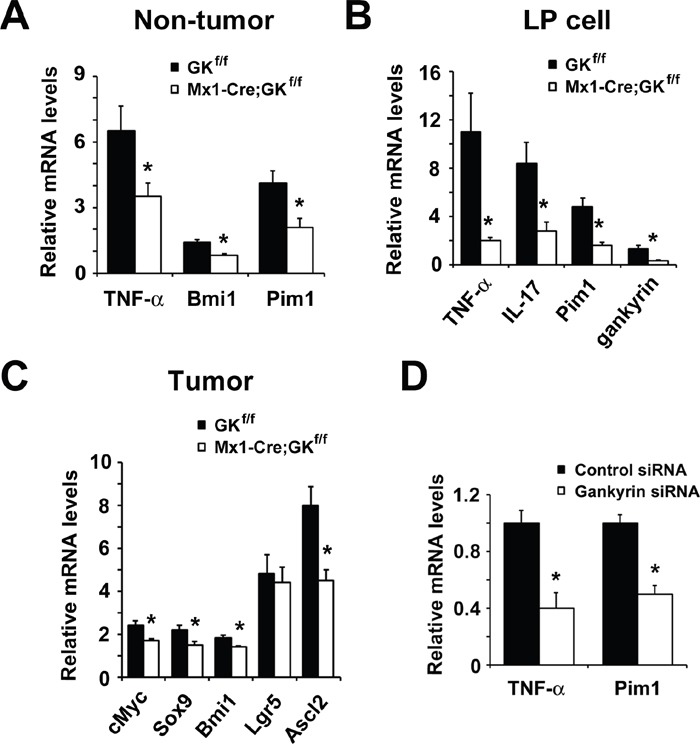
Although long-standing colonic inflammation due to refractory inflammatory bowel disease (IBD) promotes the development of colitis-associated cancer (CAC), the molecular mechanisms accounting for the development of CAC remains largely unknown. In this study, we investigated the role of gankyrin in the development of CAC since gankyrin is overexpressed in sporadic colorectal cancers. We analyzed gene expression of colon tissues obtained from 344 patients with IBD and CAC and found that expression of gankyrin was much higher in colonic mucosa of patients with refractory IBD than in those with IBD in remission. Expression of gankyrin was upregulated in inflammatory cells as well as tumor cells in colonic mucosa of patients with CAC. Over-expressing studies utilizing tagged ganlyrin-cDNA identified physical interaction between ganlyrin and Src homology 2-containing protein tyrosine phosphatase-1 (SHP-1). Importantly, the interaction between ganlyrin and SHP-1 leads to inhibition of STAT3 activation and to enhancement of TNF-α and IL-17 in inflammatory cells. To further address the role of gankyrin in the development of CAC, we created mice with intestinal epithelial cell-specific gankyrin ablation (Vil-Cre;Gankyrinf/f) and deletion of gankyrin in myeloid and epithelial cells (Mx1-Cre;Gankyrinf/f). Gankyrin deficiency in myeloid cells, but not in epithelial cells, reduced the activity of mitogen activated protein kinase and the expression of stem cell markers, leading to attenuated tumorigenic potential. These findings provide important insights into the pathogenesis of CAC and suggest that gankyrin is a promising target for developing therapeutic and preventive strategies against CAC.
尽管难治性炎症性肠病(IBD)引起的长期结肠炎症会促进结肠炎相关癌症(CAC)的发展,但导致CAC发生的分子机制在很大程度上仍不清楚。在本研究中,我们研究了甘菊环蛋白在CAC发生中的作用,因为甘菊环蛋白在散发性结直肠癌中过表达。我们分析了344例IBD和CAC患者的结肠组织基因表达,发现难治性IBD患者结肠黏膜中甘菊环蛋白的表达远高于缓解期IBD患者。在CAC患者的结肠黏膜中,炎症细胞和肿瘤细胞中甘菊环蛋白的表达均上调。利用标记的甘菊环蛋白-cDNA进行的过表达研究确定了甘菊环蛋白与含Src同源2结构域的蛋白酪氨酸磷酸酶-1(SHP-1)之间存在物理相互作用。重要的是,甘菊环蛋白与SHP-1之间的相互作用导致STAT3激活受到抑制,并增强炎症细胞中TNF-α和IL-17的表达。为了进一步探讨甘菊环蛋白在CAC发生中的作用,我们构建了肠道上皮细胞特异性甘菊环蛋白缺失的小鼠(Vil-Cre;Gankyrinf/f)以及骨髓和上皮细胞中甘菊环蛋白缺失的小鼠(Mx1-Cre;Gankyrinf/f)。骨髓细胞而非上皮细胞中的甘菊环蛋白缺乏降低了丝裂原活化蛋白激酶的活性和干细胞标志物的表达,导致致瘤潜力减弱。这些发现为CAC的发病机制提供了重要见解,并表明甘菊环蛋白是开发针对CAC的治疗和预防策略的一个有前景的靶点。