Department of Neurosurgery, University of Miami Miller School of Medicine, Miami, Florida, USA.
Department of Neurological Surgery, University of Miami Brain Tumor Initiative (UMBTI) Research Laboratory, Lois Pope LIFE Center, 2nd Floor, 1095 NW 14th Terrace, Miami, Florida, 33136, USA.
BMC Cancer. 2017 Feb 4;17(1):99. doi: 10.1186/s12885-017-3058-2.
Glioblastoma Multiforme (GBM) is the most common and lethal form of primary brain tumor in adults. Following standard treatment of surgery, radiation and chemotherapy, patients are expected to survive 12-14 months. Theorized cause of disease recurrence in these patients is tumor cell repopulation through the proliferation of treatment-resistant cancer stem cells. Current research has revealed curcumin, the principal ingredient in turmeric, can modulate multiple signaling pathways important for cancer stem cell self-renewal and survival.
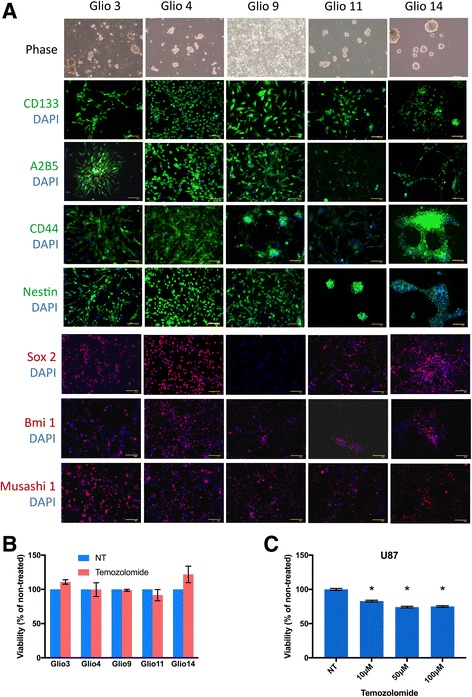
Following resection, tumor specimens were dissociated and glioblastoma stem cells (GSCs) were propagated in neurosphere media and characterized via immunocytochemistry. Cell viability was determined with MTS assay. GSC proliferation, sphere forming and colony forming assays were conducted through standard counting methods. Reactive oxygen species (ROS) production was examined using the fluorescent molecular probe CM-H2DCFA. Effects on cell signaling pathways were elucidated by western blot.
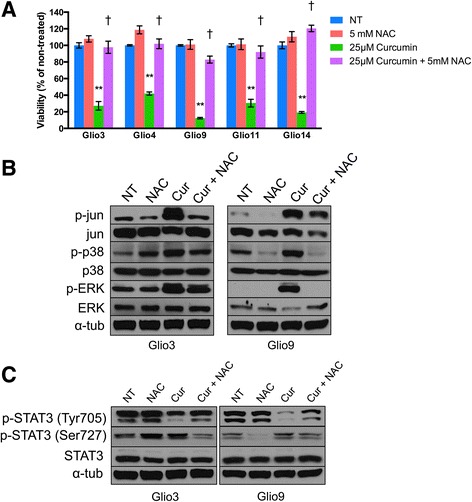
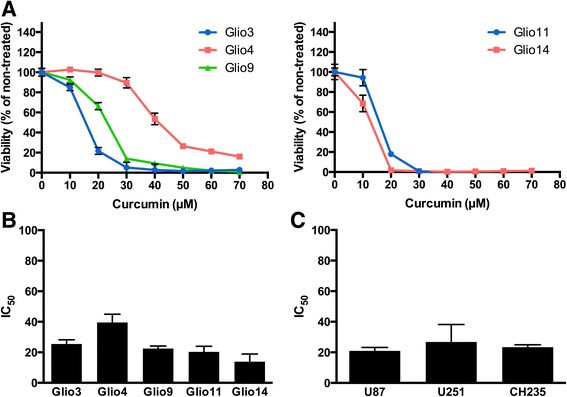
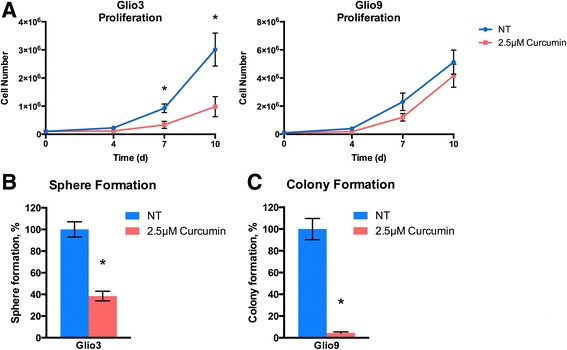
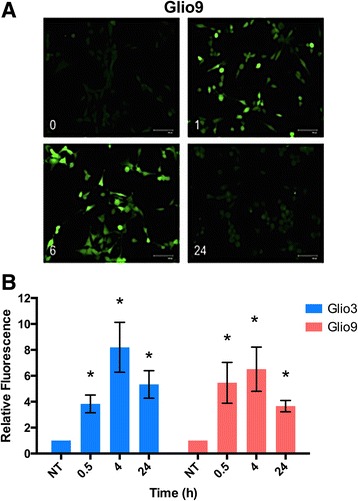
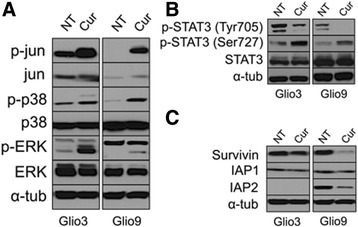
We evaluate the effects of curcumin on patient-derived GSC lines. We demonstrate a curcumin-induced dose-dependent decrease in GSC viability with an approximate IC of 25 μM. Treatment with sub-toxic levels (2.5 μM) of curcumin significantly decreased GSC proliferation, sphere forming ability and colony forming potential. Curcumin induced ROS, promoted MAPK pathway activation, downregulated STAT3 activity and IAP family members. Inhibition of ROS with the antioxidant N-acetylcysteine reversed these effects indicating a ROS dependent mechanism.
Discoveries made in this investigation may lead to a non-toxic intervention designed to prevent recurrence in glioblastoma by targeting glioblastoma stem cells.
多形性胶质母细胞瘤(GBM)是成人中最常见和最致命的原发性脑肿瘤。在接受手术、放疗和化疗的标准治疗后,患者的预期存活时间为 12-14 个月。这些患者疾病复发的理论原因是治疗耐药的肿瘤干细胞通过增殖而重新填充肿瘤细胞。目前的研究表明,姜黄素(姜黄的主要成分)可以调节癌症干细胞自我更新和存活的多个重要信号通路。
在切除后,将肿瘤标本分离,在神经球培养基中增殖神经胶质瘤干细胞(GSCs),并通过免疫细胞化学进行特征分析。用 MTS 测定法测定细胞活力。通过标准计数方法进行 GSC 增殖、球体形成和集落形成测定。使用荧光分子探针 CM-H2DCFA 检测活性氧(ROS)的产生。通过 Western blot 阐明对细胞信号通路的影响。
我们评估了姜黄素对患者来源的 GSC 系的影响。我们证明了姜黄素呈剂量依赖性地降低 GSC 活力,其近似 IC 约为 25μM。用亚毒性水平(2.5μM)的姜黄素处理可显著降低 GSC 的增殖、球体形成能力和集落形成潜力。姜黄素诱导 ROS 产生,促进 MAPK 通路激活,降低 STAT3 活性和 IAP 家族成员。用抗氧化剂 N-乙酰半胱氨酸抑制 ROS 逆转了这些作用,表明存在 ROS 依赖性机制。
本研究中的发现可能会导致一种非毒性干预措施的发现,该措施旨在通过靶向神经胶质瘤干细胞来预防胶质母细胞瘤的复发。