Turper Sedef, Aarts Kees
Department of Public Administration, University of Twente, P.O. Box 217, 7500 AE Enschede, The Netherlands.
Soc Indic Res. 2017;130(1):415-434. doi: 10.1007/s11205-015-1182-4. Epub 2015 Nov 20.
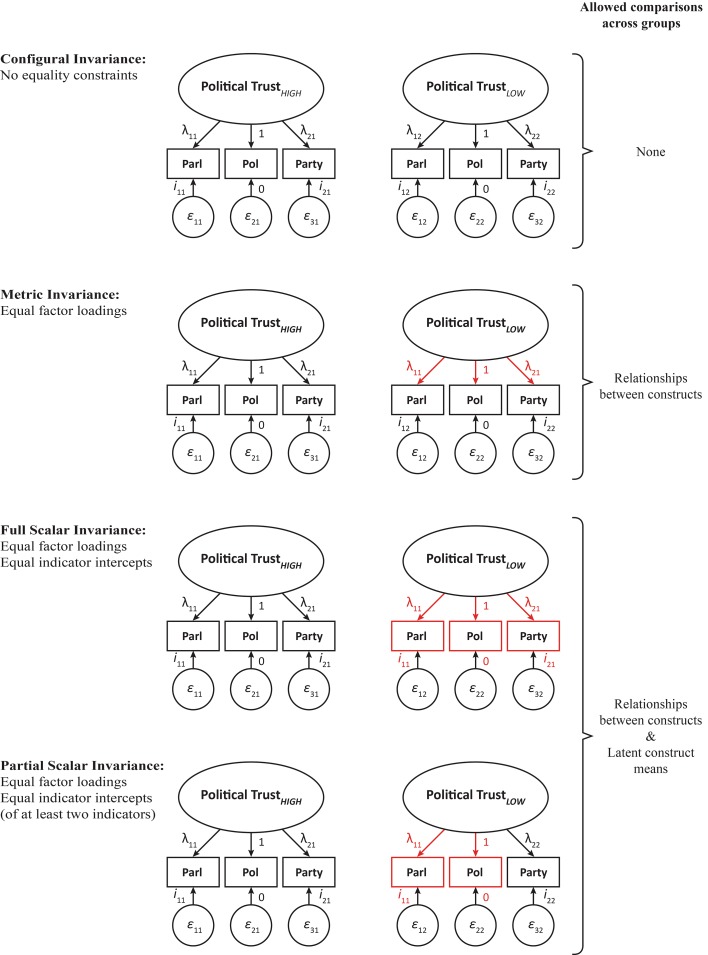
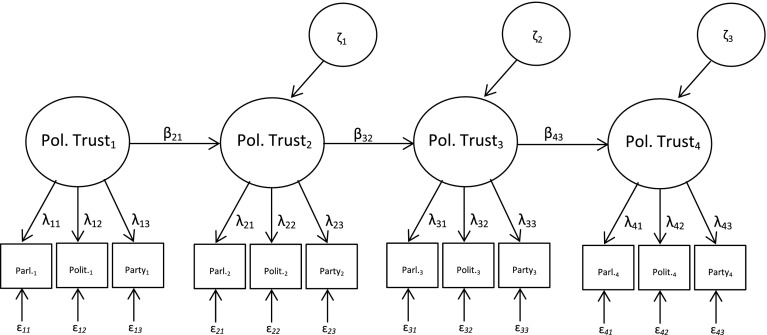
Political trust is an important indicator of political legitimacy. Hence, seemingly decreasing levels of political trust in Western democracies have stimulated a growing body of research on the causes and consequences of political trust. However, the neglect of potential measurement problems of political trust raises doubts about the findings of earlier studies. The current study revisits the measurement of political trust and re-examines the relationship between political trust and sophistication in the Netherlands by utilizing European Social Survey (ESS) data across five time points and four-wave panel data from the Panel Component of ESS. Our findings illustrate that high and low political sophistication groups display different levels of political trust even when measurement characteristics of political trust are taken into consideration. However, the relationship between political sophistication and political trust is weaker than it is often suggested by earlier research. Our findings also provide partial support for the argument that the gap between sophistication groups is widening over time. Furthermore, we demonstrate that, although the between-method differences between the latent means and the composite score means of political trust for high- and low sophistication groups are relatively minor, it is important to analyze the measurement characteristics of the political trust construct.
政治信任是政治合法性的一个重要指标。因此,西方民主国家中看似不断下降的政治信任水平激发了对政治信任的成因及后果的越来越多的研究。然而,对政治信任潜在测量问题的忽视引发了对早期研究结果的质疑。本研究通过利用欧洲社会调查(ESS)五个时间点的数据以及ESS面板部分的四波面板数据,重新审视政治信任的测量,并重新检验荷兰政治信任与政治成熟度之间的关系。我们的研究结果表明,即使考虑到政治信任的测量特征,高政治成熟度群体和低政治成熟度群体仍表现出不同程度的政治信任。然而,政治成熟度与政治信任之间的关系比早期研究所表明的要弱。我们的研究结果也为成熟度群体之间的差距随时间推移而扩大这一论点提供了部分支持。此外,我们证明,尽管高、低成熟度群体政治信任的潜在均值与综合得分均值之间的方法间差异相对较小,但分析政治信任结构的测量特征很重要。