Koutroumani Maria, Papadopoulos Georgios E, Vlassi Metaxia, Nikolakaki Eleni, Giannakouros Thomas
Laboratory of Biochemistry, Department of Chemistry, Aristotle University, Thessaloniki, Greece.
Department of Biochemistry and Biotechnology, University of Thessaly, Mezourlo, Larisa, Greece.
PLoS One. 2017 Feb 6;12(2):e0171328. doi: 10.1371/journal.pone.0171328. eCollection 2017.
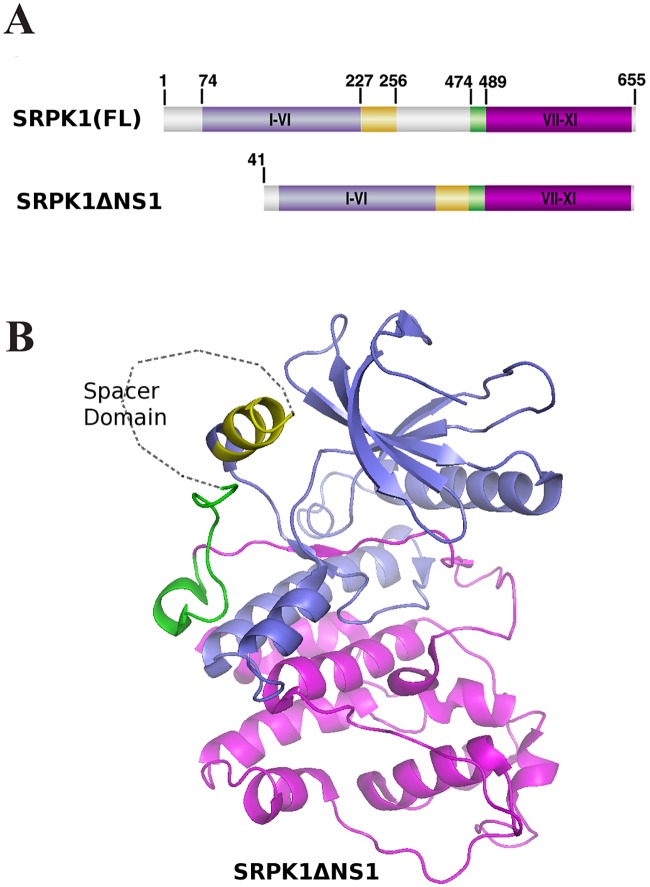
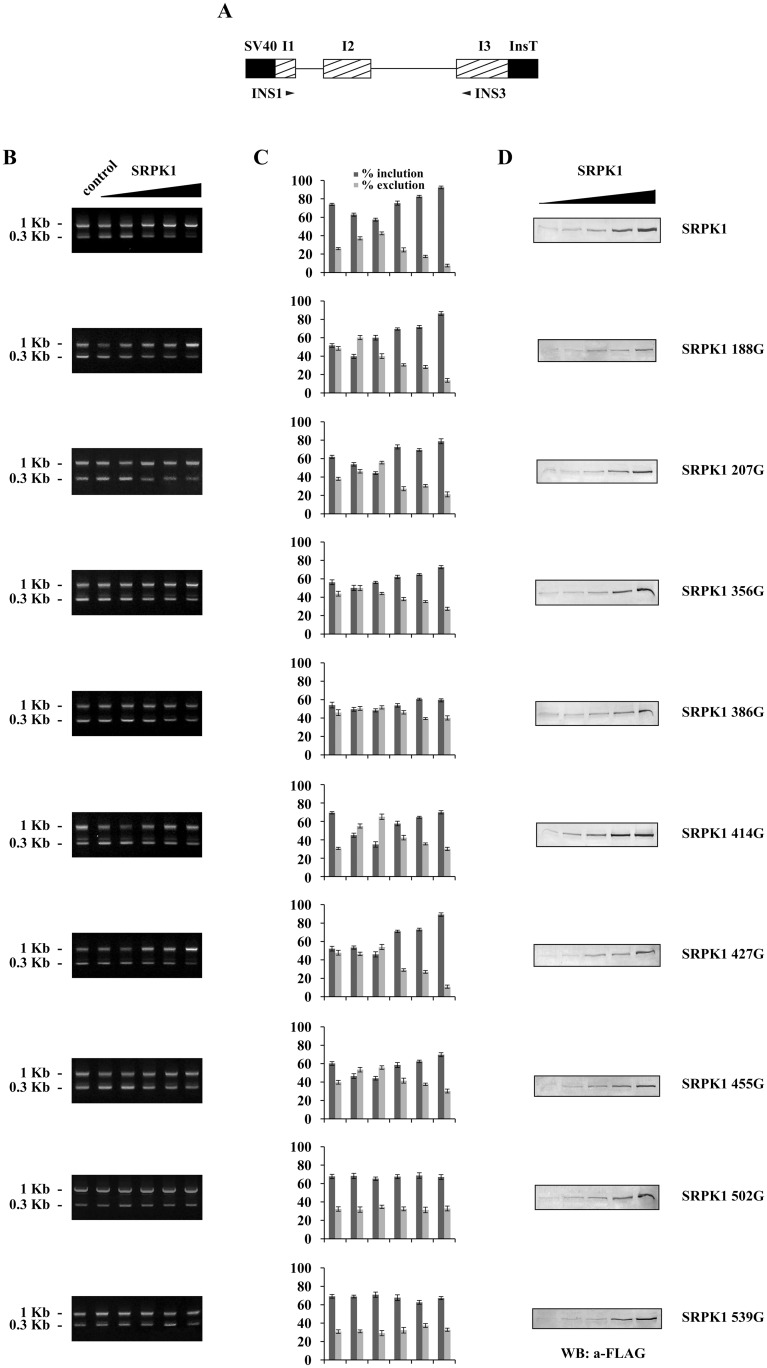
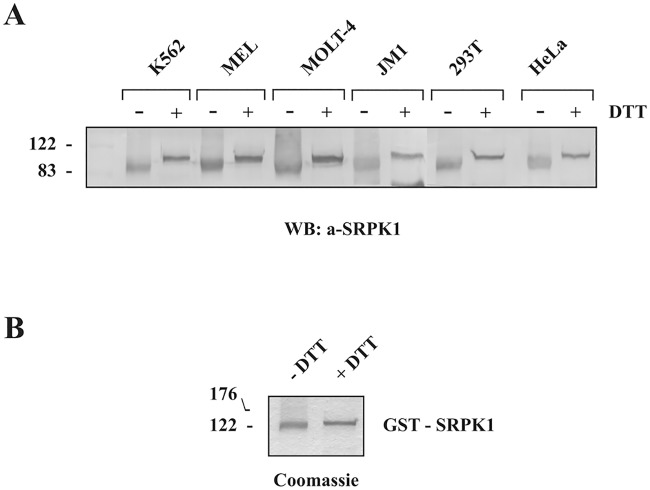
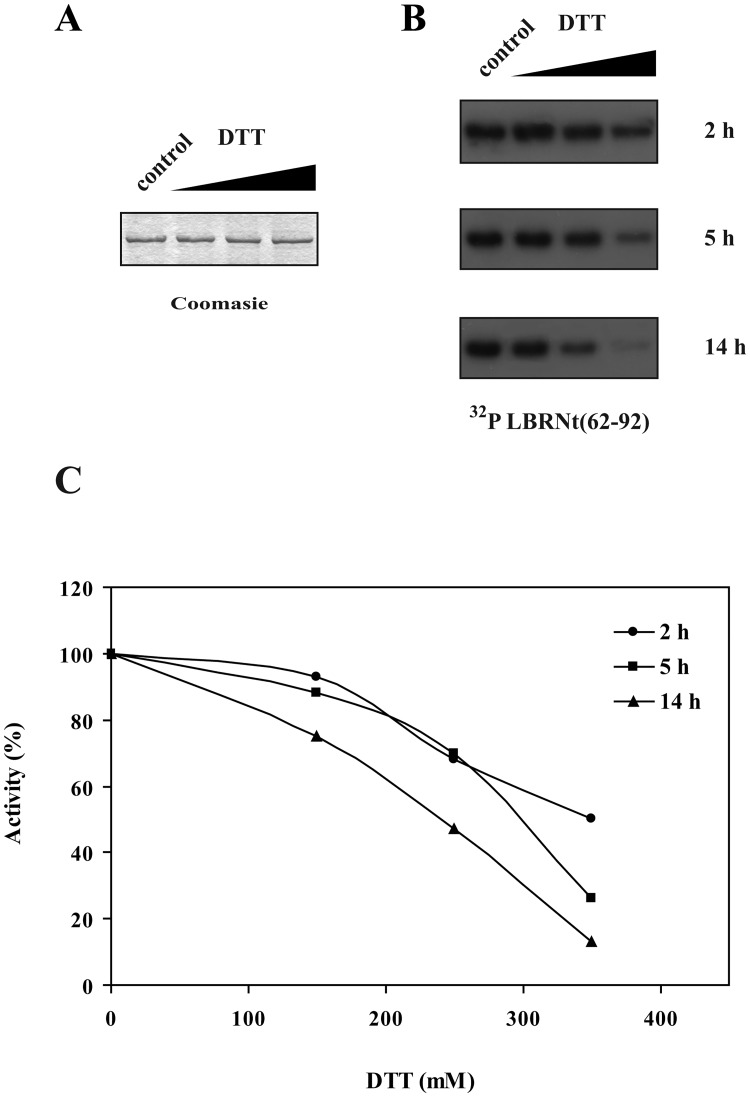
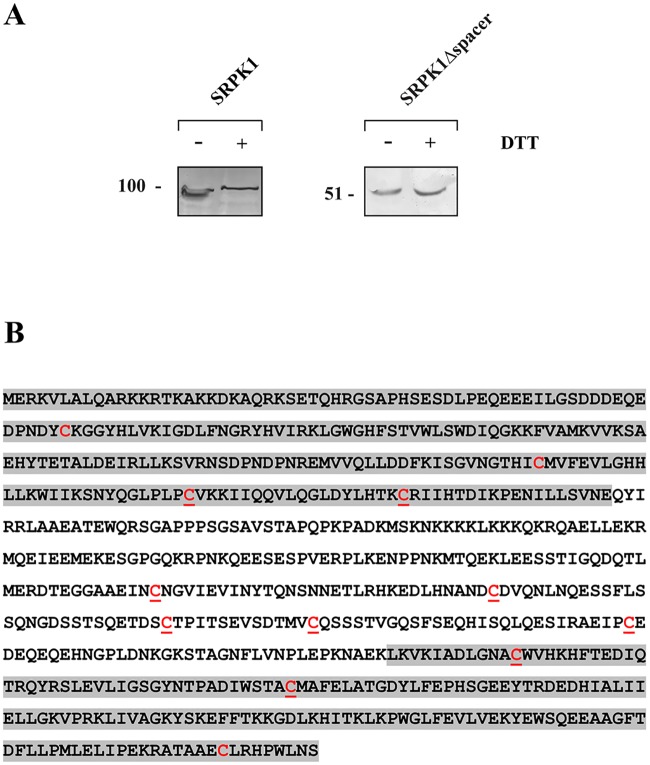
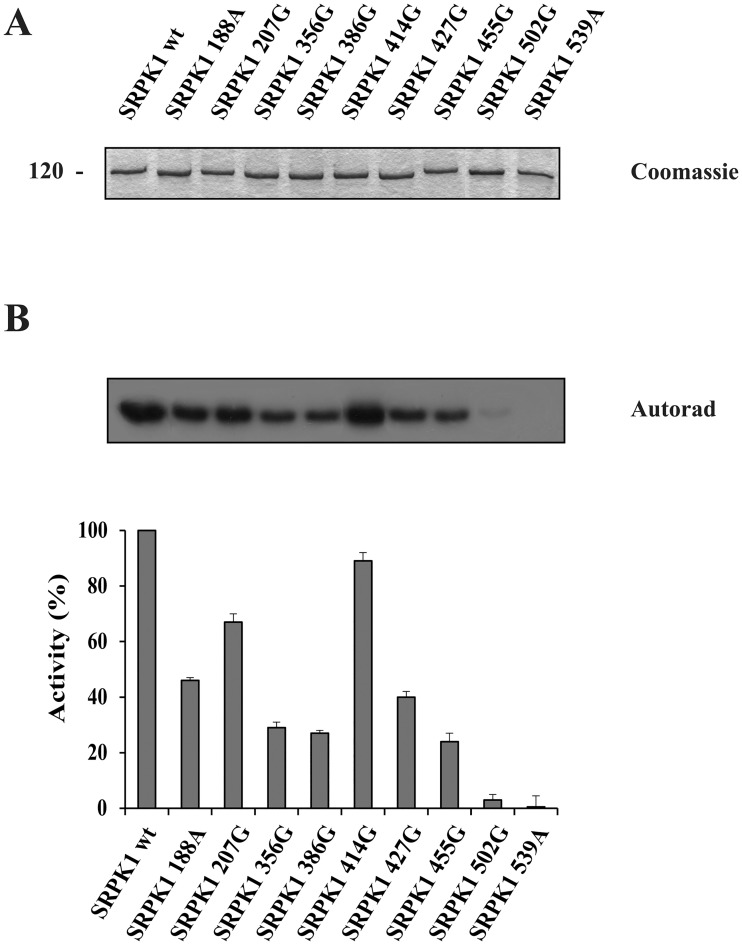
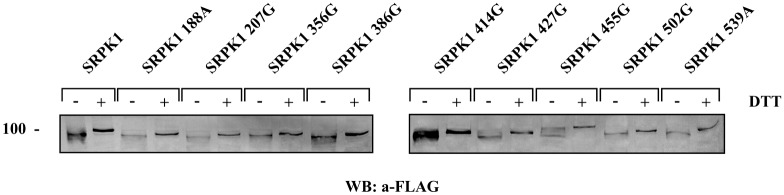
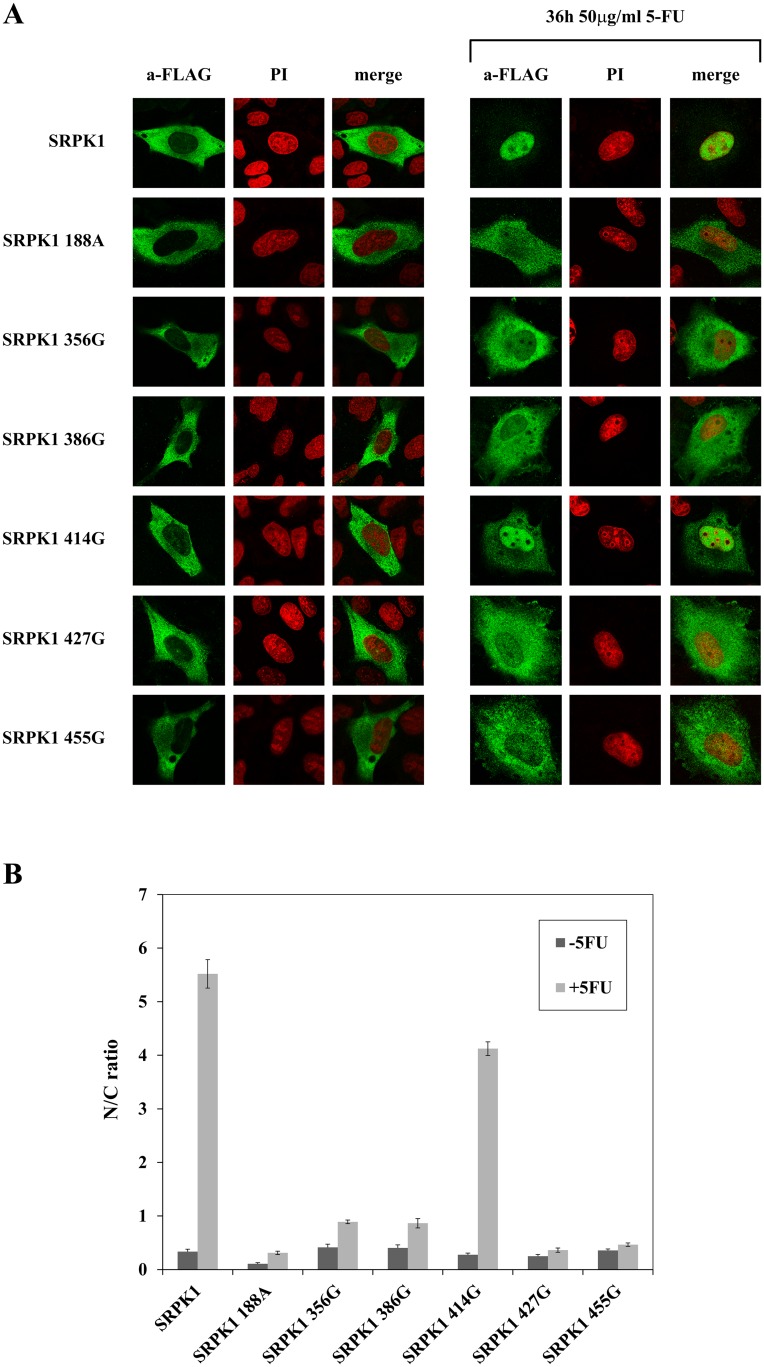
Serine/arginine protein kinases (SRPKs) phosphorylate Arg/Ser dipeptide-containing proteins that play crucial roles in a broad spectrum of basic cellular processes. The existence of a large internal spacer sequence that separates the bipartite kinase catalytic core is a unique structural feature of SRPKs. Previous structural studies on a catalytically active fragment of SRPK1, which lacks the main part of the spacer domain, revealed that SRPK1 remains in an active state without any post-translational modifications or specific intra-protein interactions, while the spacer domain is depicted as a loop structure, outside the kinase core. Using systematic mutagenesis we now provide evidence that replacement of any individual cysteine residue in the spacer, apart from Cys414, or in its proximal flaking ends of the two kinase catalytic domains has an impact on kinase activity. Furthermore, the cysteine residues are critical for nuclear translocation of SRPK1 in response to genotoxic stress and SRPK1-dependent splicing of a reporter gene. While replacement of Cys207, Cys502 and Cys539 of the catalytic domains is predicted to distort the kinase active structure, our findings suggest that Cys356, Cys386, Cys427 and Cys455 of the spacer domain and Cys188 of the first catalytic domain are engaged in disulfide bridging. We propose that such a network of intramolecular disulfide bonds mediates the bending of the spacer region thus allowing the proximal positioning of the two catalytic subunits which is a prerequisite for SRPK1 activity.
丝氨酸/精氨酸蛋白激酶(SRPKs)可磷酸化含精氨酸/丝氨酸二肽的蛋白质,这些蛋白质在广泛的基本细胞过程中发挥着关键作用。分隔双激酶催化核心的大的内部间隔序列的存在是SRPKs的独特结构特征。先前对缺乏间隔域主要部分的SRPK1催化活性片段的结构研究表明,SRPK1在没有任何翻译后修饰或特定蛋白质内相互作用的情况下仍处于活性状态,而间隔域被描绘为激酶核心外部的环结构。现在,我们通过系统诱变提供证据表明,除Cys414外,间隔区或两个激酶催化域近端片状末端中的任何单个半胱氨酸残基被替换都会影响激酶活性。此外,半胱氨酸残基对于SRPK1响应遗传毒性应激的核转位以及报告基因的SRPK1依赖性剪接至关重要。虽然预测催化域的Cys207、Cys502和Cys539被替换会扭曲激酶活性结构,但我们的研究结果表明,间隔域的Cys356、Cys386、Cys427和Cys455以及第一个催化域的Cys188参与了二硫键桥接。我们提出,这种分子内二硫键网络介导间隔区的弯曲,从而允许两个催化亚基的近端定位,这是SRPK1活性的先决条件。