Di Fenza Mauro, Hogg Bridget, Grant Jim, Barth Susanne
College of Life Sciences, School of Biology and Environmental Sciences, University College Dublin, Dublin, Ireland; Crops, Environment & Land Use Programme, Crops Research Centre Oak Park, Teagasc, Carlow, Ireland.
College of Life Sciences, School of Biology and Environmental Sciences, University College Dublin , Dublin , Ireland.
PeerJ. 2017 Jan 5;5:e2839. doi: 10.7717/peerj.2839. eCollection 2017.
Maize () is a C tropical cereal and its adaptation to temperate climates can be problematic due to low soil temperatures at early stages of establishment.
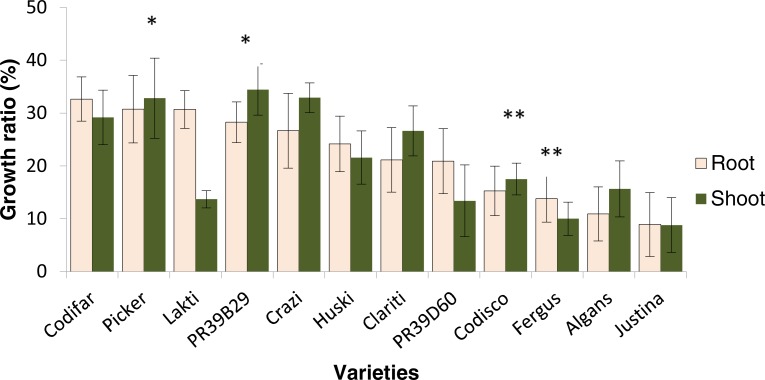
In the current study we have firstly investigated the physiological response of twelve maize varieties, from a chilling condition adapted gene pool, to sub-optimal growth temperature during seedling emergence. To identify transcriptomic markers of cold tolerance in already adapted maize genotypes, temperature conditions were set below the optimal growth range in both control and low temperature groups. The conditions were as follows; control (18 °C for 16 h and 12 °C for 8 h) and low temperature (12 °C for 16 h and 6 °C for 8 h). Four genotypes were identified from the condition adapted gene pool with significant contrasting chilling tolerance.
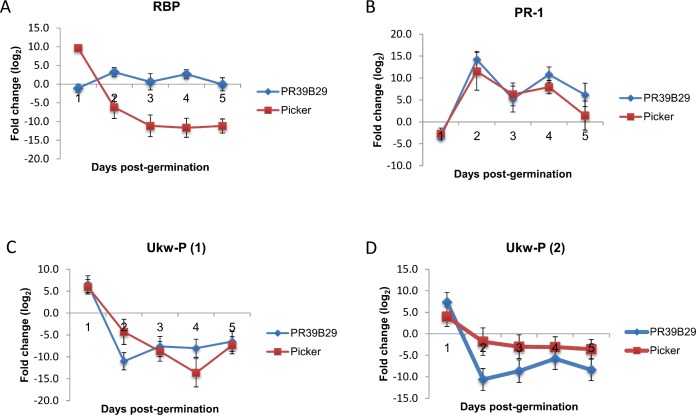
Picker and PR39B29 were the more cold-tolerant lines and Fergus and Codisco were the less cold-tolerant lines. These four varieties were subjected to microarray analysis to identify differentially expressed genes under chilling conditions. Exposure to low temperature during establishment in the maize varieties Picker, PR39B29, Fergus and Codisco, was reflected at the transcriptomic level in the varieties Picker and PR39B29. No significant changes in expression were observed in Fergus and Codisco following chilling stress. A total number of 64 genes were differentially expressed in the two chilling tolerant varieties. These two varieties exhibited contrasting transcriptomic profiles, in which only four genes overlapped.
We observed that maize varieties possessing an enhanced root growth ratio under low temperature were more tolerant, which could be an early and inexpensive measure for germplasm screening under controlled conditions. We have identified novel cold inducible genes in an already adapted maize breeding gene pool. This illustrates that further varietal selection for enhanced chilling tolerance is possible in an already preselected gene pool.
玉米()是一种C4热带谷物,由于其在生长初期土壤温度较低,因此适应温带气候可能存在问题。
在本研究中,我们首先研究了来自适应冷胁迫基因库的12个玉米品种在幼苗出土期间对次优生长温度的生理反应。为了确定已适应的玉米基因型中耐寒性的转录组标记,在对照和低温组中,将温度条件设置在最佳生长范围以下。条件如下:对照(18°C持续16小时,12°C持续8小时)和低温(12°C持续16小时,6°C持续8小时)。从适应条件的基因库中鉴定出四个基因型,它们具有显著不同的耐寒性。
Picker和PR39B29是耐寒性较强的品系,Fergus和Codisco是耐寒性较弱的品系。对这四个品种进行微阵列分析,以鉴定低温条件下差异表达的基因。在Picker、PR39B29、Fergus和Codisco这几个玉米品种的生长初期暴露于低温下,在Picker和PR39B29品种的转录组水平上有所体现。低温胁迫后,Fergus和Codisco中未观察到表达的显著变化。在两个耐寒品种中共有64个基因差异表达。这两个品种表现出不同的转录组图谱,其中只有四个基因重叠。
我们观察到,在低温下具有较高根生长率的玉米品种更耐寒,这可能是在可控条件下进行种质筛选的一种早期且经济的方法。我们在一个已经适应的玉米育种基因库中鉴定出了新的冷诱导基因。这表明在已经预先选择的基因库中,进一步选择增强耐寒性的品种是可能的。