Leiss Lina, Mutlu Ercan, Øyan Anne, Yan Tao, Tsinkalovsky Oleg, Sleire Linda, Petersen Kjell, Rahman Mohummad Aminur, Johannessen Mireille, Mitra Sidhartha S, Jacobsen Hege K, Talasila Krishna M, Miletic Hrvoje, Jonassen Inge, Li Xingang, Brons Nicolaas H, Kalland Karl-Henning, Wang Jian, Enger Per Øyvind
Neuro Clinic, Haukeland University Hospital, Bergen, Norway.
Oncomatrix Research Lab, Department of Biomedicine, University of Bergen, Bergen, Norway.
BMC Cancer. 2017 Feb 7;17(1):108. doi: 10.1186/s12885-017-3109-8.
Little is known about the role of glial host cells in brain tumours. However, supporting stromal cells have been shown to foster tumour growth in other cancers.
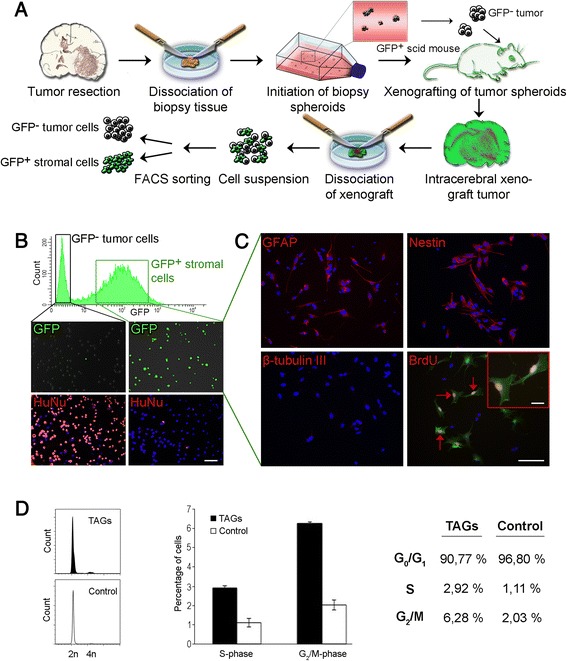
We isolated stromal cells from patient-derived glioblastoma (GBM) xenografts established in GFP-NOD/scid mice. With simultaneous removal of CD11b immune and CD31 endothelial cells by fluorescence activated cell sorting (FACS), we obtained a population of tumour-associated glial cells, TAGs, expressing markers of terminally differentiaed glial cell types or glial progenitors. This cell population was subsequently characterised using gene expression analyses and immunocytochemistry. Furthermore, sphere formation was assessed in vitro and their glioma growth-promoting ability was examined in vivo. Finally, the expression of TAG related markers was validated in human GBMs.
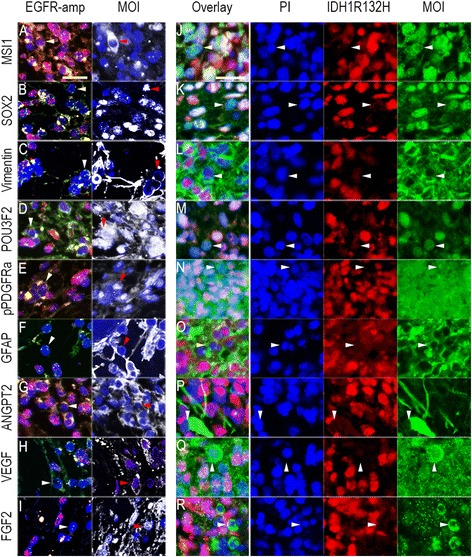
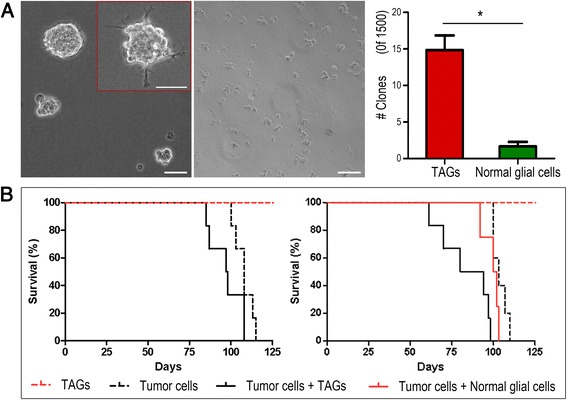
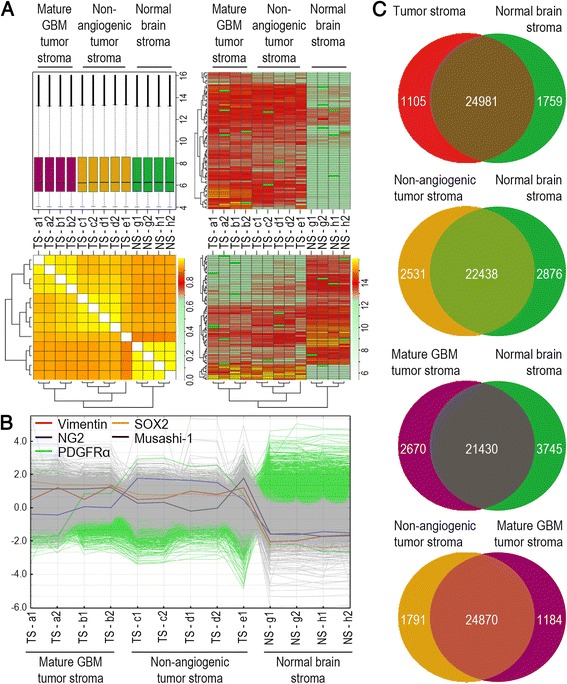
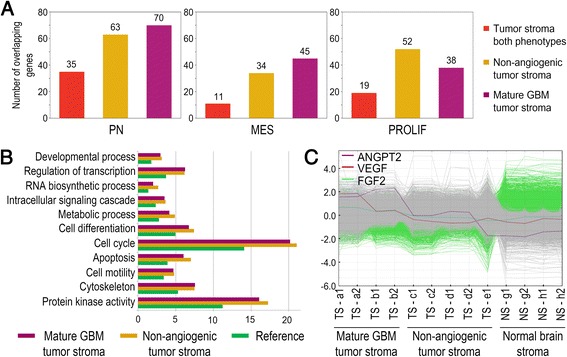
TAGs were highly enriched for the expression of glial cell proteins including GFAP and myelin basic protein (MBP), and immature markers such as Nestin and O4. A fraction of TAGs displayed sphere formation in stem cell medium. Moreover, TAGs promoted brain tumour growth in vivo when co-implanted with glioma cells, compared to implanting only glioma cells, or glioma cells and unconditioned glial cells from mice without tumours. Genome-wide microarray analysis of TAGs showed an expression profile distinct from glial cells from healthy mice brains. Notably, TAGs upregulated genes associated with immature cell types and self-renewal, including Pou3f2 and Sox2. In addition, TAGs from highly angiogenic tumours showed upregulation of angiogenic factors, including Vegf and Angiopoietin 2. Immunohistochemistry of three GBMs, two patient biopsies and one GBM xenograft, confirmed that the expression of these genes was mainly confined to TAGs in the tumour bed. Furthermore, their expression profiles displayed a significant overlap with gene clusters defining prognostic subclasses of human GBMs.
Our data demonstrate that glial host cells in brain tumours are functionally distinct from glial cells of healthy mice brains. Furthermore, TAGs display a gene expression profile with enrichment for genes related to stem cells, immature cell types and developmental processes. Future studies are needed to delineate the biological mechanisms regulating the brain tumour-host interplay.
关于神经胶质宿主细胞在脑肿瘤中的作用,人们了解甚少。然而,在其他癌症中,支持性基质细胞已被证明可促进肿瘤生长。
我们从在绿色荧光蛋白(GFP)-NOD/scid小鼠中建立的患者来源的胶质母细胞瘤(GBM)异种移植瘤中分离出基质细胞。通过荧光激活细胞分选(FACS)同时去除CD11b免疫细胞和CD31内皮细胞,我们获得了一群肿瘤相关胶质细胞(TAGs),其表达终末分化胶质细胞类型或胶质祖细胞的标志物。随后使用基因表达分析和免疫细胞化学对该细胞群体进行了表征。此外,在体外评估了球体形成,并在体内检测了它们促进胶质瘤生长的能力。最后,在人GBM中验证了TAG相关标志物的表达。
TAGs高度富集胶质细胞蛋白的表达,包括胶质纤维酸性蛋白(GFAP)和髓鞘碱性蛋白(MBP),以及未成熟标志物,如巢蛋白(Nestin)和O4。一部分TAGs在干细胞培养基中表现出球体形成。此外,与仅植入胶质瘤细胞或胶质瘤细胞与无肿瘤小鼠的未处理胶质细胞相比,当与胶质瘤细胞共植入时,TAGs在体内促进脑肿瘤生长。对TAGs进行全基因组微阵列分析显示,其表达谱与健康小鼠脑内的胶质细胞不同。值得注意的是,TAGs上调了与未成熟细胞类型和自我更新相关的基因,包括Pou3f2和Sox2。此外,来自高血管生成性肿瘤的TAGs显示血管生成因子上调,包括血管内皮生长因子(Vegf)和血管生成素2(Angiopoietin 2)。对三个GBM、两份患者活检样本和一个GBM异种移植瘤进行免疫组织化学分析,证实这些基因的表达主要局限于肿瘤床中的TAGs。此外,它们的表达谱与定义人GBM预后亚类的基因簇有显著重叠。
我们的数据表明,脑肿瘤中的神经胶质宿主细胞在功能上与健康小鼠脑内的胶质细胞不同。此外,TAGs显示出一种基因表达谱,富集了与干细胞、未成熟细胞类型和发育过程相关的基因。需要进一步的研究来阐明调节脑肿瘤-宿主相互作用的生物学机制。