Department of Medical Genetics, Iuliu Hațieganu University of Medicine and Pharmacy, 8 Victor Babes Street, 400012 Cluj-Napoca, Romania.
Department of Neurosurgery, Iuliu Hațieganu University of Medicine and Pharmacy, 8 Victor Babes Street, 400012 Cluj-Napoca, Romania.
Int J Mol Sci. 2020 Mar 12;21(6):1950. doi: 10.3390/ijms21061950.
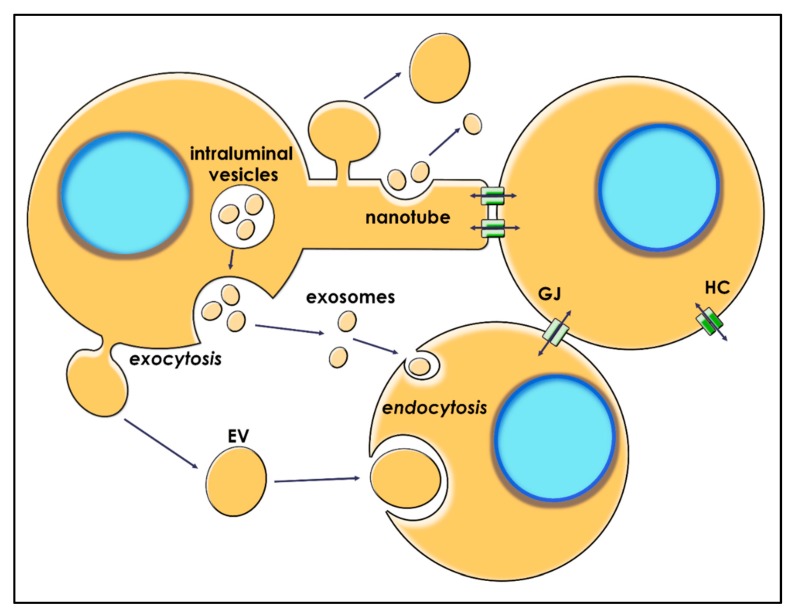
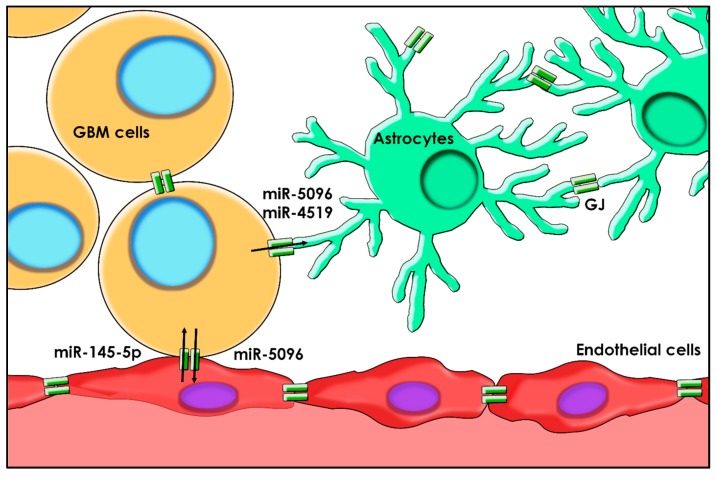
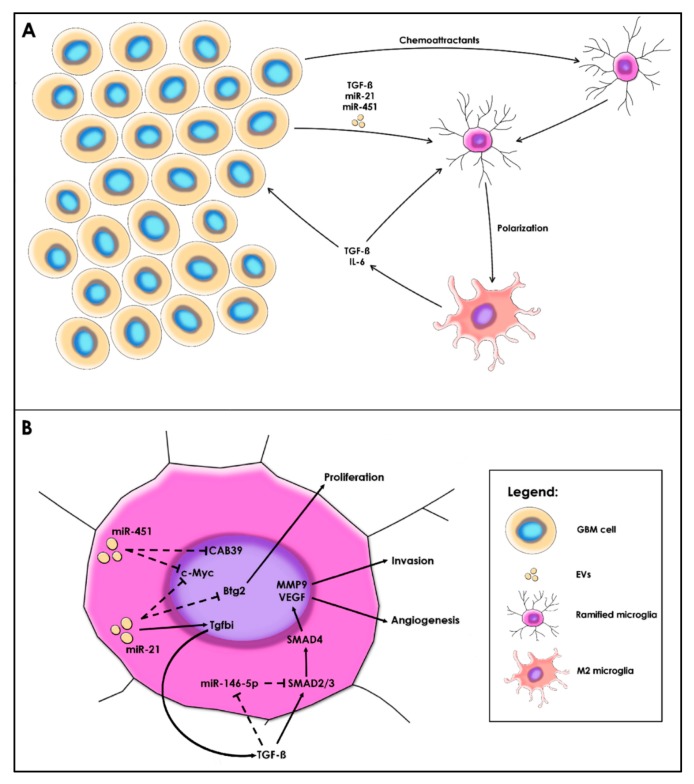
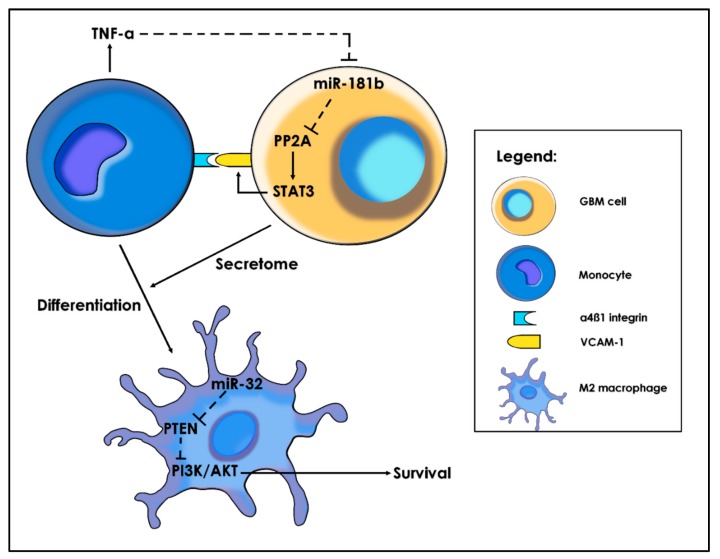
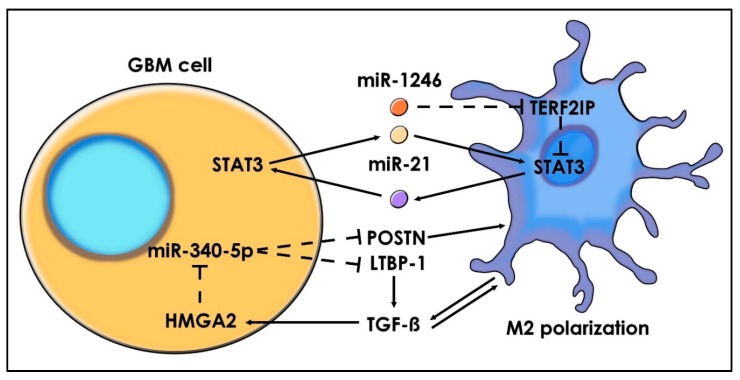
Glioblastoma (GBM) consists of a heterogeneous collection of competing cellular clones which communicate with each other and with the tumor microenvironment (TME). MicroRNAs (miRNAs) present various exchange mechanisms: free miRNA, extracellular vesicles (EVs), or gap junctions (GJs). GBM cells transfer miR-4519 and miR-5096 to astrocytes through GJs. Oligodendrocytes located in the invasion front present high levels of miR-219-5p, miR-219-2-3p, and miR-338-3p, all related to their differentiation. There is a reciprocal exchange between GBM cells and endothelial cells (ECs) as miR-5096 promotes angiogenesis after being transferred into ECs, whereas miR-145-5p acts as a tumor suppressor. In glioma stem cells (GSCs), miR-1587 and miR-3620-5p increase the proliferation and miR-1587 inhibits the hormone receptor co-repressor-1 () after EVs transfers. GBM-derived EVs carry miR-21 and miR-451 that are up-taken by microglia and monocytes/macrophages, promoting their proliferation. Macrophages release EVs enriched in miR-21 that are transferred to glioma cells. This bidirectional miR-21 exchange increases STAT3 activity in GBM cells and macrophages, promoting invasion, proliferation, angiogenesis, and resistance to treatment. miR-1238 is upregulated in resistant GBM clones and their EVs, conferring resistance to adjacent cells via the CAV1/EGFR signaling pathway. Decrypting these mechanisms could lead to a better patient stratification and the development of novel target therapies.
胶质母细胞瘤(GBM)由具有异质性的竞争细胞克隆组成,这些细胞克隆相互之间以及与肿瘤微环境(TME)相互交流。microRNAs(miRNAs)具有多种交换机制:游离 miRNA、细胞外囊泡(EVs)或缝隙连接(GJ)。GBM 细胞通过 GJ 将 miR-4519 和 miR-5096 转移到星形胶质细胞。位于浸润前沿的少突胶质细胞呈现高水平的 miR-219-5p、miR-219-2-3p 和 miR-338-3p,它们都与少突胶质细胞的分化有关。GBM 细胞和内皮细胞(ECs)之间存在着一种相互的交换,因为 miR-5096 被转移到 ECs 后促进血管生成,而 miR-145-5p 则作为一种肿瘤抑制因子。在神经胶质瘤干细胞(GSCs)中,miR-1587 和 miR-3620-5p 增加增殖,而 miR-1587 在 EVs 转移后抑制激素受体共抑制因子-1()。GBM 衍生的 EVs 携带 miR-21 和 miR-451,这些 miRNA 被小胶质细胞和单核细胞/巨噬细胞摄取,促进其增殖。巨噬细胞释放富含 miR-21 的 EVs,这些 EVs被转移到神经胶质瘤细胞。这种双向 miR-21 交换增加了 GBM 细胞和巨噬细胞中的 STAT3 活性,促进了侵袭、增殖、血管生成和对治疗的耐药性。在耐药性 GBM 克隆及其 EVs 中,miR-1238 上调,通过 CAV1/EGFR 信号通路赋予相邻细胞耐药性。解析这些机制可能导致更好的患者分层和新的靶向治疗的发展。