Fonin Alexander V, Silonov Sergey A, Sitdikova Asiya K, Kuznetsova Irina M, Uversky Vladimir N, Turoverov Konstantin K
Institute of Cytology of the Russian Academy of Sciences, Laboratory of Structural Dynamics, Stability and Folding of Proteins, Tikhoretsky av. 4, St. Petersburg 197046, Russia.
Saint-Petersburg Technological Institute (Technical University), Moskovsky av. 26, Saint-Petersburg 190013, Russia.
Molecules. 2017 Feb 6;22(2):244. doi: 10.3390/molecules22020244.
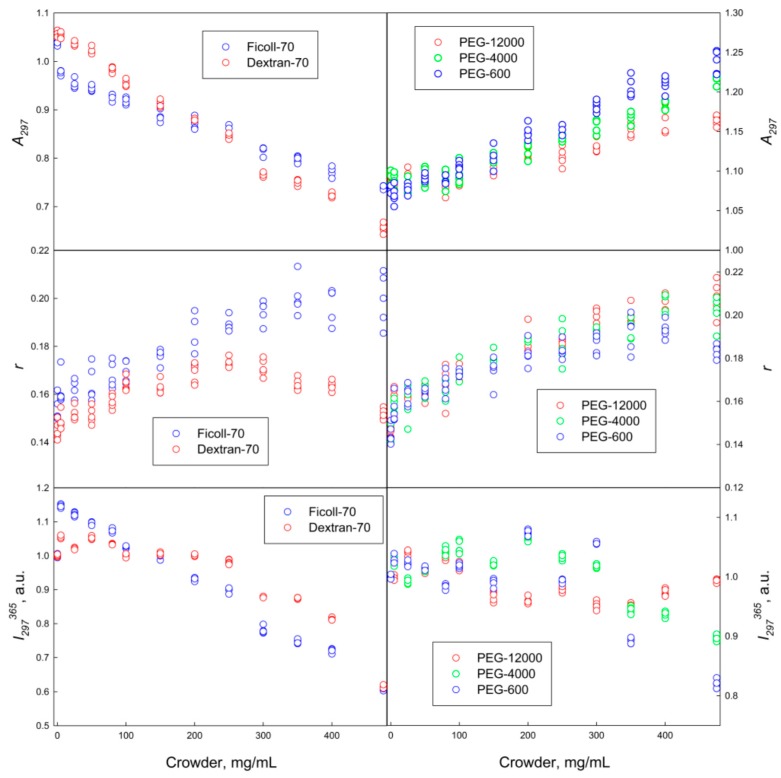
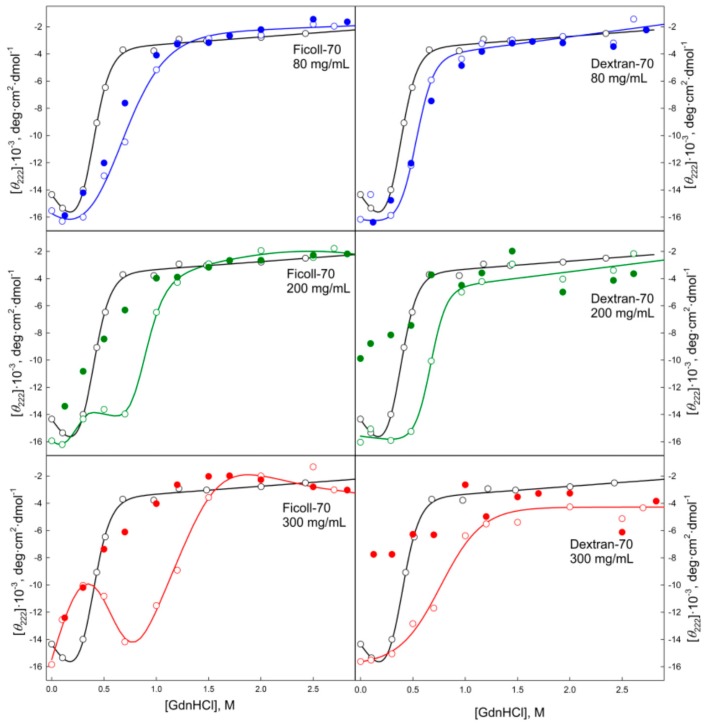
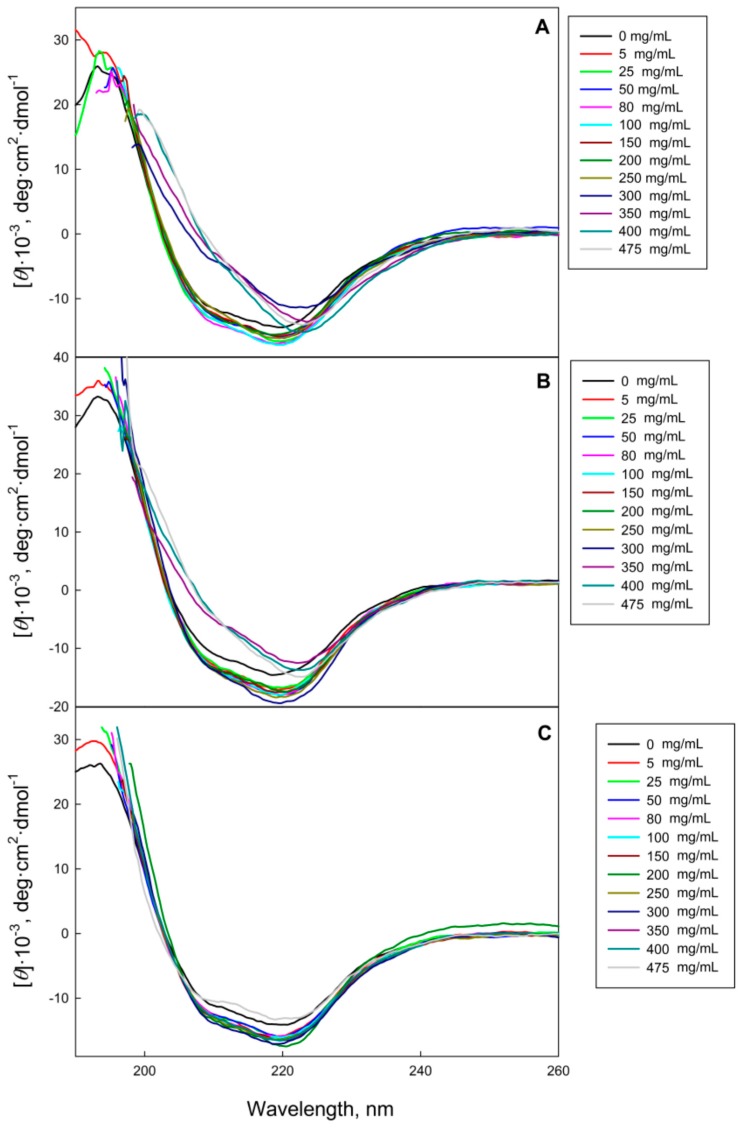
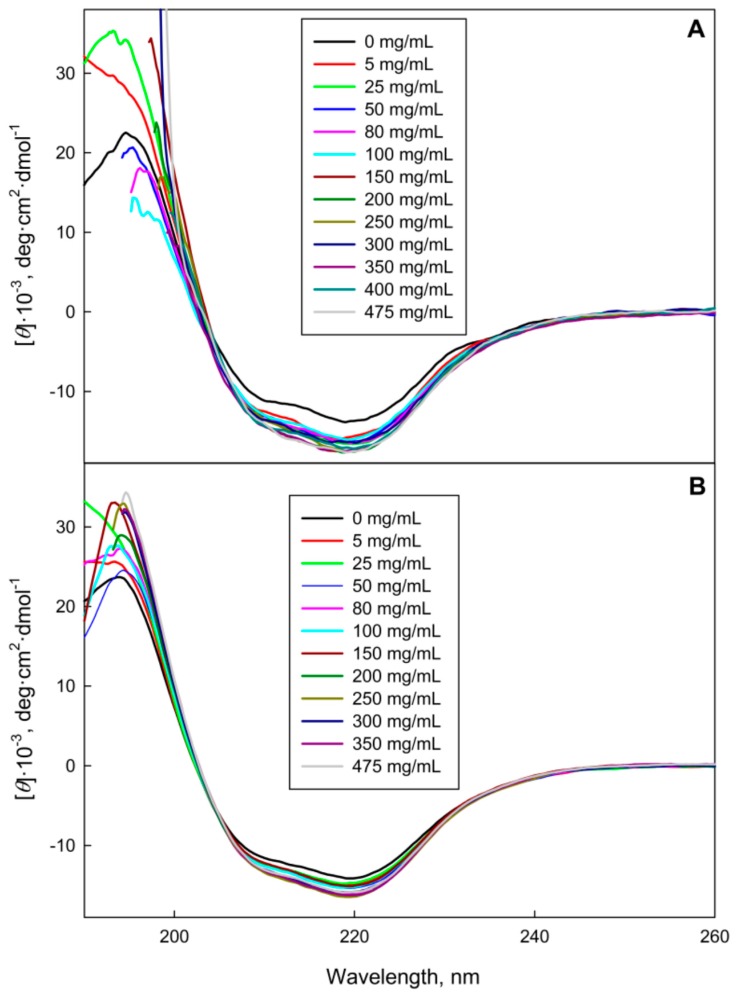
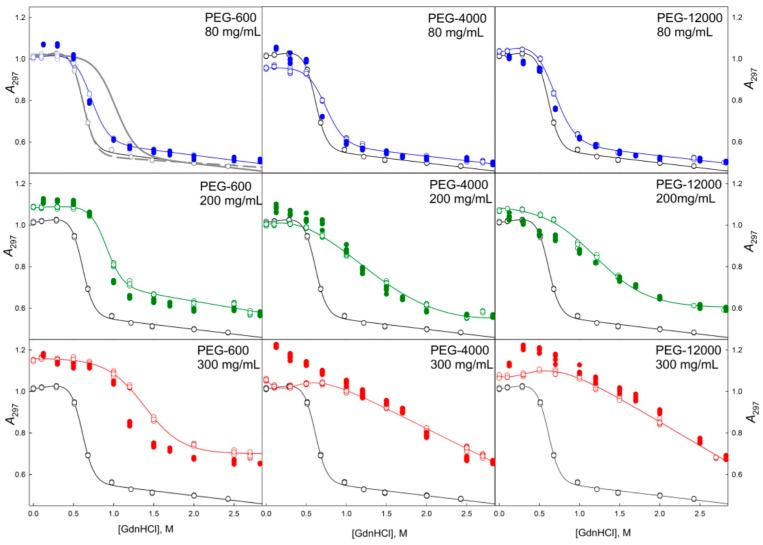
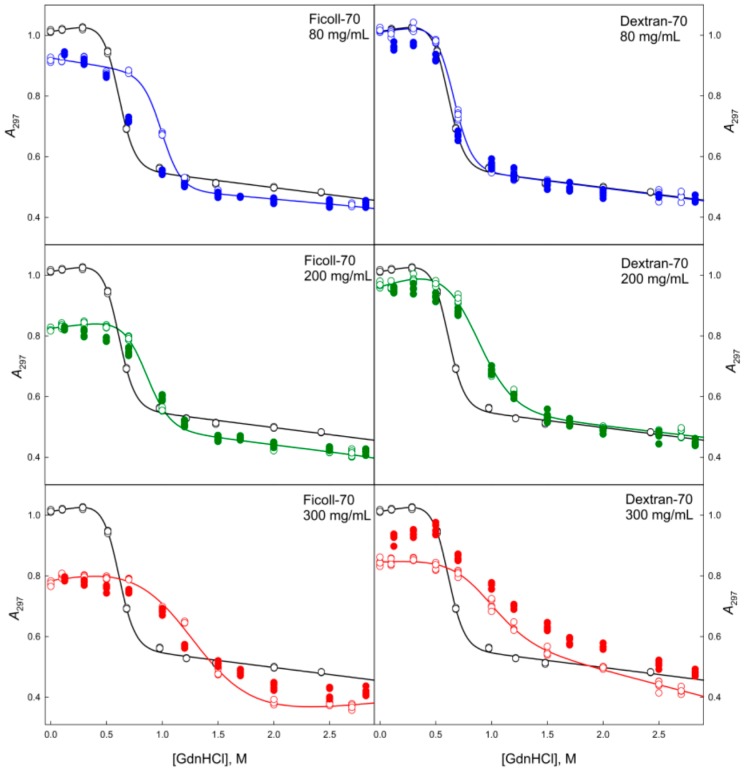
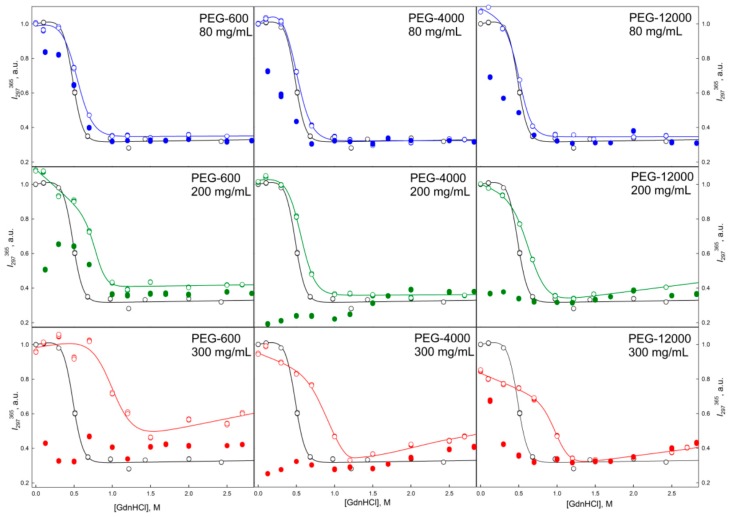
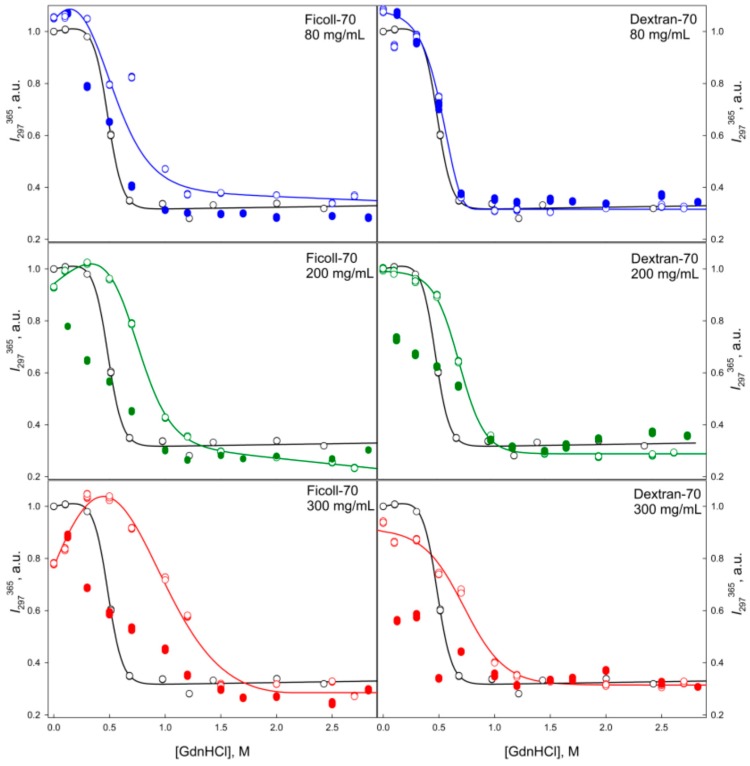
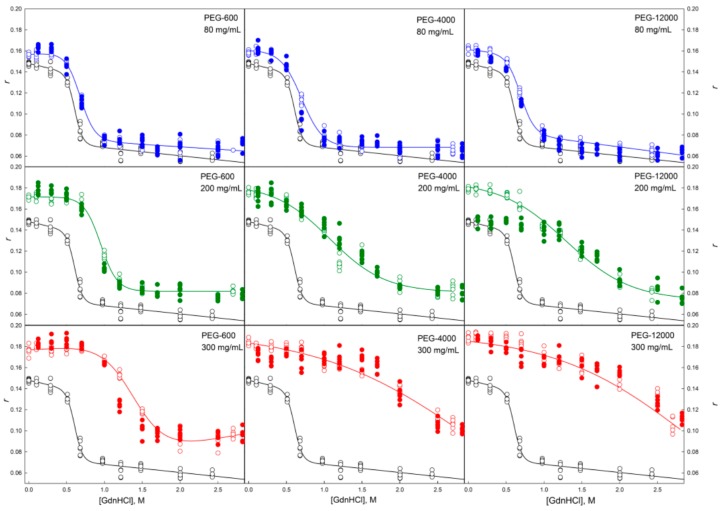
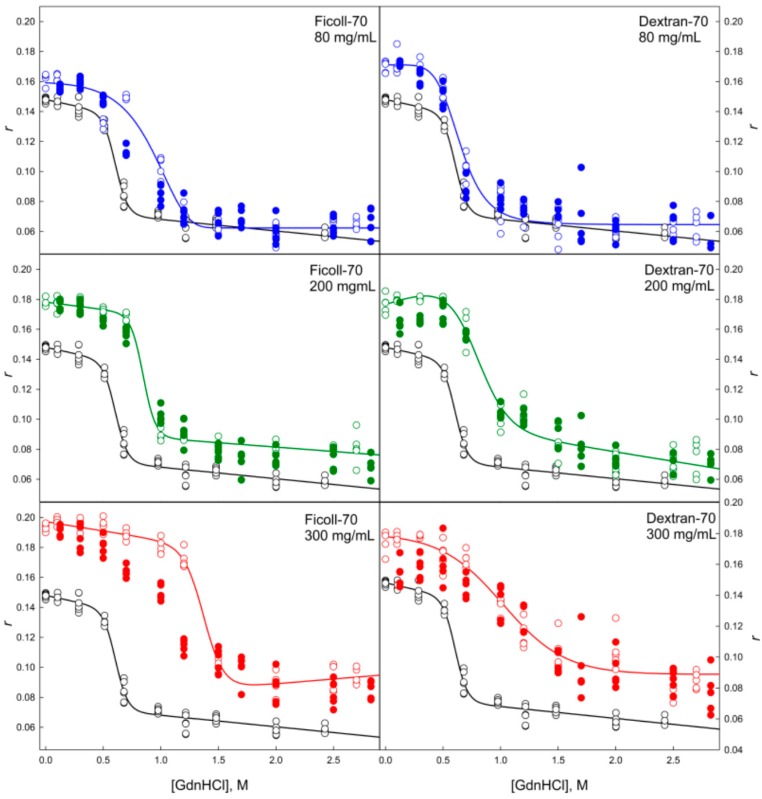
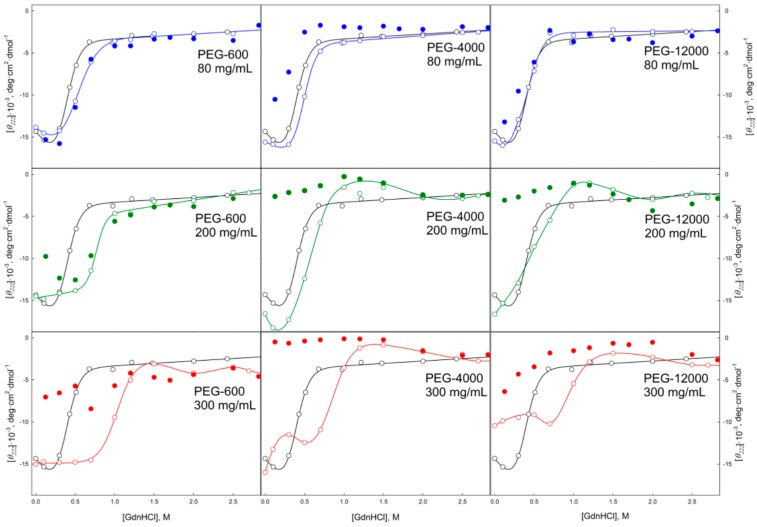
Conformational changes of d-glucose/d-galactose-binding protein (GGBP) were studied under molecular crowding conditions modeled by concentrated solutions of polyethylene glycols (PEG-12000, PEG-4000, and PEG-600), Ficoll-70, and Dextran-70, addition of which induced noticeable structural changes in the GGBP molecule. All PEGs promoted compaction of GGBP and lead to the increase in ordering of its structure. Concentrated solutions of PEG-12000 and PEG-4000 caused GGBP aggregation. Although Ficoll-70 and Dextran-70 also promoted increase in the GGBP ordering, the structural outputs were different for different crowders. For example, in comparison with the GGBP in buffer, the intrinsic fluorescence spectrum of this protein was shifted to short-wave region in the presence of PEGs but was red-shifted in the presence of Ficoll-70 and Dextran-70. It was hypothesized that this difference could be due to the specific interaction of GGBP with the sugar-based polymers (Ficoll-70 and Dextran-70), indicating that protein can adopt different conformations in solutions containing molecular crowders of different chemical nature. It was also shown that all tested crowding agents were able to stabilize GGBP structure shifting the GGBP guanidine hydrochloride (GdnHCl)-induced unfolding curves to higher denaturant concentrations, but their stabilization capabilities did not depend on the hydrodynamic dimensions of the polymers molecules. Refolding of GGBP was complicated by protein aggregation in all tested solutions of crowding agents. The lowest yield of refolded protein was achieved in the highly concentrated solutions of PEG-12000. These data support the previous notion that the influence of macromolecular crowders on proteins is rather complex phenomenon that extends beyond the excluded volume effects.
在由聚乙二醇(PEG - 12000、PEG - 4000和PEG - 600)、聚蔗糖 - 70和葡聚糖 - 70的浓溶液模拟的分子拥挤条件下,研究了d - 葡萄糖/d - 半乳糖结合蛋白(GGBP)的构象变化。添加这些物质会引起GGBP分子中明显的结构变化。所有的聚乙二醇都促进了GGBP的压缩,并导致其结构有序性增加。PEG - 12000和PEG - 4000的浓溶液导致GGBP聚集。虽然聚蔗糖 - 70和葡聚糖 - 70也促进了GGBP有序性的增加,但不同的拥挤剂产生的结构结果不同。例如,与缓冲液中的GGBP相比,在聚乙二醇存在下该蛋白的内源荧光光谱向短波区域移动,但在聚蔗糖 - 70和葡聚糖 - 70存在下发生红移。据推测,这种差异可能是由于GGBP与糖基聚合物(聚蔗糖 - 70和葡聚糖 - 70)的特异性相互作用,这表明蛋白质在含有不同化学性质分子拥挤剂的溶液中可以采取不同的构象。还表明,所有测试的拥挤剂都能够稳定GGBP结构,将GGBP盐酸胍(GdnHCl)诱导的解折叠曲线向更高的变性剂浓度移动,但它们的稳定能力并不取决于聚合物分子的流体动力学尺寸。在所有测试的拥挤剂溶液中,GGBP的复性都因蛋白质聚集而变得复杂。在PEG - 12000的高浓度溶液中,复性蛋白的产率最低。这些数据支持了先前的观点,即大分子拥挤剂对蛋白质的影响是一种相当复杂的现象,超出了排阻体积效应。