Riches Kirsten, Huntriss John, Keeble Claire, Wood Ian C, O'Regan David J, Turner Neil A, Porter Karen E
1 Division of Cardiovascular and Diabetes Research, Leeds Institute of Cardiovascular and Metabolic Medicine (LICAMM), University of Leeds, Leeds, UK.
2 Faculty of Life Sciences, University of Bradford, Bradford, UK.
Diab Vasc Dis Res. 2017 Mar;14(2):122-129. doi: 10.1177/1479164116677968. Epub 2016 Dec 21.
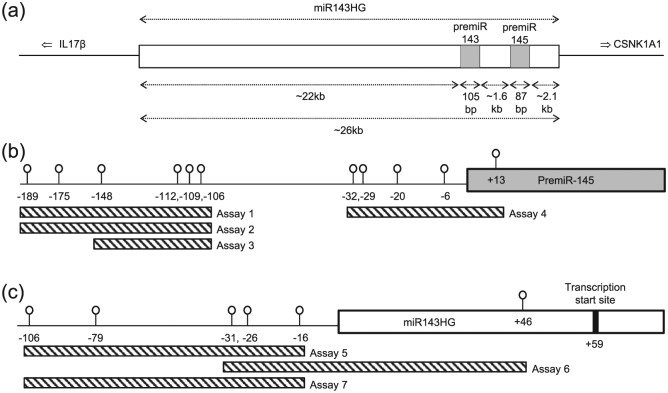
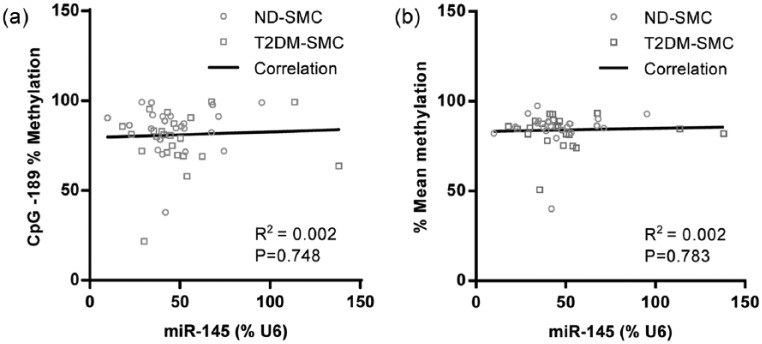
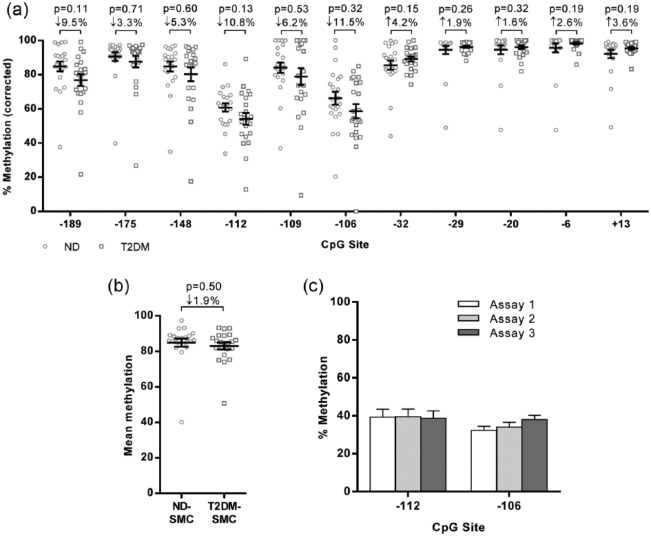
Type 2 diabetes mellitus prevalence is growing globally, and the leading cause of mortality in these patients is cardiovascular disease. Epigenetic mechanisms such as microRNAs (miRs) and DNA methylation may contribute to complications of type 2 diabetes mellitus. We discovered an aberrant type 2 diabetes mellitus-smooth muscle cell phenotype driven by persistent up-regulation of miR-145. This study aimed to determine whether elevated expression was due to changes in methylation at the miR-145 promoter. Smooth muscle cells were cultured from saphenous veins of 22 non-diabetic and 22 type 2 diabetes mellitus donors. DNA was extracted, bisulphite treated and pyrosequencing used to interrogate methylation at 11 CpG sites within the miR-145 promoter. Inter-patient variation was high irrespective of type 2 diabetes mellitus. Differential methylation trends were apparent between non-diabetic and type 2 diabetes mellitus-smooth muscle cells at most sites but were not statistically significant. Methylation at CpGs -112 and -106 was consistently lower than all other sites explored in non-diabetic and type 2 diabetes mellitus-smooth muscle cells. Finally, miR-145 expression per se was not correlated with methylation levels observed at any site. The persistent up-regulation of miR-145 observed in type 2 diabetes mellitus-smooth muscle cells is not related to methylation at the miR-145 promoter. Crucially, miR-145 methylation is highly variable between patients, serving as a cautionary note for future studies of this region in primary human cell types.
2型糖尿病在全球的患病率正在上升,而这些患者的主要死因是心血管疾病。诸如微小RNA(miR)和DNA甲基化等表观遗传机制可能导致2型糖尿病的并发症。我们发现miR-145的持续上调驱动了一种异常的2型糖尿病-平滑肌细胞表型。本研究旨在确定miR-145表达升高是否是由于其启动子甲基化的变化所致。从22名非糖尿病和22名2型糖尿病供体的大隐静脉中培养平滑肌细胞。提取DNA,进行亚硫酸氢盐处理,并使用焦磷酸测序法检测miR-145启动子内11个CpG位点的甲基化情况。无论是否患有2型糖尿病,患者间的差异都很大。在大多数位点,非糖尿病和平滑肌细胞与2型糖尿病-平滑肌细胞之间存在明显的甲基化差异趋势,但无统计学意义。在非糖尿病和平滑肌细胞与2型糖尿病-平滑肌细胞中,CpG -112和-106处的甲基化始终低于所有其他检测位点。最后,miR-145本身的表达与在任何位点观察到的甲基化水平均无相关性。在2型糖尿病-平滑肌细胞中观察到的miR-145持续上调与miR-145启动子的甲基化无关。至关重要的是,miR-145甲基化在患者之间高度可变,这为未来在原代人类细胞类型中对该区域的研究敲响了警钟。