Chen Bei-Bei, Li Zhen-Hua, Gao Shan
Department of Respiratory, The Central Hospital of Wuhan, Tongji Medical College, Huazhong University of Science and Technology, Wuhan, China.
Medicine (Baltimore). 2018 Feb;97(7):e9820. doi: 10.1097/MD.0000000000009820.
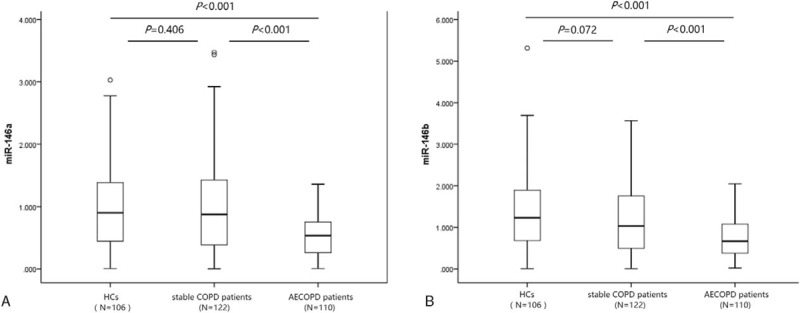
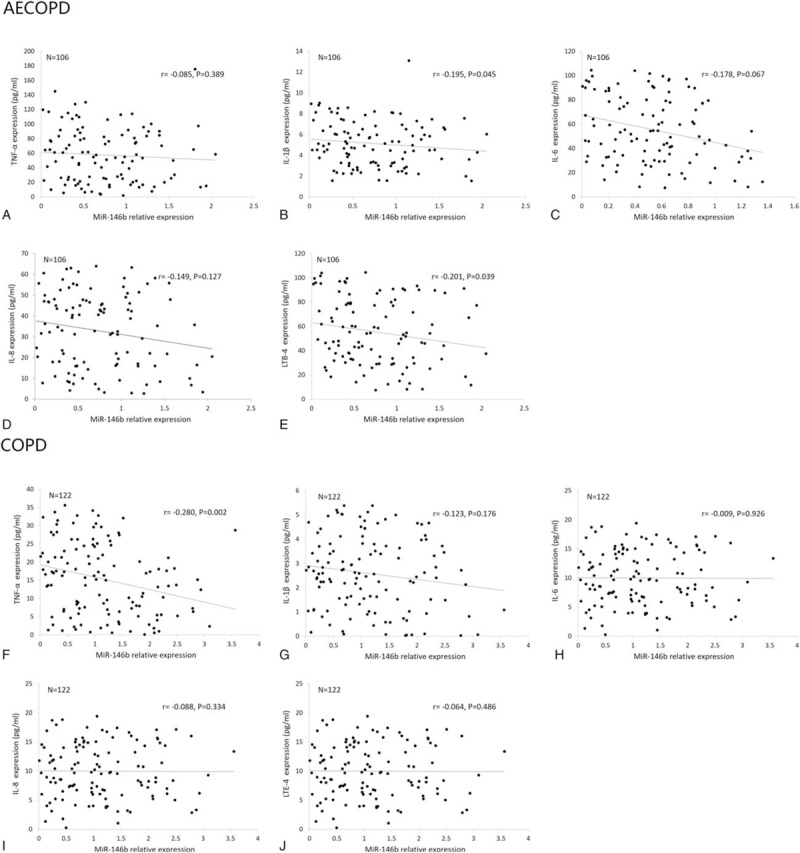
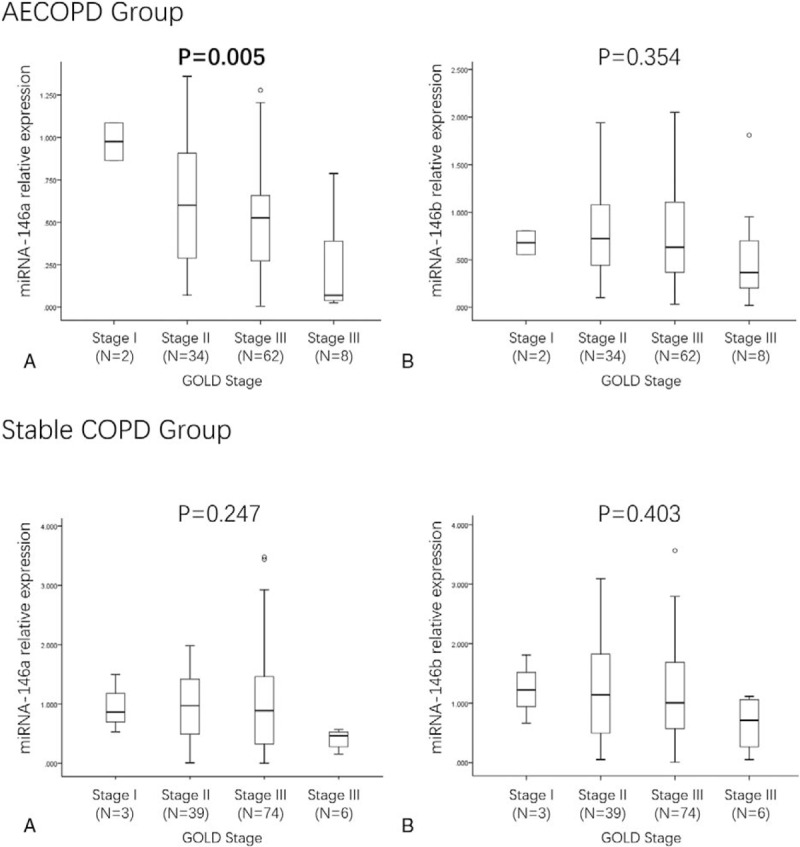
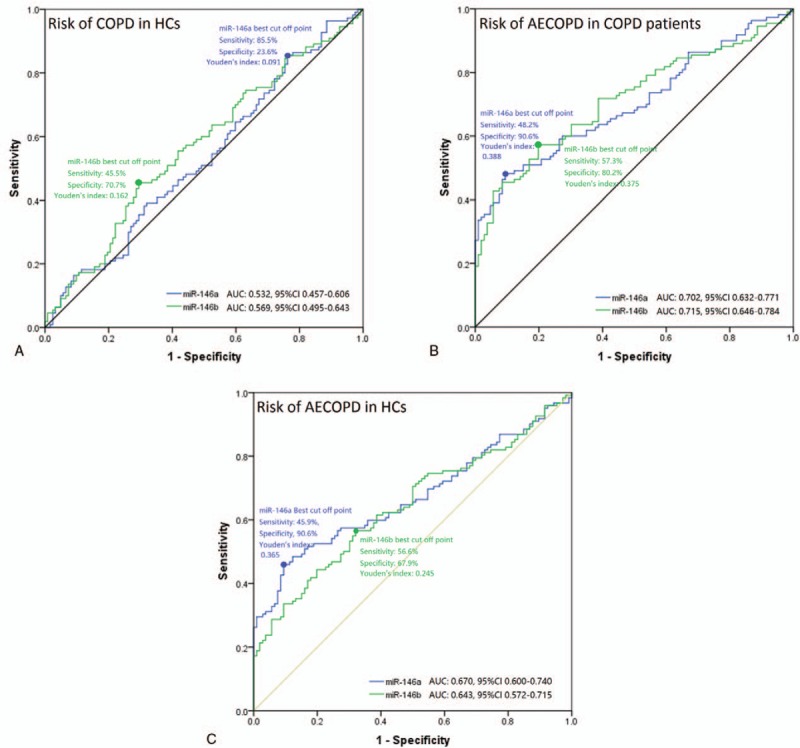
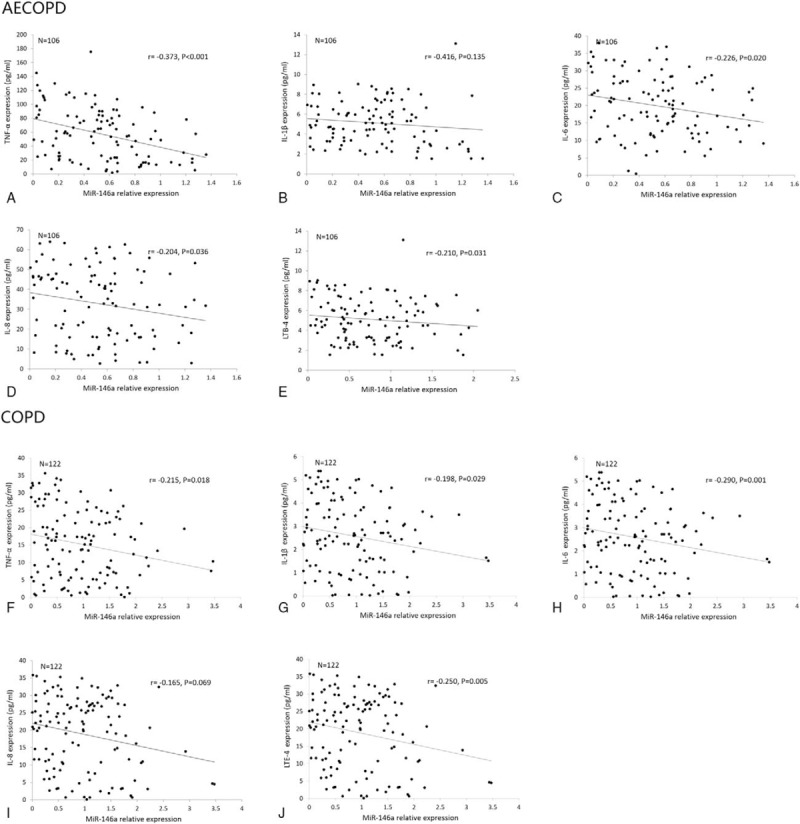
The aim of this study was to investigate the predicting value of miR-146a/b for acute exacerbation chronic obstructive pulmonary disease (AECOPD) and COPD, and to explore their associations with inflammatory cytokines in AECOPD and stable COPD patients.One hundred six AECOPD, 122 stable COPD patients, and 110 health volunteers with age and sex matched to total COPD patients (AECOPD and stable COPD) were enrolled. Blood samples were collected from all participants. Relative expression of miR-146a/b was determined by real-time polymerase chain reaction. Tumor necrosis factor-α (TNF-α), interleukin-1β (IL-1β), interleukin-6 (IL-6), interleukin-8 (IL-8), leukotriene B4 (LTB-4) expression in serum from AECOPD and stable COPD patients were assessed using commercial ELISA kit.Serum levels of miR-146a and miR-146b were down regulated in AECOPD patients compared with stable COPD patients and HCs. miR-146a and miR-146b are of good values for predicting the risk of AECOPD in HCs with AUC of 0.702 and 0.715. Additionally, miR-146a and miR-146b could distinguish AECOPD from stable COPD patients with AUC of 0.670 and 0.643. In AECOPD patients, levels of miR-146a in AECOPD patients were negatively associated with TNF-α, IL-6, IL-8, and LTE-4 expression. In stable COPD patients, miR-146a expressions were negatively correlated with TNF-α, IL-1β, IL-6, IL-8, and LTE-4 levels. And, the expressions of miR-146b in AECOPD patients were negatively associated with IL-1β and LTB-4 expression. While in stable COPD patients, miR-146b expressions were only negatively correlated with TNF-α level.In conclusion, miR-146a and miR-146b were negatively correlated with inflammatory cytokines, and could be promising biomarkers for predicting the risk of AECOPD in stable COPD patients and healthy individuals.
本研究旨在探讨miR-146a/b对慢性阻塞性肺疾病急性加重期(AECOPD)和慢性阻塞性肺疾病(COPD)的预测价值,并探讨其与AECOPD和稳定期COPD患者炎症细胞因子的相关性。纳入了106例AECOPD患者、122例稳定期COPD患者以及110例年龄和性别与全部COPD患者(AECOPD和稳定期COPD)相匹配的健康志愿者。采集了所有参与者的血样。通过实时聚合酶链反应测定miR-146a/b的相对表达。使用商用ELISA试剂盒评估AECOPD和稳定期COPD患者血清中肿瘤坏死因子-α(TNF-α)、白细胞介素-1β(IL-1β)、白细胞介素-6(IL-6)、白细胞介素-8(IL-8)、白三烯B4(LTB-4)的表达。与稳定期COPD患者和健康对照者相比,AECOPD患者血清中miR-146a和miR-146b水平下调。miR-146a和miR-146b对预测健康对照者发生AECOPD风险具有良好价值,曲线下面积(AUC)分别为0.702和0.715。此外,miR-146a和miR-146b能够区分AECOPD和稳定期COPD患者,AUC分别为0.670和0.643。在AECOPD患者中,miR-146a水平与TNF-α、IL-6、IL-8和LTE-4表达呈负相关。在稳定期COPD患者中,miR-146a表达与TNF-α、IL-1β、IL-6、IL-8和LTE-4水平呈负相关。并且,AECOPD患者中miR-146b表达与IL-1β和LTB-4表达呈负相关。而在稳定期COPD患者中,miR-146b表达仅与TNF-α水平呈负相关。总之,miR-146a和miR-146b与炎症细胞因子呈负相关,可能是预测稳定期COPD患者和健康个体发生AECOPD风险的有前景的生物标志物。