INSERM, U1043, Toulouse, F-31300, France.
Université Toulouse III Paul-Sabatier, Faculté de Médecine Toulouse-Purpan, Toulouse, F-31300, France.
Sci Rep. 2017 Feb 10;7:42215. doi: 10.1038/srep42215.
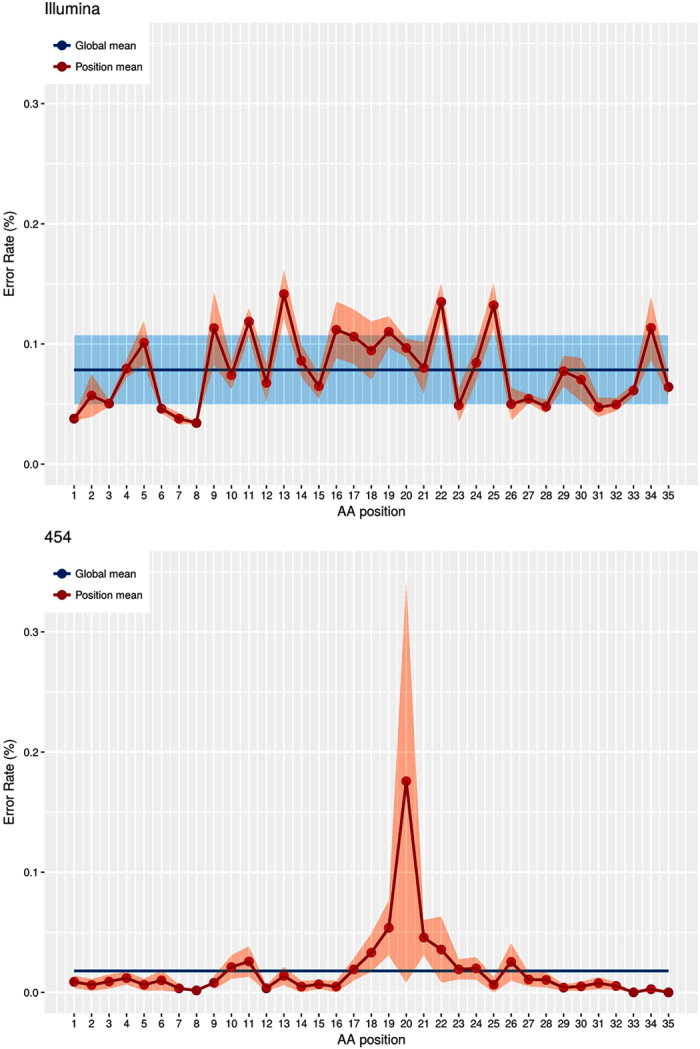
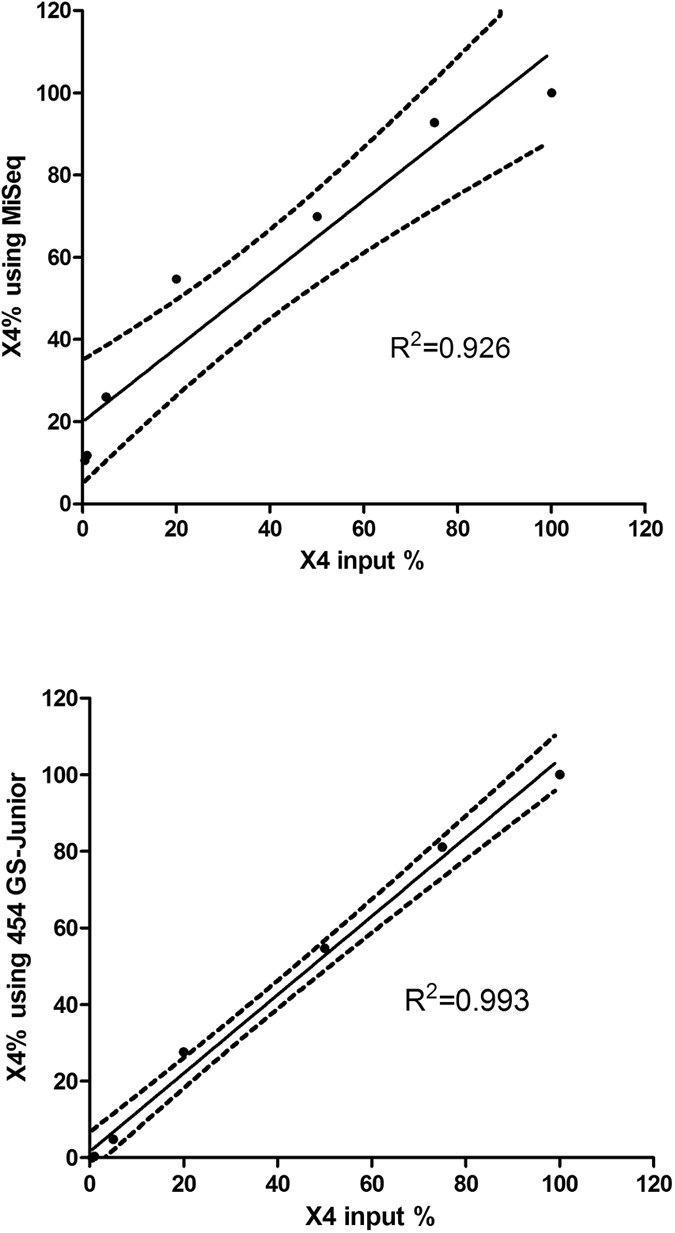
The coreceptor used by HIV-1 must be determined before a CCR5 antagonist, part of the arsenal of antiretroviral drugs, is prescribed because viruses that enter cells using the CXCR4 coreceptor are responsible for treatment failure. HIV-1 tropism is also correlated with disease progression and so must be determined for virological studies. Tropism can be determined by next-generation sequencing (NGS), but not all of these new technologies have been fully validated for use in clinical practice. The Illumina NGS technology is used in many laboratories but its ability to predict HIV-1 tropism has not been evaluated while the 454 GS-Junior (Roche) is used for routine diagnosis. The genotypic prediction of HIV-1 tropism is based on sequencing the V3 region and interpreting the results with an appropriate algorithm. We compared the performances of the MiSeq (Illumina) and 454 GS-Junior (Roche) systems with a reference phenotypic assay. We used clinical samples for the NGS tropism predictions and assessed their ability to quantify CXCR4-using variants. The data show that the Illumina platform can be used to detect minor CXCR4-using variants in clinical practice but technical optimization are needed to improve quantification.
在开处方使用 CCR5 拮抗剂(抗逆转录病毒药物的一部分)之前,必须确定 HIV-1 使用的辅助受体,因为使用 CXCR4 辅助受体进入细胞的病毒是导致治疗失败的原因。HIV-1 嗜性也与疾病进展相关,因此必须在病毒学研究中确定。可以通过下一代测序(NGS)确定嗜性,但并非所有这些新技术都已在临床实践中得到充分验证。Illumina NGS 技术在许多实验室中使用,但尚未评估其预测 HIV-1 嗜性的能力,而 454 GS-Junior(罗氏)则用于常规诊断。HIV-1 嗜性的基因型预测是基于对 V3 区进行测序,并使用适当的算法对结果进行解释。我们比较了 MiSeq(Illumina)和 454 GS-Junior(罗氏)系统与参考表型测定法的性能。我们使用临床样本进行 NGS 嗜性预测,并评估了它们定量检测 CXCR4 利用变异体的能力。数据表明,Illumina 平台可用于临床实践中检测 CXCR4 利用的微小变异体,但需要进行技术优化以提高定量能力。