Liu Zhong-Yan, Xu Guo-Li, Tao Hui-Hong, Yang Yao-Qin, Fan Yue-Zu
Department of General Surgery, Tongji Hospital, Tongji University School of Medicine, Tongji University, Shanghai, 200065 People's Republic of China.
Laboratory of Tumor Cytology, Tongji University School of Medicine, Tongji University, Shanghai, 200092 People's Republic of China.
Cancer Cell Int. 2017 Feb 8;17:20. doi: 10.1186/s12935-017-0388-8. eCollection 2017.
Human gallbladder cancer (GBC) is an aggressive malignant neoplasm with a poor prognosis. The development of ideal tools for example tumor cell lines for investigating biological behavior, metastatic mechanism and potential treatment in GBCs is essential. In present study, we established and characterized a GBC cell line derived from primary tumor.
Primary culture method was used to establish this cell line from a primary GBC. Light and electron microscopes, flow cytometry, chromosome analysis, heterotransplantation and immunohistochemistry were used to characterize the epidemic tumor characteristics and phenotypes of this cell line.
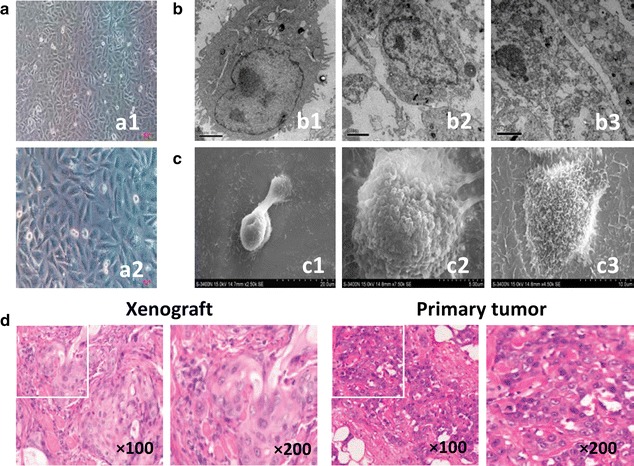
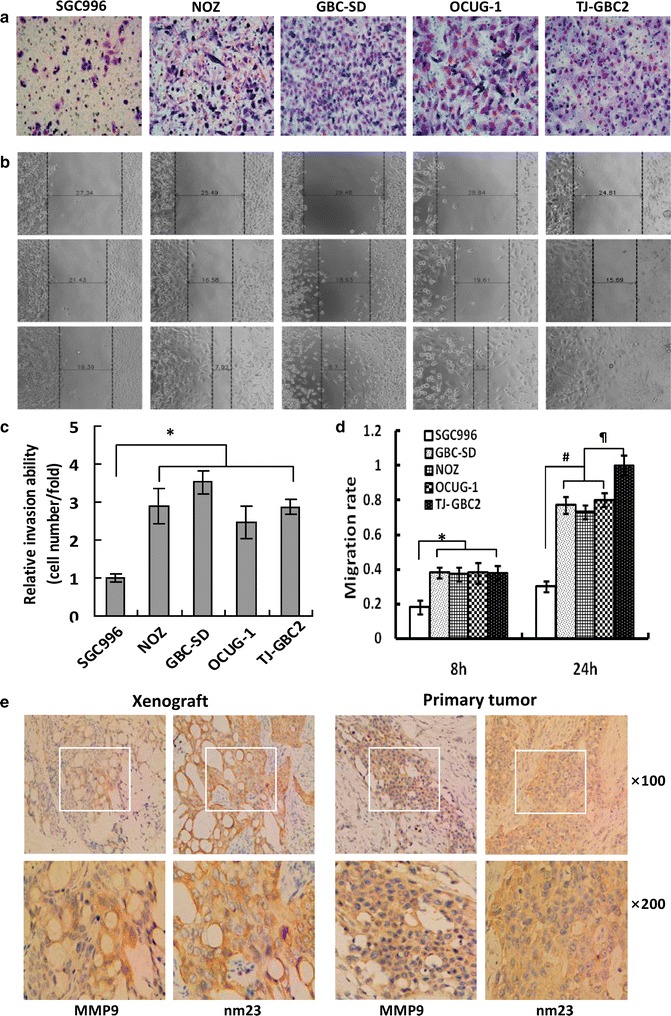
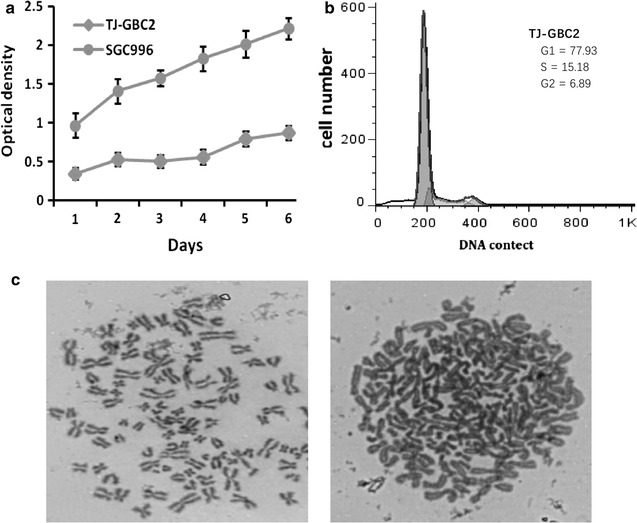
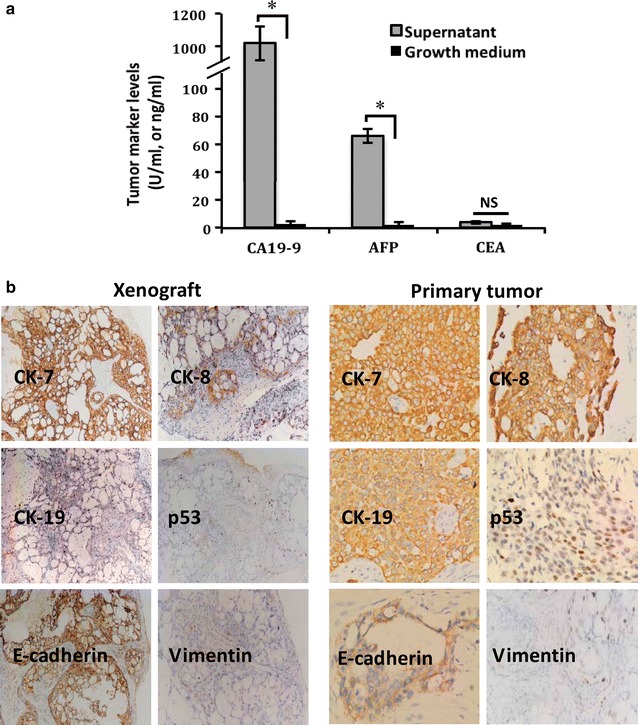
A novel GBC cell line, named TJ-GBC2, was successfully established from primary GBC. This cell line had characteristic epithelial tumor morphology and phenotypes in consistent with primary GBC, such as polygon and irregular cell shape, increased CA19-9 and AFP levels, and positive expression of CK7, CK8, CK19 and E-cadherin with negative vimentin. Moreover, about 25% of the cells were in the S-G2/M phase; abnormity in structure and number of chromosome with a peak number of 90-105 and 80% hypertetraploid were observed. Furthermore, this cell line had higher invasion and highest migration abilities compared to other GBC cell lines; and metastatic-related marker MMP9 and nm23 were positively expressed.
A novel highly aggressive GBC cell line TJ-GBC2 was successfully established from primary GBC. TJ-GBC2 cell line may be efficient tool for further investigating the biological behaviors, metastatic mechanism and potential targeted therapy of human GBC.
人类胆囊癌(GBC)是一种侵袭性恶性肿瘤,预后较差。开发理想的工具,如用于研究胆囊癌生物学行为、转移机制和潜在治疗方法的肿瘤细胞系至关重要。在本研究中,我们建立并鉴定了一种源自原发性肿瘤的胆囊癌细胞系。
采用原代培养方法从原发性胆囊癌建立该细胞系。使用光学显微镜和电子显微镜、流式细胞术、染色体分析、异种移植和免疫组织化学来鉴定该细胞系的流行肿瘤特征和表型。
从原发性胆囊癌成功建立了一种新的胆囊癌细胞系,命名为TJ-GBC2。该细胞系具有特征性上皮肿瘤形态和表型,与原发性胆囊癌一致,如多边形和不规则细胞形状、CA19-9和甲胎蛋白水平升高,以及CK7、CK8、CK19和E-钙黏蛋白阳性表达而波形蛋白阴性。此外,约25%的细胞处于S-G2/M期;观察到染色体结构和数量异常,峰值数量为90-105条,80%为超四倍体。此外,与其他胆囊癌细胞系相比,该细胞系具有更高的侵袭能力和最高的迁移能力;转移相关标志物MMP9和nm23呈阳性表达。
从原发性胆囊癌成功建立了一种新的高侵袭性胆囊癌细胞系TJ-GBC2。TJ-GBC2细胞系可能是进一步研究人类胆囊癌生物学行为、转移机制和潜在靶向治疗的有效工具。