Schöfl Gerhard, Lang Kathrin, Quenzel Philipp, Böhme Irina, Sauter Jürgen, Hofmann Jan A, Pingel Julia, Schmidt Alexander H, Lange Vinzenz
DKMS Life Science Lab, Blasewitzerstr. 43, 01307, Dresden, Germany.
DKMS, Kressbach 1, 72072, Tübingen, Germany.
BMC Genomics. 2017 Feb 14;18(1):161. doi: 10.1186/s12864-017-3575-z.
At the DKMS Life Science Lab, Next Generation Sequencing (NGS) has been used for ultra-high-volume high-resolution genotyping of HLA loci for the last three and a half years. Here, we report on our experiences in genotyping the HLA, CCR5, ABO, RHD and KIR genes using a direct amplicon sequencing approach on Illumina MiSeq and HiSeq 2500 instruments.
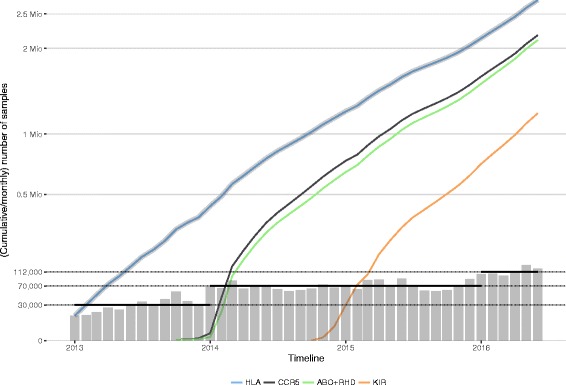
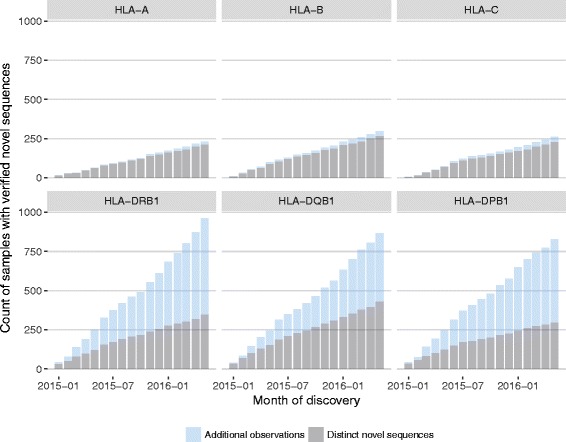
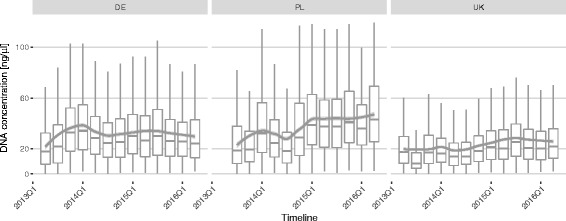
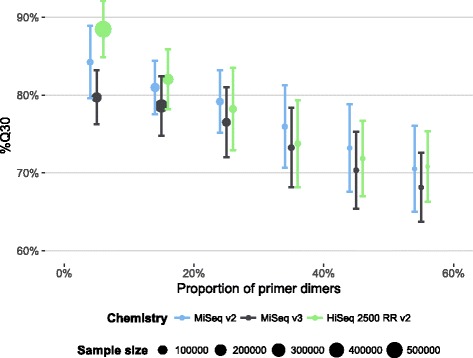
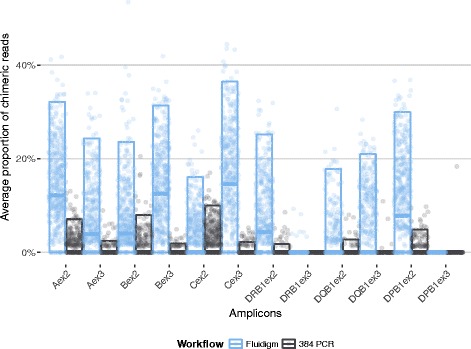
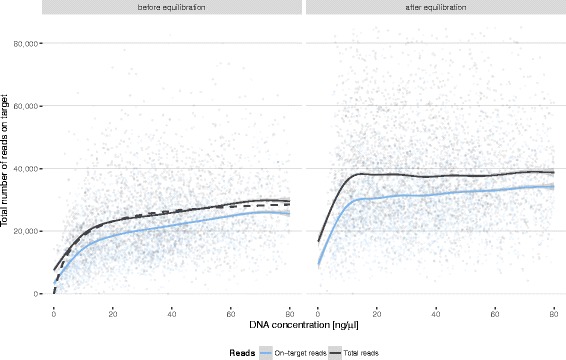
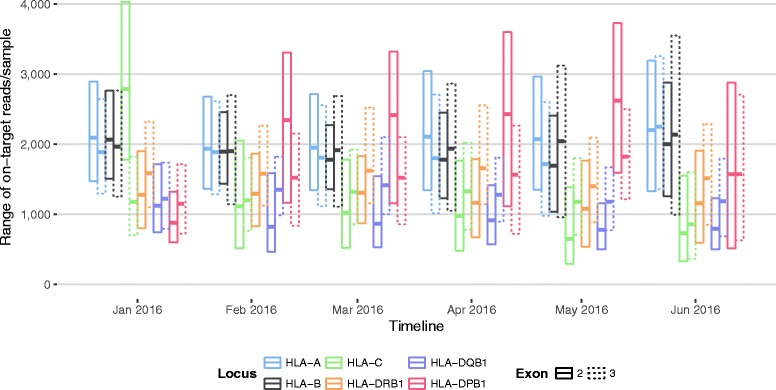
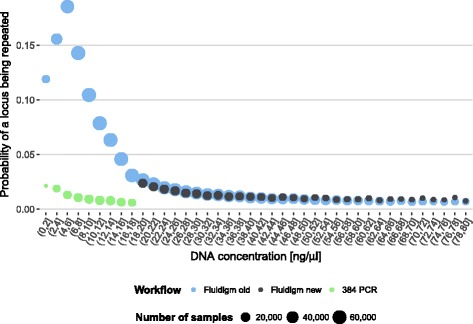
Between January 2013 and June 2016, 2,714,110 samples largely from German, Polish and UK-based potential stem cell donors have been processed. 98.9% of all alleles for the targeted HLA loci (HLA-A, -B, -C, -DRB1, -DQB1 and -DPB1) were typed at high resolution or better. Initially a simple three-step workflow based on nanofluidic chips in conjunction with 4-primer amplicon tagging was used. Over time, we found that this setup results in PCR artefacts such as primer dimers and PCR-mediated recombination, which may necessitate repeat typing. Split workflows for low- and high-DNA-concentration samples helped alleviate these problems and reduced average per-locus repeat rates from 3.1 to 1.3%. Further optimisations of the workflow included the use of phosphorothioate oligos to reduce primer degradation and primer dimer formation, and employing statistical models to predict read yield from initial template DNA concentration to avoid intermediate quantification of PCR products. Finally, despite the populations typed at DKMS Life Science Lab being relatively homogenous genetically, an analysis of 1.4 million donors processed between January 2015 and May 2016 led to the discovery of 1,919 distinct novel HLA alleles.
Amplicon-based NGS HLA genotyping workflows have become the workhorse in high-volume tissue typing of registry donors. The optimisation of workflow practices over multiple years has led to insights and solutions that improve the efficiency and robustness of short amplicon based genotyping workflows.
在DKMS生命科学实验室,近三年半来,下一代测序(NGS)技术已用于HLA基因座的超高通量高分辨率基因分型。在此,我们报告使用Illumina MiSeq和HiSeq 2500仪器上的直接扩增子测序方法对HLA、CCR5、ABO、RHD和KIR基因进行基因分型的经验。
在2013年1月至2016年6月期间,共处理了2,714,110份样本,这些样本主要来自德国、波兰和英国的潜在干细胞捐献者。所有靶向HLA基因座(HLA-A、-B、-C、-DRB1、-DQB1和-DPB1)的等位基因中,98.9%的分型分辨率达到高分辨率或更高。最初使用基于纳米流体芯片结合4引物扩增子标记的简单三步工作流程。随着时间的推移,我们发现这种设置会导致PCR假象,如引物二聚体和PCR介导的重组,这可能需要重复分型。针对低DNA浓度和高DNA浓度样本的分开工作流程有助于缓解这些问题,并将每个基因座的平均重复率从3.1%降低到1.3%。工作流程的进一步优化包括使用硫代磷酸酯寡核苷酸以减少引物降解和引物二聚体形成,以及采用统计模型根据初始模板DNA浓度预测读取产量,以避免对PCR产物进行中间定量。最后,尽管DKMS生命科学实验室分型的人群在遗传上相对同质,但对2015年1月至2016年5月期间处理的140万捐献者的分析导致发现了1919个不同的新型HLA等位基因。
基于扩增子的NGS HLA基因分型工作流程已成为登记捐献者高通量组织分型的主力军。多年来工作流程实践的优化带来了一些见解和解决方案,提高了基于短扩增子的基因分型工作流程的效率和稳健性。