Chowdhury Biswajit, Xiang Bo, Liu Michelle, Hemming Richard, Dolinsky Vernon W, Triggs-Raine Barbara
From the Department of Biochemistry and Medical Genetics (B.C., M.L., R.H., B.T.-R.), Department of Pharmacology and Therapeutics (B.X., V.W.D.), and Department of Obstetrics and Gynecology (M.L.), University of Manitoba, Winnipeg, Canada; and The Children's Hospital Research Institute of Manitoba, Winnipeg, Canada (V.W.D., B.T.-R.).
Circ Cardiovasc Genet. 2017 Jan;10(1):e001598. doi: 10.1161/CIRCGENETICS.116.001598.
Hyaluronan (HA) is required for endothelial-to-mesenchymal transition and normal heart development in the mouse. Heart abnormalities in hyaluronidase 2 (HYAL2)-deficient ( ) mice and humans suggested removal of HA is also important for normal heart development. We have performed longitudinal studies of heart structure and function in mice to determine when, and how, HYAL2 deficiency leads to these abnormalities.
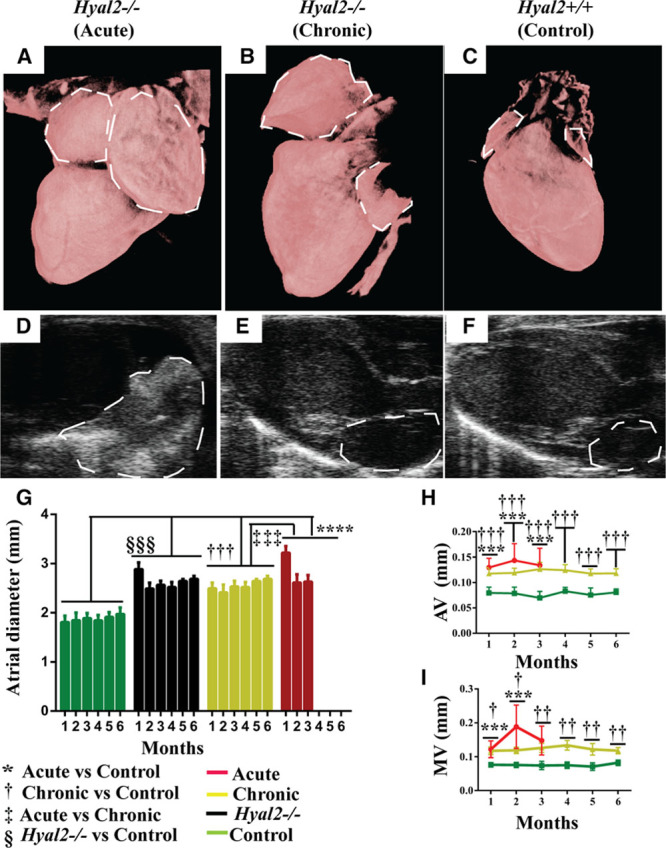
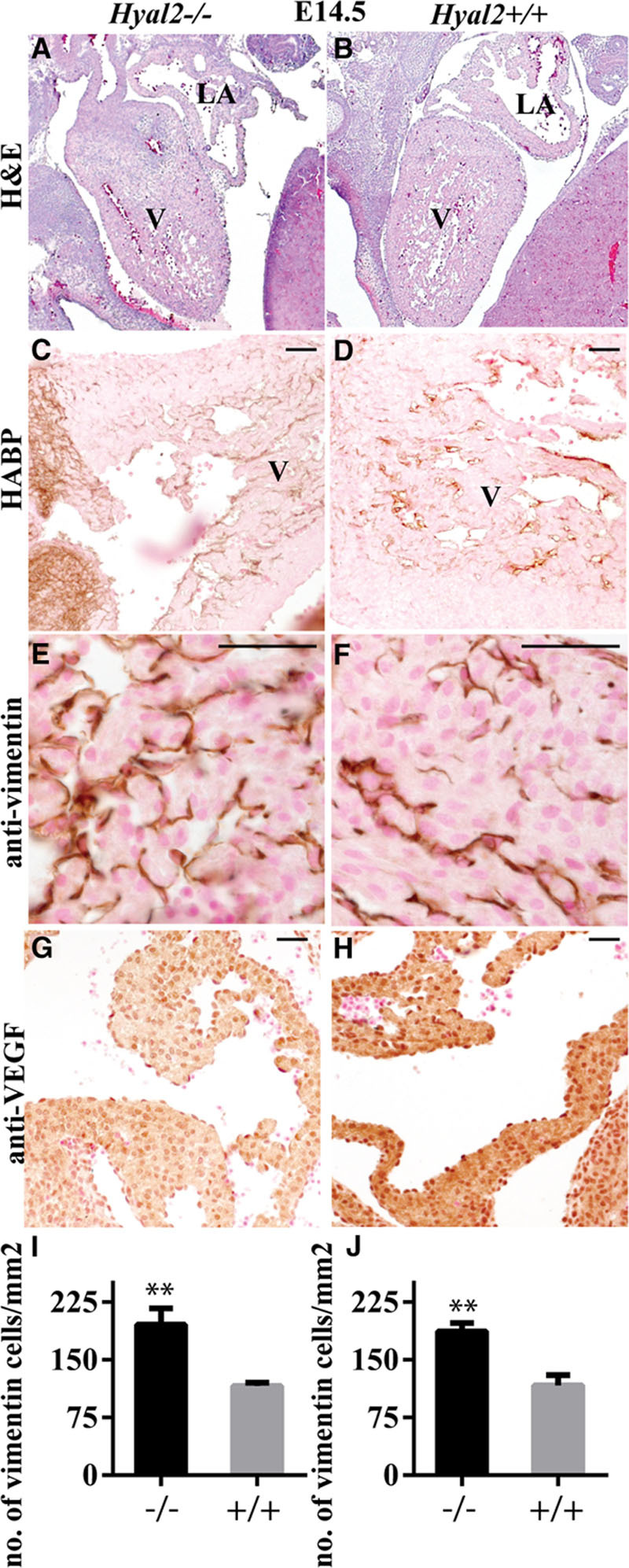
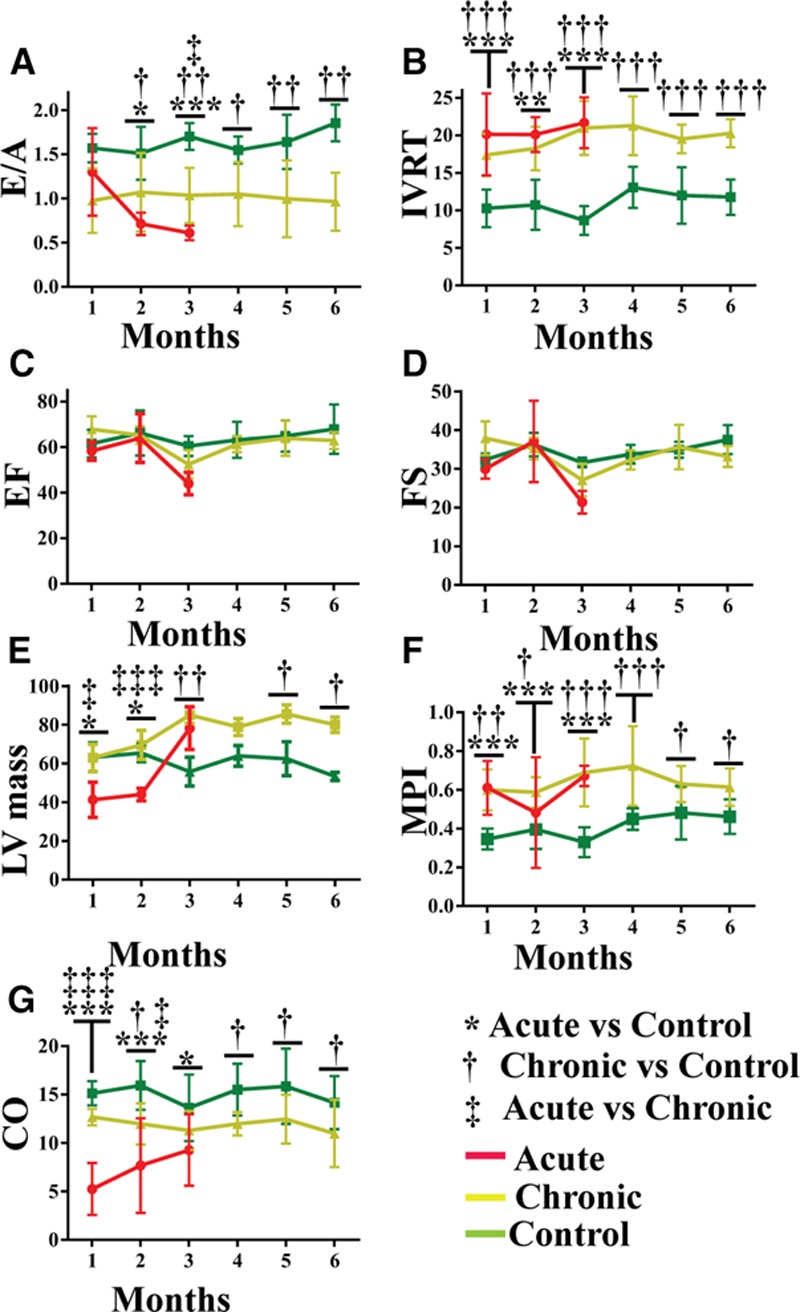
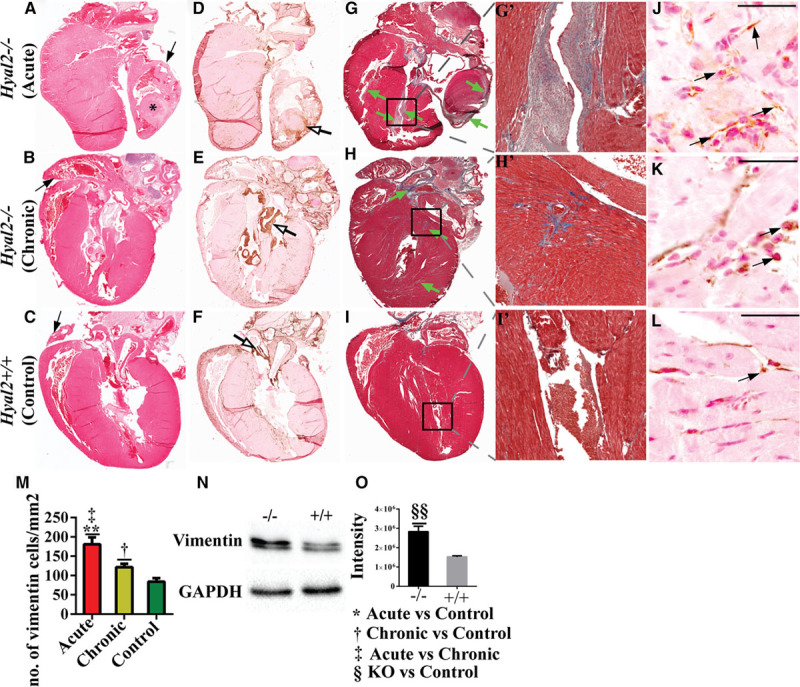
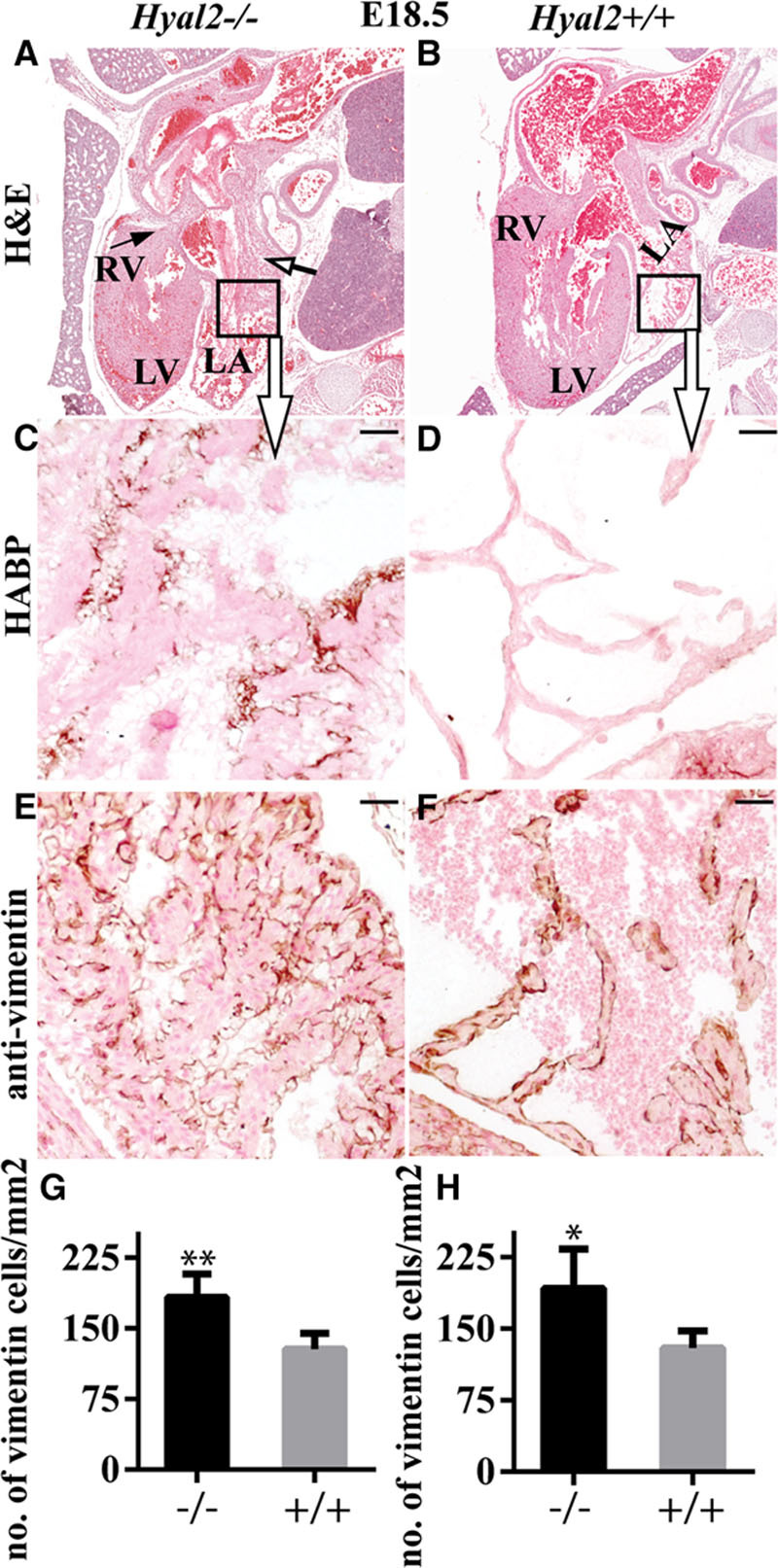
Echocardiography revealed atrial enlargement, atrial tissue masses, and valvular thickening at 4 weeks of age, as well as diastolic dysfunction that progressed with age, in mice. These abnormalities were associated with increased HA, vimentin-positive cells, and fibrosis in compared with control mice. Based on the severity of heart dysfunction, acute and chronic groups of mice that died at an average of 12 and 25 weeks respectively, were defined. Increased HA levels and mesenchymal cells, but not vascular endothelial growth factor in embryonic hearts, suggest that HYAL2 is important to inhibit endothelial-to-mesenchymal transition. Consistent with this, in wild-type embryos, HYAL2 and HA were readily detected, and HA levels decreased with age.
These data demonstrate that disruption of normal HA catabolism in mice causes increased HA, which may promote endothelial-to-mesenchymal transition and proliferation of mesenchymal cells. Excess endothelial-to-mesenchymal transition, resulting in increased mesenchymal cells, is the likely cause of morphological heart abnormalities in both humans and mice. In mice, these abnormalities result in progressive and severe diastolic dysfunction, culminating in heart failure.
透明质酸(HA)是小鼠内皮细胞向间充质细胞转变及正常心脏发育所必需的。透明质酸酶2(HYAL2)缺陷型( )小鼠和人类的心脏异常表明,HA的清除对正常心脏发育也很重要。我们对 小鼠的心脏结构和功能进行了纵向研究,以确定HYAL2缺陷何时以及如何导致这些异常。
超声心动图显示, 小鼠在4周龄时出现心房扩大、心房组织肿块和瓣膜增厚,以及随着年龄增长而进展的舒张功能障碍。与对照小鼠相比,这些异常与 小鼠中HA增加、波形蛋白阳性细胞和纤维化有关。根据心脏功能障碍的严重程度,定义了平均分别在12周和25周死亡的急性和慢性 小鼠组。 胚胎心脏中HA水平和间充质细胞增加,但血管内皮生长因子未增加,这表明HYAL2对抑制内皮细胞向间充质细胞转变很重要。与此一致的是,在野生型胚胎中,很容易检测到HYAL2和HA,且HA水平随年龄下降。
这些数据表明, 小鼠正常HA分解代谢的破坏导致HA增加,这可能促进内皮细胞向间充质细胞转变和间充质细胞增殖。内皮细胞向间充质细胞的过度转变导致间充质细胞增加,这可能是人类和小鼠心脏形态异常的原因。在小鼠中,这些异常导致进行性严重舒张功能障碍,最终导致心力衰竭。